Transcript
Transcribed automatically: it certainly contains errors. It’s pretty good, just not perfect. We provide it here because, for accessibility, it’s better than nothing.
Jeffrey Lewis
0:02
Ah, so very, very interesting. So I think we're going to get all three episodes out without some new horrible thing occurring?
Joseph Dempsey
0:11
I think that depends how quickly Scott can work.
Jeffrey
0:17
You are listening to the Arms Control Wonk podcast, the leading podcast on arms control, disarmament, and nonproliferation. I'm Jeffrey Lewis, the founding publisher of the Arms Control Wonk blog and a scholar at the Middlebury Institute of International Studies at Monterey. This is the second part of our epic conversation about North Korean solid-fueled missiles with Joseph Dempsey from IISS.
So, Joe, you're back. How are you doing?
Joseph
0:44
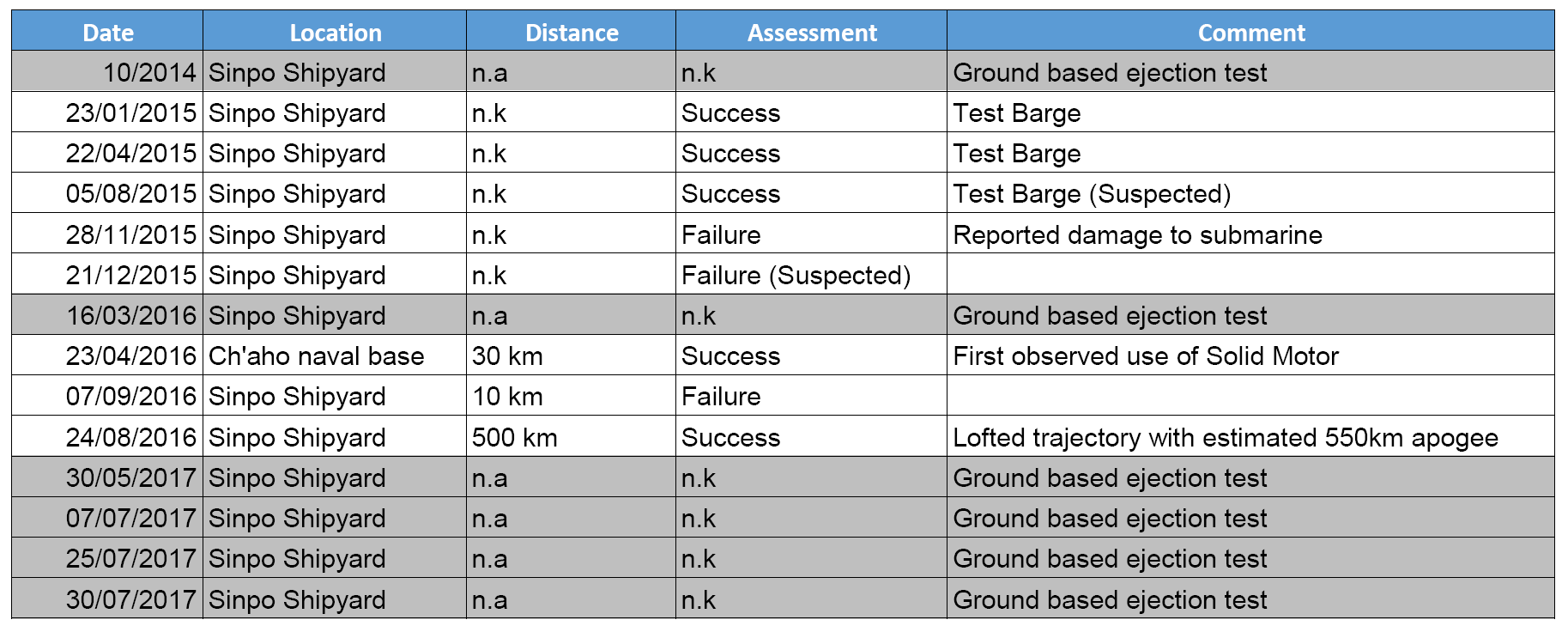
Good, thank you. So I think the kind of question is, what is the next step for this program? And they're clearly testing a component, but there's potential reasons why they've gone back to do the ground ejection tests. So one potential area is, well, we have to look at what was wrong with Pucasson 1. I don't think the motor was the problem.
I think the solid motor seems to be working out. They've adopted it on Bukasom 2, which they've done, allegedly, IOC on. So I think the rotor's fine. One interesting thing about that, though, is the range requirements for this missile.
Joseph
1:30
So initially, it was a liquid-fueled system. Now, pound for pound in terms of space, Solid-fueled—the switch to solid may have reduced the range.
Jeffrey
1:46
Probably reduced the range. Probably reduced the range, yeah. I mean, we think the—I mean, it's always hard because you're going with the range that they demonstrated, which may not be the theoretical maximum, but, I mean, it's definitely less than the Musudans.
Joseph
2:02
Yeah. I mean, it's hard because the Musudan is a longer, bigger system. So the fuel capacity of the Musudan was probably greater regardless. I think just seeing as far as we know, the actual airframe of the missile has not changed when they switched from liquid to solid. And bear in mind... Okay. As far as we know, but please correct me on that, Jeff.
Jeffrey
2:28
You were one of the people who pointed it out. I mean, does that mean we think that the apparent wound filament has been there from the beginning?
Joseph
2:38
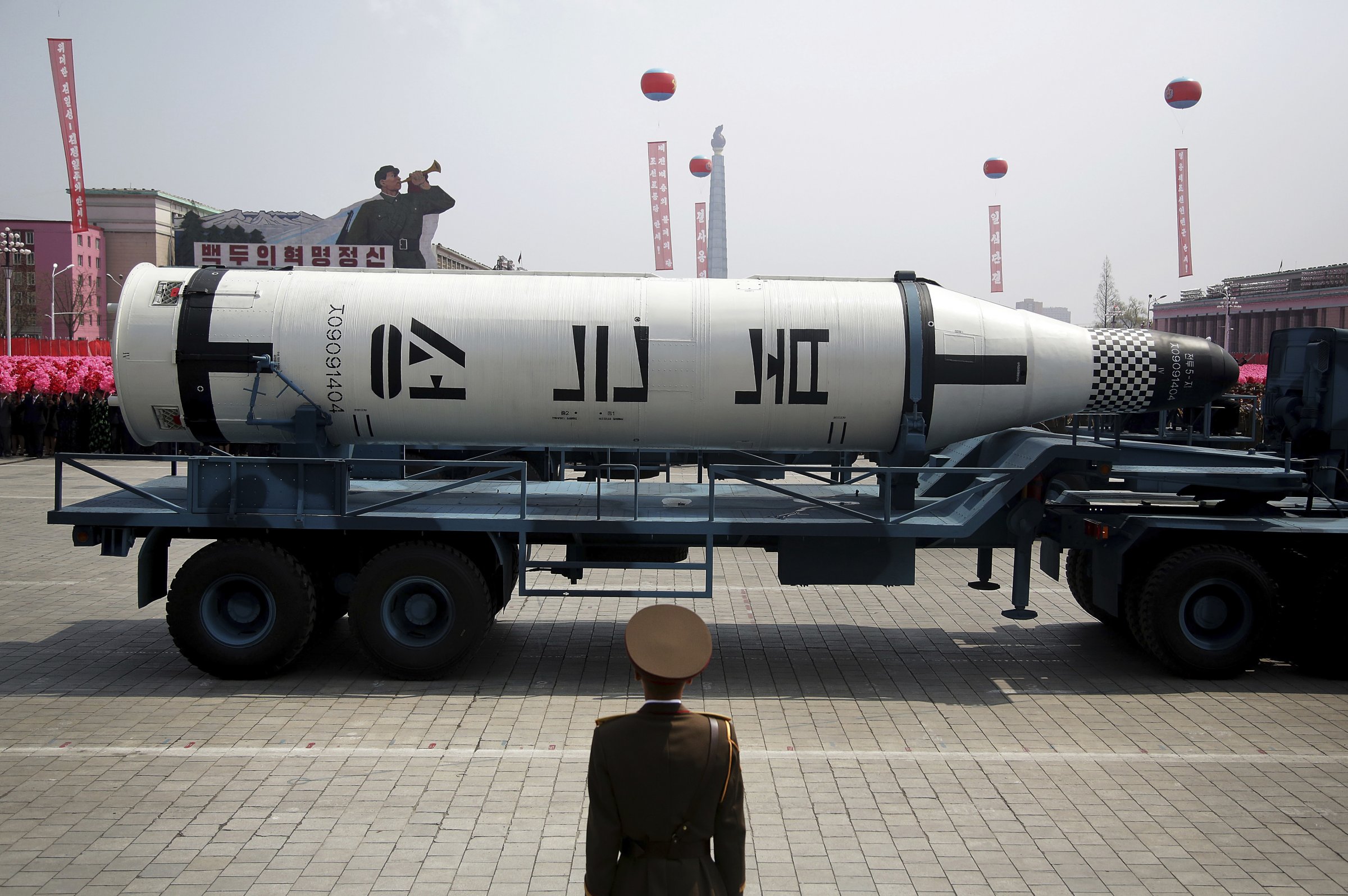
Well, that's an interesting question. I mean, one interesting aspect is that... Is potentially the weight difference by using the wound filament. And we saw this great high-definition imagery from the April parade here. And one of the lovely things...
Jeffrey
2:55
The listeners are probably confused. Yeah, yeah, yeah. I should say I've just thrown a monkey wrench in by asking about something we should probably talk about later, which is, as Joe was just about to say, when we saw the high-resolution images of the... The Pukguksong-1 at the parade, it looked like it had a wound filament airframe, which Joe is going to describe.
Joseph
3:24
I'm not an expert on wound filament.
Jeffrey
3:26
Would you like to do it instead of me doing it? Because then I would have screwed it up.
Joseph
3:33
Well, I'm not... I don't know the structure, but I know the take-home from that, shall we say, is that you can make a... A lighter way, a lighter kind of airframe to take the strains related to a solid rocket. I don't know the science behind it, but that's the general take home. So we saw this wound filament technology being apparently integrated into the airframes we saw on parade.
The wound filament we saw in the airframes paraded, you know, would have some potential weight saving advantage, which could increase the potential range of the system. But the key thing is we haven't really seen The high-definition imagery of this missile before then to know if it was ever integrated before?
Jeffrey
4:20
So, I mean, I guess one of the questions I have is if we're seeing a return to ejection testing, I mean, I guess there are a couple of hypotheses, right? One is it's something bigger, which would stink, but seems to be possible. Whether it's something bigger for a bigger submarine or something bigger for one of those canisters we saw, I don't know.
But then I guess the other possibility is it's incremental changes that might require pop-up testing, like, like a, like a change to the airframe.
Joseph
4:53
Yeah. I think there's a, there's a, there's a multitude of options of what it could be. I think the, we touched upon the, the range requirements on this. The interesting thing is if we go from the, if we look at the successful last August test, the extrapolated range when lofted was at minimum, I think around the 1250 kilometer mark.
Right. Interestingly, if you look at the virtually identical lofted tests of the Bucason 2, the land-based system, people generally expanded that range estimate to upwards of 2,000 kilometers. So I don't necessarily know what the accurate range of this is based upon the tests we've seen. I just know that we have two very similar tests, but two slightly different range variances.
Joseph
5:39
If we go, though, on the lower estimate, the conservative one, it's 1,200 or 1,250 kilometers. Do you need more than that? Do the North Koreans need to go any further than that for their purposes? Now, my thing on this, and I've got multiple reasons why I think this, is it's very much a regional system. It's not going to be operating behind.
It's a regional, littoral operations and a regional threat. Now, with this, 1,200-kilometer missile. Even if that missile just sits in Sinpo Harbor, it could cover, I believe, virtually all South Korea and the vast majority of Japan. So I don't necessarily know if there's a requirement to build a much longer-range missile. And, you know, I think by longer-range missile, we're possibly talking a bigger missile.
A bigger missile may or may not necessitate a bigger canister. It may necessitate, you know, not necessarily a bigger submarine, but a bigger... A bigger area to house that missile, which, yeah, can lead to a bigger submarine. And the interesting thing is because the missiles house in the sail of the Goy class, then, you know, there's going to be no obvious, as far as I'm aware, work on the sail to install a bigger canister.
Now, I'm not saying the Goy couldn't handle a bigger canister already, but we haven't seen that work.
Jeffrey
6:55
That's true. Well, you know, I think one reason I'm a little... A little hesitant is I don't fully understand what the relationship between the land and the sea-based system is. You know, I mean, we know in retrospect with the Chinese system, it started really as a sea-based system. And there were bureaucratic reasons that the missileers wanted to keep going, even as the people making the submarine sort of found themselves unable to sustain their, their, their, their political support.
And so they, You know, the missile survived when the submarine did not, bureaucratically. But I just don't know.
Aaron Stein
7:40
I mean, we don't have that level of insight into the North Korean situation to know if it's, you know, if the impetus for the missile was always land and sea, right?
Jeffrey
7:55
If it's the same people, if it's different people. I just think it's impossible to tell. And so, you know, I mean, I would think there would be an incentive to have longer range land-based solid-fueled systems.
Joseph
8:09
My take on this is that I believe that it was never a parallel program. That's my personal take on this. I think it was the SLBM program. The SLBM switched to solar fuel. They saw the advantages. And I think, you know, it's quite possible. Quite interesting to bring Musudan into this equation. So Musudan, we believe, used the same engine as the SLBM to start with.
The SLBM switched quite early on. Musudan, they tried it longer and largely failed.
Joseph
8:40
Now, my personal take on Musudan is we're probably not going to see Musudan become an operational system.
Jeffrey
8:47
Yeah, I mean... Yeah. It would seem like throwing good money after bad, although governments have done stranger things, but yes.
Joseph
8:55
True. True. I mean, I mean, they may show it, but I kind of wonder, I think, you know, the, the development has succeeded that quite a lot. So I think, you know, by using using the, because I'm too using the, the solid propellant, which seems to be worked out well as a replacement for the 40, 10 in the SLBM.
Using that same missile as a ground-based system is kind of a replacement for Musudan to a degree. Now, the range isn't the same, granted. Right. But, you know, it's still quite a capable system for the regional. Musudan, I guess, the advantage of the range of Musudan is it could have potentially hit Guam.
Joseph
9:38
But then you kind of, because of development of Harrison 12... Mm-hmm. And as a precursor to the ICBM, RS-114, I think you may have already covered that base, shall we say, with other technology.
Jeffrey
9:50
Yeah. No, I think you're right about that.
Joseph
9:52
The interesting thing I should point out, though, is that there are some little differences that I've noted and other people noted on Buccasin II. And it makes you wonder, will we see those changes in any way with the SLBM? So two things come to mind. One, when you look at the missile, at the very least, the nose is different.
Jeffrey
10:14
Mm-hmm. Very different.
Joseph
10:17
It is very different. Now, I don't know if that incorporates, you know, potentially more fuel. Again, we've not necessarily seen that from the testing. Again, we've not necessarily know if the test is full capacity, of course, as you mentioned. It could be that, you know, their RV technology and their warhead technology is because since when we first saw this missile or tested that design in 2015, they've done some work.
On RVs. They've done some work on standardization of warheads, as we know. It's potentially that that's what the nose cone needs to be. I also don't know necessarily the triconical shape of the SLBM. I know we've seen that, shall we say, in some early SLBM systems. It very much moves the R-27. It very much mirrors Polaris. But I don't necessarily know how factual that is for operations.
So they could have changed that, potentially. But again, I don't necessarily know the rationale why that changed in shape.
Jeffrey
11:12
Yeah, I think that's right. I mean, it is this really interesting puzzle where you have these two missiles that are in some very important sense the same, but nonetheless, there are differences. And the differences aren't, I mean, they're not aesthetic, right? I mean, they didn't just decide that the nose looked prettier so that, you know, in theory, you ought to be able to figure out From the functional change, what they're worried about, what they're concerned about, what decisions they're making.
But sadly, they're not so unambiguous that that's an easy task. I mean, it's still an interesting interpretive puzzle.
Joseph
11:55
And I did wonder also that because of the triconical shape of the SLBM system, if it has something to do with the way it travels through the water. Yeah, I... It's traveling through a different medium to get to the...
Jeffrey
12:08
Launch. We definitely think that that's got to be part of the story. You do care about how the pop-up, you want it to get up and clear of the water. If it tries to light when it's underwater, it's going to be a bad day.
Joseph
12:27
I generally don't know the science behind that or the rationale behind it. If anyone does, I'd love to hear from them, certainly. I think the other little difference that I've noted with the Buchasson 2 is the ejection system. Now, it's more obvious with the Buchasson 2 than it is with Buchasson 1 because it's in the open air.
And there's even some slight differences between the two Buchasson 2 tests we've seen. But interestingly, in the latest test, in regards to the cold ejection, it's a very smoky cold ejection. There's black smoke possibly coming out of it. And you kind of wonder... Is it a hard call detection or soft call detection? It almost looks like it's a mortar system, but it's something some kind of combustion going on to pop it up rather than the air.
Jeffrey
13:15
It looks odd. And there's also, by the way, that little which maybe we just are missing it. We could be missing it on the Oh, now I'm doing this from memory. I will mess this up. Perhaps you will correct me. The timing is a little bit different of the two ejects.
Jeffrey
13:36
Because the land-based one has that little kick.
Joseph
13:39
I think if they built the ejection system to go underwater, they probably adapted it to go onto land. Now, if you look at the two land tests, my interpretation is it goes up a bit further, I think, on the first test. And if you slow that image really far down... It almost looks like it's going to fall.
It actually may have started to go down ever so slightly before the motor kicks in. So maybe they were playing around with the timing because you don't see that as obviously on the second test. Well, it also kicks over, right? It does, yeah.
Jeffrey
14:16
Which we presume was an effort to spare the transporter. Well, the launcher.
Joseph
14:23
It's hard to say if that was something going very right or something about to go very wrong.
Jeffrey
14:28
Yeah, that's true too. I mean, that's why this is fun, right? Because there isn't I, I, I have to be honest, it's one of the things I like most about this is that it's a hard enough problem and it's it's an ambiguous enough problem that it lends itself to collegiality because it's like, I don't freaking know. Yeah.
Joseph
14:50
So I think, you know, there are some certainly potential differences between Booker Son 2 and the ejection system. So whether that means that there's some difference between Booker Son 1 or that system is not quite right, that's interesting, which may necessarily say, you know, they're refining the actual ejection system rather than the missile they're putting in it.
Jeffrey
15:07
Right, right, right, right. Which, by the way, they might be testing in the pop-up tests. I mean, that's just, I mean, you could simply replace the ejection system, right? You're going to have to run them by me again, Jeffrey, sorry. Sorry, if you're changing the ejection system, the first place you'd test that is on land.
Joseph
15:24
Oh, yes, of course, yeah.
Jeffrey
15:26
Right, and so we've speculated, well, why are they going back and retesting and doing all these pop-up tests on land? And we talked about the possibility that they were making changes to the missile, whether it was minor changes to the missile or major changes to the missile. It's also possible they've altered the ejection system.
Joseph
15:45
Indeed, yeah. And the interesting, the language when we heard about this from the reports of, you know, unknown U.S. officials, I think the terminology used was the testing component. Right. Now, it could be how you interpret the use of that word, but it kind of... Well, that's what we do, right, is people play word games. They do, yeah.
You know, it kind of applies, it's not testing the whole missile system, it's just one component of it, and that may be the ejection system.
Jeffrey
16:10
Yeah, that's true. That's a really good point. So, I mean, my big question as we kind of end all this is what do we make of this program? Because it's, from my perspective, clearly a superior long term path to a large and capable land and sea based nuclear force. I mean, crap, given what the Chinese are doing, you know, you could even drop the things out of bombers, which is insane.
But apparently what the Chinese are thinking about doing. And something U.S. tested. Yeah. Bizarre to me, but whatever. So but there's this like whole future, right, that lays in front of us. We've got this brand new technological base that presents routes to more survivable regional systems. And more survivable long range systems, including someday an ICBM. So like, what do you think the trajectory of this program is?
And what do you think are the next two or three things we see?
Joseph
17:12
Okay, so I agree with everything you said, Jeffrey, on this one, you know, what the trajectory of the whole thing. Implicit missile program. It's, you know, a big jump forward, as we know, over the last, certainly two years, I would say towards that more survivable, more capable more robust systems, specifically when we look at the, the SLBM program. I think we have to be careful about how we interpret it and what people's assumptions are about what we'll see when we come to an operational system. So the key thing is, it's not going to be like any SLBM or at sea nuclear system that anyone else has.
The key thing is the submarines that we're carrying it, the SSBs, are SSBs. They're not SSBNs. They're not nuclear powered. And that's some key issues around that. So I think the key thing is about endurance and range. It's not going to be operating off the coast of the United States anytime soon. I think it's very important when you look at what an initial operational system will be for Norfolk's SLBM program, We distinguish it from the SOBO programs that are currently in operation, the nuclear-powered submarines that they operate, that the US, Russia, and others operate.
So because it's not nuclear-powered, it's going to have limited endurance, both from the surf and submerged. I very much view it as operating very... The tall waters. And that's a great aspect. One interesting thing that came up in recent porting is an insight into how North Korea submarines operate. There's an interesting reporting that says this, I think it was a Type 033 Romeo submarine, was operating 100 kilometers off the North Korean coast, and it had done so for a week.
And that was classified as unusual activity because apparently what normal is is less than 100 kilometers out of the coast, which isn't very far when you look at the Sea of Japan. And apparently only for four-day deployments. That gives you an insight just how limited, shall we say, their current submarine deployments are. And that's not going to be very practical for an SSB.
Because part of the value of an SSB or any kind of ATC-based system is that you have that sustainable ATC capability.
Jeffrey
19:36
Oh, no, they're just going to flood them to sea in a crisis. What could possibly go wrong?
Joseph
19:45
I think when you look at the whole continuous at-sea deterrent principle, but certainly the UK operates, and we need a minimum of four submarines to do that. And these are nuclear-powered submarines, of course. When they're operational, we're talking about deployments at sea of three months at a time. And the idea of having four is you're always guaranteed to have at least one at sea.
So I think if you went that way on conventional systems, you're going to need a lot more submarines.
Joseph
20:12
And I don't think we're going to see the kind of CASD system in place. I think more than likely, we're going to see them deploy as and when they need to. I think we're going to see those submarines being used as an indicator, potentially even a deliberate indicator, i.e. They know they're doing it, they know people are going to see it.
Deliberate indication of escalation.
Jeffrey
20:35
We're really worked up now.
Joseph
20:38
Yeah. And, you know, we can see them when we look at, say, the ladder of escalation that we occasionally see with North Korea. This could just be another step.
Jeffrey
20:45
Right, right, right. When they decide to put the submarines out to sea.
Joseph
20:49
It depends how many that they have. That's not a very cheery thought. Well, we won't have the podcast on there then.
Jeffrey
20:55
I'm just imagining the briefing for President Trump, right? Oh, the North Koreans are very upset, so they've put all their nuclear-armed submarines out to sea. That's a four-day launch window. What should we do?
Joseph
21:07
So, yeah, I think the sustainability of ATSI operations could be quite interesting. I think it'd be very limited in that sense. I think also having that kind of... That's the key thing for the second-strike capability, which is the key aspect for them doing this, by the way, is to have that second-strike capability and survivability aspect. We've touched upon them doing it for their...
They're land-based forces. They move towards mobile systems that they can hide and move around. I think, you know, traditionally speaking, the at-sea capability is the most survivable system, which is why most countries have gone towards that route. Countries like the UK, they've gone only that route. They've got rid of the land-based systems. They've got rid of the air-based systems.
They rely purely upon that at-sea deterrent because we consider it the most survivable. The interesting thing is that I don't necessarily think it will be incredibly survivable because it also relies on non-detection. And submarines are hard to hide. If you are operating, you know, just within, say, the Sea of Japan or potentially on the West Coast in the longer term, you're not a great sphere of operation.
It's a limited space to hide in. Now, they could potentially, like in conditions where they operate very close in waters, make it hard to detect. But these are not necessarily going to be the most refined submarines based upon what we've seen on previous technology. So, you know, they could potentially be easily tracked. And potentially, you know, as we talked about with...
They're marked almost by a U.S. submarine, a South Korean submarine, or a Japanese submarine. They could actually be potentially more vulnerable than the mobile systems on land.
Jeffrey
22:36
Well, that's certainly what the Chinese used to think when they looked at their submarine systems. Although, you know, these things are always colored by service prerogative, right? It was the guys in the rocket force who thought that submarines were not survivable. Not surprisingly, the Navy disagreed. But, yeah, I mean, I think there are some really interesting crisis stability concerns that this system raises because it's not clear that it is going to be a dramatic increase in survivability.
And I think the temptation to shoot those things when they come out to play will be in a crisis very high.
Joseph
23:12
Yeah. And, you know, it raises questions like, you know, if, for example, they're going to have to go near the surface to some degree. So, admittedly to Snorkel, but you could probably, if you're following those submarines, you know, and this is the same, this is what happened in the Cold War, by the way, you know, you look, if you're tracking SSBN, you would look for signs they're going to launch, and the idea was you mark as many as you can, so if, if ever push came to shove and there's signs of launch, you could take them out before they launch. And you know, I'm sure we could see the same scenario, hopefully we never do, of course, but you know, I'm sure that would be how the game would work out. And I just don't think they have that survivability, shall we say.
Jeffrey
23:52
So my last question is, if the submarines are based north of Shinpo, does that make North Hamyang Province the Scotland of North Korea?
Joseph
24:04
Well, I think in fairness, we've only seen them develop it there. We don't know what basing options there will be for these submarines. So there are currently two main submarine bases on the East Coast and one main submarine on the base on the West Coast.
Jeffrey
24:19
They weren't going to take that bait, huh? Well, I think this has been a really interesting discussion, and I, the part I like about it most is, I do think this program has fallen off the radar, and I think that it will pop back up on the radar pretty soon, and when it does there will be a panic.
But, you know, more broadly, there is a kind of question about whether these forces will actually be more or less stable. And we actually have a project that we're putting together to look at what happens as Asia's nuclear weapons go to sea. And I don't think it's quite as simple as the European context. So. This is going to be a really interesting set of questions about crisis stability going forward.
Joseph
25:06
Indeed. And I think one other, just a final aspect, if I may, about what an operational system could look like for North Korea is it raises some interesting command and control issues as well.
Jeffrey
25:15
Yes, because I don't think they're going to be broadcasting launch codes.
Joseph
25:21
No, no. So, yeah, the ability to, so we assume that the authority to launch will always, it's very centralized. It comes directly from King Jong-un. That's what we know already. So any kind of decentralization of that could be a massive issue for them. And also the ability to securely communicate with their submarines is questionable. Yes.
Jeffrey
25:48
Yeah. So that's a whole other. Yeah. As I say, I think there are some really interesting stability questions about Sea-based Asian nuclear forces that we assume will be as cheery and straightforward as they were in Europe. And I'm not convinced that assumption is a very strong one. So thank you for joining me.
Joseph
26:11
It's been a pleasure, Jeffrey. Thank you. And do we need to end on a happy note?
Jeffrey
26:17
No, no. I mean, I, you know, I think at this point I've given up on a happy note. Usually the happy note is I bring Scott on to talk about how great things are going on the Slack channel, but he can't record himself. Isn't that right, Scott?
Aaron
26:27
That's right, Jeffrey, but I know how to add my voice in in post-production because I have editorial power. So, this Slack channel is fantastic, and you, dear listener, can be a part of our community of over 300 members for $3 a month if you are a student, $5 a month if you are not a student. And come talk where we exchange imagery, ideas, documents, expert opinions, enthusiast opinions.
Come talk to folks. Joe, you're going to be in the Slack channel for a little bit the day that this releases, which is going to be Friday the 8th. So come by, hang out. It's a lot of fun.
Jeffrey
27:04
Thank you for joining me and thank you for listening.