Transcript
Transcribed automatically: it certainly contains errors. It’s pretty good, just not perfect. We provide it here because, for accessibility, it’s better than nothing.
Jeffrey Lewis
0:04
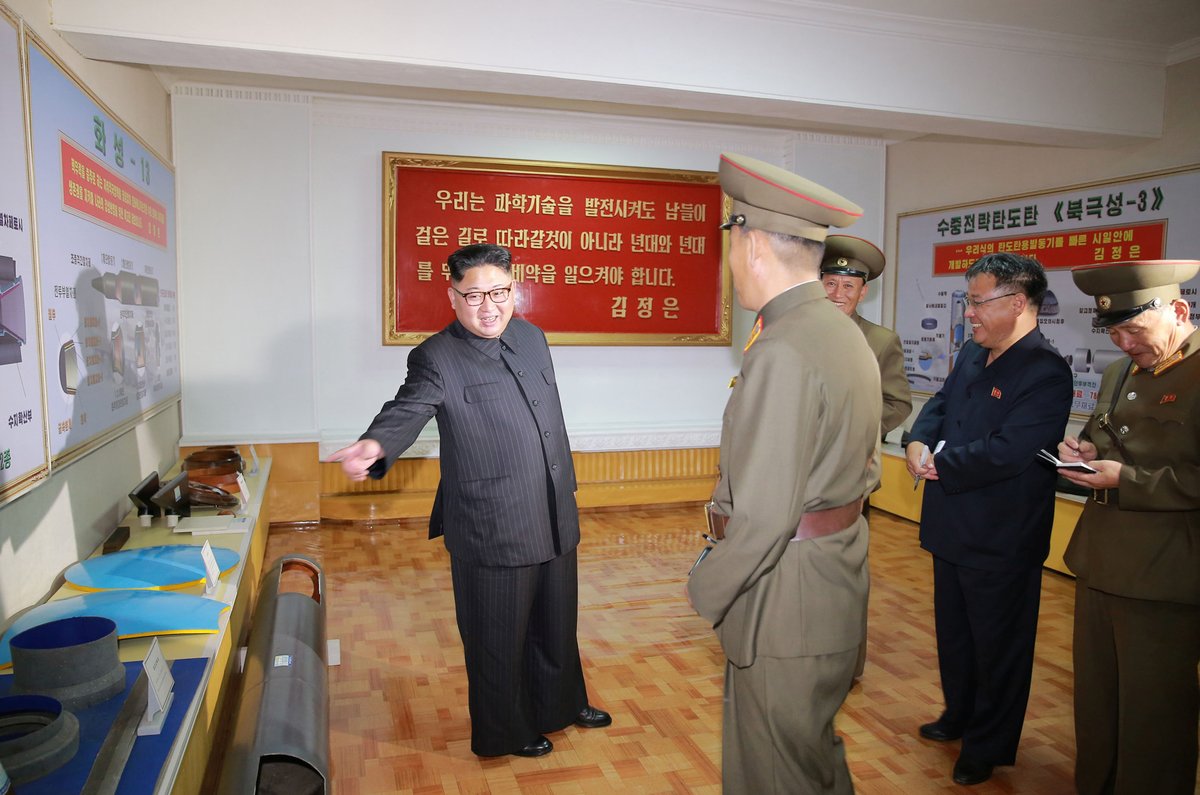
Hey, a quick addendum. That podcast, even though we broke it into two parts, it's not long enough. We got Joe back. Joe, you're back because we had a visit from Kim Jong-un.
Joseph Dempsey
0:15
We did. This time he went to a chemical material institute and he showed us some interesting stuff.
Jeffrey
0:21
Yeah, Dave Schmerler geolocated it. It's near Hamhung, which is near the solid fuel test site, and probably near the place where they make the solid fuel, although Scott, I assume, is going to be working on geolocating that. But we saw lots of interesting things. If Kim Jong Un would just get the hell out of the way.
Joseph
0:40
We did, yes. It's kind of a plethora of new technology they're trying to show off.
Jeffrey
0:45
Yeah, so I thought we would just come back and we would just spend maybe 10 minutes talking about the visit because we have this very large podcast, which we have now done, about North Korea's solid fuel missile program. And we got some really intriguing hints. And I guess the first thing I observe is there was a map.
There was a map, yes.
Joseph
1:05
Yes, there's a map of a complex, which we haven't been able to locate. It appears to be a... Something that's not yet built or finished yet, related to Institute. But again, we don't know where.
Jeffrey
1:20
But I mean, it does seem like this is further evidence that the North Koreans are going to keep investing in the solid-fueled missile program. So while we're all focused on Hwasong-12 and 14, there's a whole new generation of really interesting Hwasongs. Well, I guess they're not Hwasongs, are they?
Joseph
1:36
Well, the Bukhansons are not Hwasongs, certainly. Again, we don't know and say no what that... The map of this new place or modified place actually produces. So the Institute does do a range of stuff and they showed us a range of different stuff. So we can't necessarily say that that new modification or new building work is related specifically to the solid fuel program.
Jeffrey
1:57
Yeah, because we actually saw a lot of different posters and exhibits. So it isn't just simply, you know, one new missile or this or that. It's kind of a range of things. I mean, I guess the most interesting thing to me was the solid fuel motor casing.
Joseph
2:12
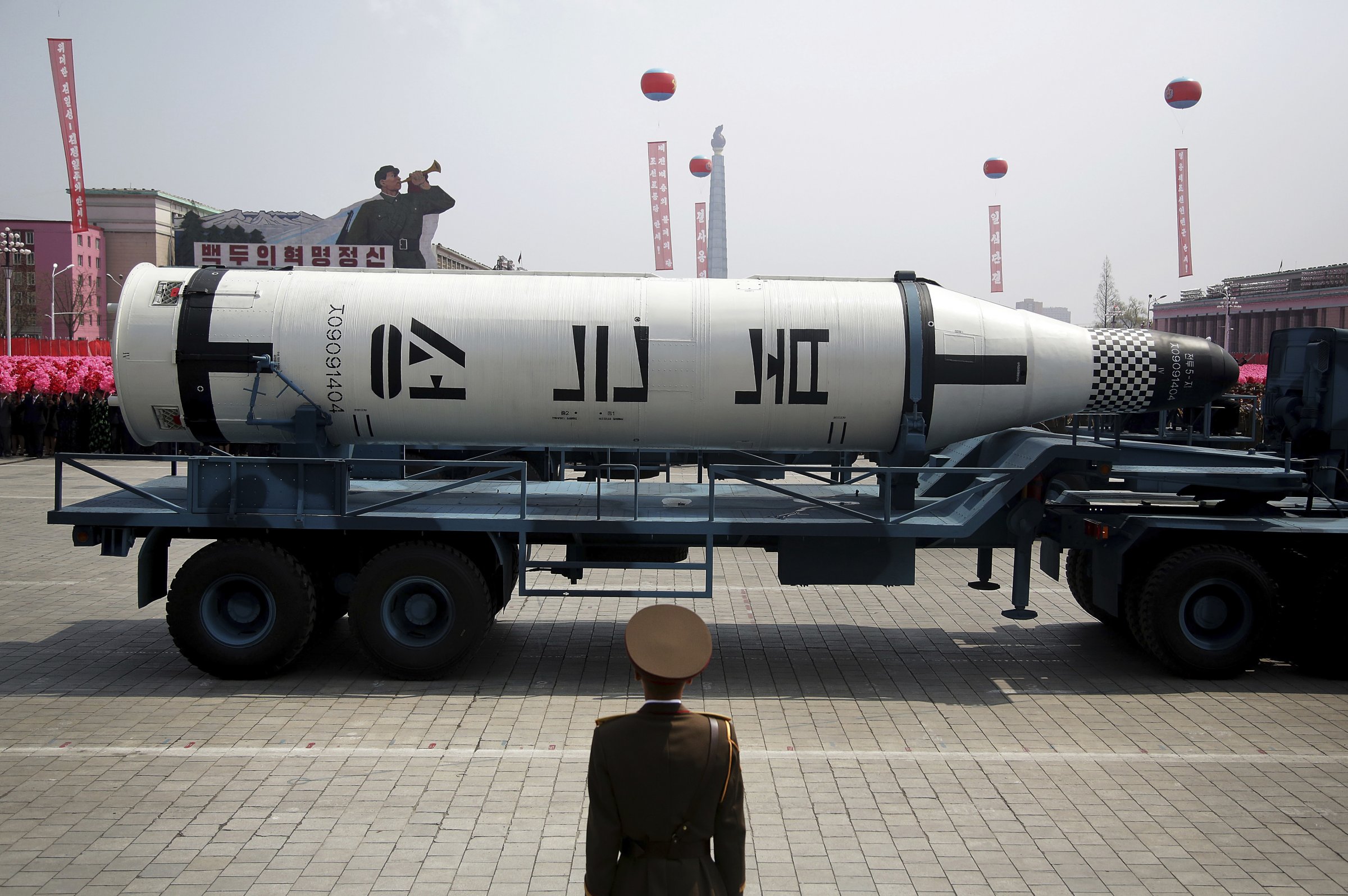
Yes. So what they appear to show is a composite motor casing. And we talked a little bit about the wound filament casing from the parade last time. This is the first time we've kind of seen it properly. So we don't necessarily say, no, this is from Pucasson 1 or 2 or a different new system, but the sizing about 1.5 meters in diameters is probably consistent with it.
Jeffrey
2:33
Yeah, and I think the thing here is that this is for listeners who aren't in love with the ins and outs of rocket technology, you know, One of the things that limits the range and throw weight of North Korean missiles is the weight that's lost to the casing or the airframe. And so moving from metal alloys to these kinds of wound filaments is going to be a huge weight reduction.
And so that is weight that's freed up to go into payload or, you know, other fun stuff.
Joseph
3:13
And we talked, I think, A little bit last time about, you know, what the range requirements are of, say, the Bucherson 1, because the switch to solid fuel would have reduced the range if we hadn't changed anything else about the airframe. So the use of this kind of composite casing could offset that and increase the range.
Jeffrey
3:34
Yeah. And, you know, consistent with that, some interesting things we saw in the posters.
Joseph
3:40
Yes. So I think the most relevant to this podcast is probably looking at the we see part of the post. He said someone was conveniently signing in front of it, but we see a poster which appears to be book us on free.
Jeffrey
3:54
Yeah. We had a big discussion in the podcast about whether the thing that was sitting on the docket shinpo, whether that was a three or a song still not sure what that thing was, but ain't no doubt. There's a poster saying that we should be ready for a book of song three.
Joseph
4:10
Yeah, and I think before we even talk about what was on that poster, I think, you know, I assess that poster as very much for Kim's benefit. I don't know if that poster would have been there last week. So I'm wondering how much of a real thing this is. Is this just a paper design? Is it a paper missile?
Have they actually started producing it? Have they actually completed producing it and are now into the developing stage?
Jeffrey
4:39
Yeah, it's a really interesting question. I think one thing you had noticed, I won't steal your thunder, it's only two stages.
Joseph
4:48
Yes, it's only two stages, as we assessed it on one and two was. Again, there could be an issue about sizing, as we talked about for SLBM stuff. SLBM, you need a compact system. So a three-stage SLBM, whilst they do exist, They are, generally speaking, on larger SSBNs, nuclear-powered submarines. So fitting onto a Goree-class vessel or a successor class, you still need to have a relatively compact design.
So I wouldn't expect a third stage.
Jeffrey
5:22
Although, you know, I mean, the thing that I find interesting about that is that then tells us something about the North Korean intention for improvement. I mean, it's one thing to just make things bigger and keep stacking, right? But it's another thing... To move on to new generations of missiles that are physically the same size, but significantly more capable, right?
So it's a, at least to me, it's a hint that the North Koreans are looking at design innovations like wound filament casings or, you know, other things that may be coming, maybe better solid fuels.
Joseph
5:55
Yes. I mean, whilst a major milestone for them is the development of the ICBM system, they've developed a plethora of Of shorter-range systems for more regional context, then inevitably they will improve upon those.
Jeffrey
6:10
Not the only poster we saw.
Joseph
6:12
It's not. No, we saw a multitude of posters, actually. But the other poster I think you're probably talking about is Hwasong-13.
Jeffrey
6:20
Yeah, I mean, there are a lot of posters, a lot of North Korean guys standing in front of posters, which is really aggravating when we're trying to have things translated. But yeah, it's the Hwasong-13 poster, which I think there's a big debate about. And I think some people thought that this was a solid-fueled variant of the Hwasong-13.
I am not convinced of that. It's ambiguous, but you had thoughts.
Joseph
6:46
Well, I think... It's a tricky one to know what that poster represents, what that design represents. The key thing is that if you forget about the posters and just showed what they talked about at the Institute, there's various different elements and components of advanced missile systems. So they showed us the composite casings, they showed us heat-resistant nose cones, and they showed us solid fuels.
So assuming that Which one of those relates to the posters or if any of those actually relates to posters may could be a bit of a jump.
Jeffrey
7:24
Yeah, that's what I was thinking is that, you know, the. You know, this is the Chemical Material Institute, and so this is an institute that makes unusual materials for the missile program. And so it's not surprising that you would see a wound filament airframe, that you'd see a nose tip. From a reentry vehicle or that you would see the nozzles from various missiles.
And so on that poster, you know, it looked to me like they were calling out the interstage sections.
Joseph
8:00
Yes. Yeah. When you look at the kind of the blown up elements of that, it's focused very much on the interstage sections and the motors as well. And I mean, as I said, there's a lot of stuff we see at this institute. There's parts of missiles on tables, or assume missiles on tables, which I haven't been able to identify where they're from or what they are.
So it's hard to say. And I think one thing as well about when we look at these posters, we may want to take them with a slight pinch of salt. And there's one poster, for example, which I think talks about the nose cone of a system where you actually see in the Kind of a watermark on it, which is the Chinese J 10 fighter.
So you kind of put it into context a little bit and just, just how seriously you should take this.
Jeffrey
8:46
Yeah. Well, I do think that there's a certain aspirational quality to a lot of this stuff. So it is a little bit hard to know for sure. What we're looking at, you know, the reason that I hesitate on the cam 13 is if you look at the bottom of the illustration It still shows two nozzles, which is the same configuration as the old KN-08.
Jeffrey
9:15
Which is not... I mean, it's not impossible to imagine that you might try to direct the thrust through different nozzles for a solid-fueled missile, but it...
Joseph
9:22
There's also quite... It would be a big step up to create a solid motor for an ICBM.
Jeffrey
9:31
It would. It would be... I mean, you know... It's always the danger we run into, like there's a first time for everything. And so, you know, that's going to happen eventually. We don't want to be surprised when it does happen, but I would be surprised if it happened tomorrow. But I'm going to say Scott actually wrote a really nice article for NK News in which he looked at the timeline between countries going from medium-sized solid-fueled motors to ICBMs.
And while in a lot of cases it took a long time, I think the thing he observed is with each successive country, that time has compressed and gotten shorter. So I don't know. I'm putting this in the category of something that's years off, not months off, but not forever.
Joseph
10:17
I think also another interesting challenge with that is that if they can produce a motor, can they also produce the – The composite casing for it as well. So we saw what appears to be a filament-wounding machine. So whether it can produce more than the 1.5 diameter is an interesting question. And also a challenge for listeners would be, has anyone actually tried to identify that machine yet?
Jeffrey
10:39
Ooh, an open-source challenge. Yeah, I mean, we live in this era where there's so much stuff, there just isn't enough time for us to do everything. Yeah. Yeah. Well, we'll issue that challenge. See if you can find who produced that filament winding machine. Well, and the last thing, I guess, is to note that, yes, there was our favorite nose cone or nose tip.
Joseph
11:03
Yes, the one that we saw, I think, for lack of a term, blasted by an engine nozzle in a ground test.
Jeffrey
11:12
Yeah, they have fun over there.
Joseph
11:15
They do, and I think I think you mentioned this previously on Twitter, Jeffrey, that actually how do you test a nose cone? And that's exactly what the Soviets did as well until they realized that that's – I think maybe sometimes they actually give the testing process for a nose cone that's heat-resistant because survivor entry is maybe actually harder than it is.
Jeffrey
11:37
Yeah, it's hard to know, right?
Joseph
11:39
It is. And I actually came across some great imagery of the Soviets' SLBM program. I presume around the 60 time, I think around about the R-27 development stage, where you literally saw exactly the same thing that North Korea did to test.
Jeffrey
11:55
Oh, yeah. You know, actually, one of the interactions I had that was pretty funny is the minute the North Koreans did that test, people said, well, that's not really how you do that test. And I found a report that From a U.S. test that was exactly the same, or at least approximately the same, using a liquid-fueled engine in order to light up to do an experiment.
And so then I showed this report, right? And the person who said, that's not the way you're doing it, then said, I can't believe that's unclassified. So... Yeah, I mean, people do do it. I mean, I do think there are some questions about how effective that is in terms of simulating that reentry environment. But, you know, at least they're moving along.
So I don't know. I thought it was a very interesting visit. I mean, it struck me that, you know, about these visits... Their victory laps. And so usually the people who've been working on these things are getting rewarded. And the North Koreans are choosing to, I mean, they're choosing to reveal the existence of the Institute, right? And by doing this, they always burn its location.
And so I think actually it's not purely a, it's not purely showing off. I mean, I think that there's probably a domestic component to it. I don't know. What did you make of the visit?
Joseph
13:31
I think it's very much a showcase of new missile technology. I think, yes, they showed us the location. I think it's the location we already knew. The stuff they showed doesn't necessarily be produced there. I think it's been brought together, shall we say, for Kim's benefit. I also wondered the various different elements we see, and particularly on the motor casing in reference to Pucasson III, is where they actually are with that.
Is it aspirational? Are they starting producing it? And I think going back to our earlier podcast is, have they started testing elements of it? What are they testing at Simpo?
Jeffrey
14:07
So we got to talk about the Golf Class and Site B. Yes. Okay, let's talk about the Golf Class submarine.
Joseph
14:16
So if we go back to the early origins of the SLBM program or concerns about the SLBM program, because I think there's been international concern that this would be a route that North Korea would go. But as I said, it's only been the last few years we've actually seen visible evidence of that progression, and it's maturing. And one of the elements that was concerned was the access to the R-27 in the early 90s, the Soviet SLBM system, but also the access to a Gulf II, which is, again, a Soviet SSB, so a conventional-powered ballistic missile submarine.
And they... In the early 90s, they acquired a number of these, I think quite a small number, amongst other submarines, which was notably for scrap from the Soviet Union.
Jeffrey
15:03
Which, yeah, they had purchased them for scrap, right?
Joseph
15:06
Yeah, the argument was that they were not operational and they could be scrapped. And it was part of a purchase of, I think, other SSKs, other conventionally powered submarines. And obviously there was a lot of concern about this. I think Japan particularly had concern about this. And an interesting little reference to this is The Gulf II was the same basic design that China used as part of its SLBM development program.
I think we talked about that earlier in the pod, or one of the pods. Yes. I forget which one now. So there was nothing to be concerned about that. And yes, there was assurances given that it wouldn't be supplied with missiles, the ejection system would be removed. But I think there was always concern about what technology they could have gathered From what was left now, a lot of people, when we start to see the the Gore class, where you're making assumptions or statements and jumping, saying it's a Golf Two, obviously it's not a Golf Two. Looks nothing really like a Golf Two. It's an indigenous design. It's a smaller design. granted that they they both contain the launch tubes in the sail, but when you're having a submarine, an SSB submarine that size, that's the only logical place to put it. So it's more of a
The nature of the requirements rather than the copying of design. But one other key thing is that despite the early origins, we've seen divergent developments. For example, The Gulf II class submarine will utilize a completely different SLBM system. It also has a hot launch ejection system. And, you know, we haven't seen that with the Pucasson 1, which is a cold launch system as well.
It's just literally incompatible. So whilst they may have gathered something from whatever kind of ejection system existed or remnants of that, it hasn't taken them quite as far as maybe some people had suggested in the past.
Jeffrey
17:05
Yeah. Well, I mean, that whole story to me is just fascinating. Actually, David Sanger wrote it back when he was stationed in Tokyo because it was mostly it was mostly Foxtrot submarines. Right. But there was some golf class mixed in and it was a Japanese company that was it was a Japanese company that was selling them for scrap.
And at the time, it was a total mystery because you really couldn't buy them for parts because they didn't match the North Korean submarines.
Joseph
17:36
No, no. It's really, really a mystery. Yeah, I'm not entirely sure. And the thing is, I mean, this was in the 90s. The access to information, the access to open source stuff wasn't as good as it is now. I mean, one thing when the story came out in the Gulfs, I revisited the Gulf a few years ago and said, you know, is there any evidence that Where they were scrapped, is there any evidence they actually kept one intact to reverse engineer?
And I couldn't see anything in terms of open source to suggest they had. Again, we don't know what happened, what they gained from that, what they could have reverse engineered or utilized. But I think, you know, in terms of the actual design of the Gore, externally, it's a very different design and a very indigenous design.
Jeffrey
18:22
Do you want to talk about Site B?
Joseph
18:23
There is one more thing on the Gulf class. Just to mention that there were a number of Gulf classes modified for test beds and whatnot. And I think as far as I'm aware, there was only one Gulf submarine that was modified to launch an R-27 variant. Again, we don't know the specific vessels that came into North Korean possession.
Jeffrey
18:47
Yeah, it's also strange. I mean, it's 23 years ago, which is it's amazing how time flies. You know, we the point being that if the North Koreans were thinking about this, you know, it's I think often we have this idea that, you know, they would have imported something. But, you know, if you import something and then 23 years later, something similar appears.
I mean, I would. I would imagine that it's either a coincidence or the interest was really exploratory, like figuring out how these things work and going down the road of making intelligent technical choices.
Joseph
19:23
I think that's true, Geoffrey, but I think we also have to look at, see if we can make a comparison. So the R-27 engine, which is the 4D10, I think we believe they had access to that or suspected access to that to a degree around the same time in the early 90s. And it wasn't really... Until the last few years, we've actually seen that being used with the Musudan test, with the SLBM tests.
Jeffrey
19:47
That's true. I mean, it is this bizarre case where the designers get picked up in the 90s, and then the US intelligence community thinks the system goes into the field in the 2000s, and then they don't test it for a decade, which is just a bizarre decision, I have to confess.
Joseph
20:02
And also, if you look at the SAM system, what we know as KN-06, that's been going a long time as well.
Jeffrey
20:10
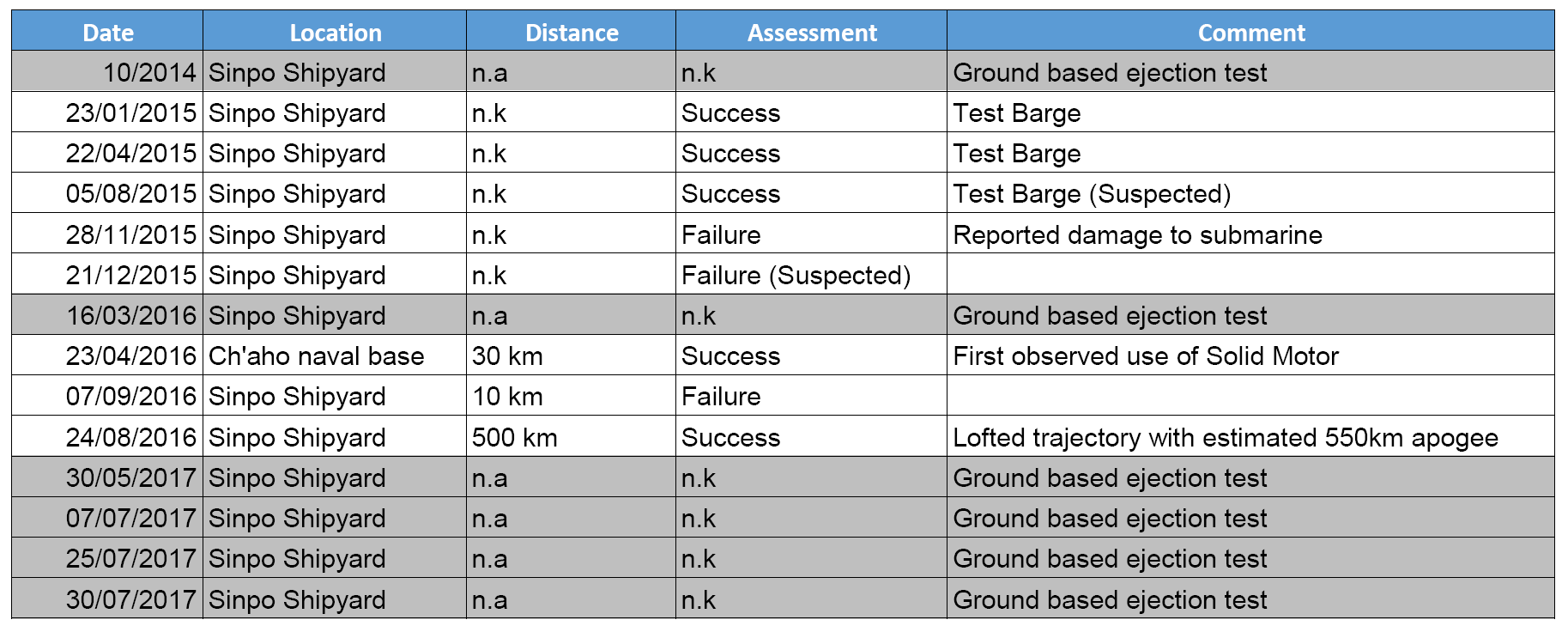
North Korea has done the ejection testing for its submarine-launched ballistic missiles at a site near Shinpo, which is the major shipyard on North Korea's east coast. But if you go further out onto this peninsula, past where the ejection test stand is, there is some very
Joseph
20:39
Curious construction occurring because it's really far away from the rest of the shipyard. Yeah, I I refer to it as Site B just for my own purposes, and it's something I've been looking at for actually quite a number of years. I was never sure exactly what it was. and I think it's only recently, in the last year or so, maybe coming to public eye a bit more, and people have written about it.
Unfortunately, I think the first person who read about it probably got it wrong. So we see at the end of the peninsula, it's kind of a hill that sticks out, a rocky cliff face that sticks out. And what we saw, I can't remember exactly the time frame of this, but, you know, several years ago, they basically dug into a hill on the coast.
And my first thought when I first saw it was, you know, is it a submarine tunnel? Is it a submarine pen? And they have built submarine tunnels elsewhere on other submarine bases. And, you know, using the hillside, it's natural protection if you build over it again. But then what we saw is what appears to be an assembly hall.
Very much kind of what was going on already at the Simpoe main site. Maybe not the same size, but we also saw the slipway being made identically to the revised slipway at Simpo. So it appears to be an assembly complex rather than necessarily a submarine pen. And that's quite curious because it's a lot of effort to go to to make an assembly hall.
It's a weird place to do it because you think you may have capacity on the main site and it's just why you... There's a lot of effort to make To dig into a whole hillside.
Jeffrey
22:26
And it's not well served by roads and not likely to be well served by roads. I mean, yeah, it's very strange.
Joseph
22:35
I mean, they've built access to it, obviously. And you could deliver stuff. There is obviously a quayside as well around it. So you could deliver stuff by barge potentially. But it's a curious thing. And I guess why would you build an assembly hall into a cliff? And the only reason I can get to build into cliffside is some elements of natural protection, particularly if they build over it.
So at least on three sides, it's protected and from above. Unfortunately, the front of it, where the submarine would come out and you'd presume you have large doors, faces out into the, largely out towards the Sea of Japan, which is ironically where any kind of probable attack would come from.
Jeffrey
23:16
Yeah, it's such a strange and curious decision. I'm really staring at it. You know, I had this idea, which I fully accept is wrong. I'm not pushing it. But it looked to me like it was the – it's sort of the same size as the Egyptian solid fuel test stand out in the desert. But, you know, we know where they have the solid fuel test stand.
That's in some other place. Yeah. You would have all the same problems of accessing it. So, yeah, I think you're right. I think it's for building submarines. I just think it's such a weird place to put it.
Joseph
23:55
It is. So I think, well, I think the first thing is, regardless of why they've done it there, is it shows more evidence of capacity building at the Simpo site so that they can produce more submarines. And whether those are SSB designs remains to be seen. But, you know, I think you're probably going to see something beyond Gorey.
Jeffrey
24:14
Yeah, I think that's probably the case.
Joseph
24:18
I think also there may be a tendency to, you know, have big aspirational designs rather than, say, practical designs. So, you know, we've seen, I know, hillsides, I don't want to say bomb villain-esque, but, you know, historically we've seen North Korea go into hillsides for runways and stuff like this. So, It may be an old school thinking that, you know, building the hillside, it's protected.
Jeffrey
24:45
Yeah, it is definitely possible that this is just something that they do.
Jeffrey
24:51
You know, that they just don't even. It's it. I mean, studying the Chinese nuclear program, you saw this, right? There was just a period where it was like, oh, get a new facility. Better put it underground. Like, well, that's really inefficient. Like, well, but they go underground. Like, that's what you do. And it was just a pattern for a really long time.
Ah, so very, very interesting. So I think we're going to get all three episodes out without some new horrible thing occurring.
Joseph
25:24
I think that depends how quickly Scott can work. He's done a very good job so far.
Jeffrey
25:32
Thank you for coming back yet again.
Joseph
25:35
You've been very welcome. It's nice to tie it up a little bit more and update.
Jeffrey
25:41
I'll let Scott say a few words about how things are going over on ye old Slack channel. Ye old Slack channel is great as always. And listeners can be a part of our very large community. Now we've got over 350 members closing in at 400. We've already got over 400 patrons closing in on 400 Slack channel members.
It's getting It's getting so big that I'm worried we're going to have to raise prices so that I can better manage community size. But for $3 a month if you are a student and $5 a month if you are not, you too can be part of our community of excited arms control wonks. It's a great place to be right now.
And thank you for listening.