Collections

How arms control was invented

From the bomber gap to Reykjavik: the people, bargains and blunders behind the first nuclear treaties, mostly told by Michael Krepon.

Article

The Bomber Gap

There is a long history of deceptive practices and bogus military displays designed to project greater firepower than is actually available. In my military dictionary, this is known as creative deterrence, or deterrence on the cheap. A classic case in…

Article

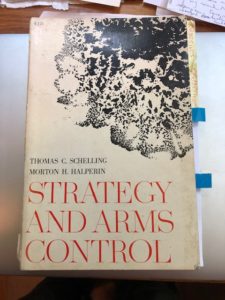
Defining Arms Control

Thomas Schelling and Morton Halperin provided the most widely used definition of arms control in their seminal book, Strategy and Arms Control (1961): We believe that arms control is a promising, but still only dimly perceived, enlargement on the scope…

Article

The First Conversation

Go figure: The very first conversation between Washington and Moscow on the relationship between strategic offense and missile defense took place at Glassboro, New Jersey. Soviet Premier Alexey Kosygin was visiting the United States in June 1967, and President Lyndon…

Article

Action, Reaction

The best definition of the “action-reaction” syndrome was provided by Secretary of Defense Robert McNamara during a deeply conflicted speech before United Press International editors and publishers on September 18, 1967. McNamara used this occasion to rail against the nuclear…

Article

Nixon, Kissinger, and SALT

Reading 1,000 pages of memoranda, meeting notes, and transcripts of conversations about SALT I in Volume XXXII of Foreign Relations of the United States prompts many unsettling questions, beginning with the competence of President Richard Nixon and National Security Adviser…

Article

The Jackson Amendment

Sen. Henry M. “Scoop” Jackson was a tenacious, well-informed, defense-minded Democrat who played a central role in arms control debates during the 1960s and 1970s. He was a reliable vote for progressive domestic causes, and a deep skeptic of détente…

Article

Why MIRV?

The Stimson Center will publish a collection of five essays in May titled, The Lure and Pitfalls of MIRVs: From the First to the Second Nuclear Age. Our authors look back at US and Soviet compulsions, and forward to how…

Article

The Turn

In late 1983, well before Mikhail Gorbachev’s elevation as General Secretary of the Communist Party, the Reagan administration switched gears in dealing with the Soviet Union, moving from a policy of confrontation to the alleviation of the Politburo’s deep anxieties.…

Article

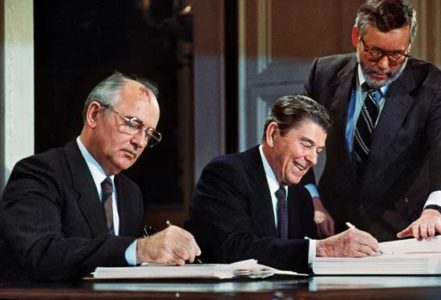
Reykjavik

Twenty-five years ago, the world’s highest-stakes poker game was played in Reykjavik. This characterization comes from a man with a pretty good poker face, George Shultz, who was the US Secretary of State at the time. Secretary Shultz appeared to…

Article

SDI RIP

The thirtieth anniversary of President Ronald Reagan’s surprise roll-out of the Strategic Defense Initiative has been duly noted within narrow circles. The section of my shoe box files devoted to SDI is thick and inviting. The 4 X 6 card…

Article

Which President Was Best for Arms Control?

Quote of the week: “Success is where preparation and opportunity meet.” — Bobby Unser When it comes to arms control, presidents are hamstrung or empowered by historical context. It also helps to be a Republican because Republican presidents have far…

Article

The Golden Age of Nuclear Arms Control

Quote of the week: “The fear of the bomb is not the beginning of wisdom. Fearful men have a kind of foresight, but in their partial view of the future all signs point to a foregone conclusion. How else could…