

This guest post is by Jim Lamson.
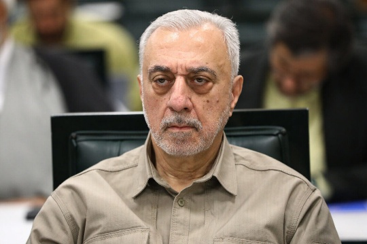
Last month, Iran named its new defense minister, Mehrdad Akhlaghi-Ketabchi, to replace the interim minister, Majid Ebn al-Reza, and succeed the former defense minister, Aziz Nasirzadeh, who was killed in February 2026 by Israeli air attacks. Iranian defense ministers have been either senior officials of the Islamic Revolutionary Guard Corps (IRGC) or Artesh (Regular Military), or have been Defense Ministry technocrats—Akhlaghi is an example of the latter, with 42 years of experience in Iran’s aerospace and defense industries.
Recent Iranian and Western reports have highlighted Akhlaghi’s past positions and experience in Iran’s aerospace and defense industries, including his role in Iran’s advancing Iran’s ballistic missile capabilities. For instance, these sources have noted that Akhlaghi was director of the Shahid Bakeri Industries Group (SBIG)—which runs the Defense Ministry’s solid-propellant ballistic missile programs—and the Aerospace Industries Organization (AIO), which oversees SBIG and all of the ministry’s missile programs. More recently, Akhlaghi headed the Defense Ministry’s Defense Industries Organization (DIO), which develops and produces a wide range of conventional weapons, munitions, equipment, and technologies. The Wall Street Journal even referred to Akhlaghi as “one of the fathers of the country’s ballistic missile program.” One Iranian press report noted his close ties to the late IRGC missile official and “father” of Iran’s ballistic missile efforts, Hassan Tehrani Moghadam, and also to Amir Ali Hajizadeh, the late commander of the IRGC Aerospace Force. Another Iranian press report stated that Akhlaghi is one of the key architects of Iran’s aerospace industry, and an Iranian Majles (parliament) member noted that Akhlaghi has been “hands-on” in Iran’s missile industry, with his hands in the “mixing pot” of missile programs. For 20 years, Akhlaghi has been identified by Western governments as an important figure in Iran’s aerospace and defense industries, and has been sanctioned by the United Nations, the United States, the United Kingdom, the European Union, and other Western countries.
Although these reports provide a useful general view of Akhlaghi, they only scratch the surface of Akhlaghi’s extensive role in the origins and evolution of Iran’s ballistic missile programs and industries. Other sources, especially the three-volume book Eternal Man (mard-e abadi)—based on extensive interviews with Iranian missile and military officials—as well as other Persian-language information provide many other important datapoints about Akhlaghi’s missile background and experience. (The author of Eternal Man, who interviewed Akhlaghi extensively, referred to Akhlaghi by the pseudonym “Mohammad Ali Ahmadi” throughout the book.) This information provides a valuable picture of how well-positioned Akhlaghi is to help Iran rebuild and improve its missile capabilities moving forward.
The following is a summary of Akhlaghi’s missile background and experience, based mainly on Eternal Man, but also on other Persian-language sources.
Akhlaghi’s Background
Akhlaghi was born in 1958 in Rasht and earned a bachelor’s degree in chemical engineering at the Amir Kabir University of Technology (Tehran Polytechnic) in 1984/1985. According to Eternal Man, he also obtained a master’s degree in electrical engineering (with a specialization in control) at the Ferdowsi University of Mashhad. Probably many years later, he obtained a master’s degree in strategic management from the Defense Ministry’s Malek Ashtar University of Technology. Although he did not serve in the IRGC military forces, Akhlaghi holds the rank of IRGC general, according to the National Council of Resistance of Iran (NCRI). (If true, this is likely due to his service in the IRGC Ministry and IRGC Self-Sufficiency Jahad Organization, as described below.)
Akhlaghi Starts Work on Scud B Ballistic Missile
According to Eternal Man, Akhlaghi first entered Iran’s missile industry in the mid-1980s by joining the IRGC Ministry’s project to reverse engineer the Scud B ballistic missile at the Shahid Hemmat Industries Group (SHIG). Akhlaghi worked for SHIG director Ali Ghiamtiun, guidance and control (G&C) official (and future SHIG director) Abbas Farivar, and Iran’s leading G&C expert, Mohammad Ali Masumnia. Akhlaghi became head of SHIG’s G&C group and worked with North Korea on the technology transfer of the Scud B guidance system to Iran. Later, Akhlaghi led SHIG’s Shahid Ghazi Project, whose aim was to improve the original Scud B guidance system.
(In the 1990s, Iran used the Shahid Ghazi guidance system in its domestically produced versions of the North Korean Scud B (Shahab-1), Scud C (Shahab-2), and No Dong (Shahab-3) missiles. Iran also used the Shahid Ghazi guidance system in its effort to develop an extended range version of the Tondar-69 (Chinese B610) ballistic missile, under the Zolfaghar-73 Project. Of note, in an undated visit to China, Akhlaghi and others were surprised at the similarity between the B610 and Shahid Ghazi guidance systems.)
Work on Zelzal Rockets
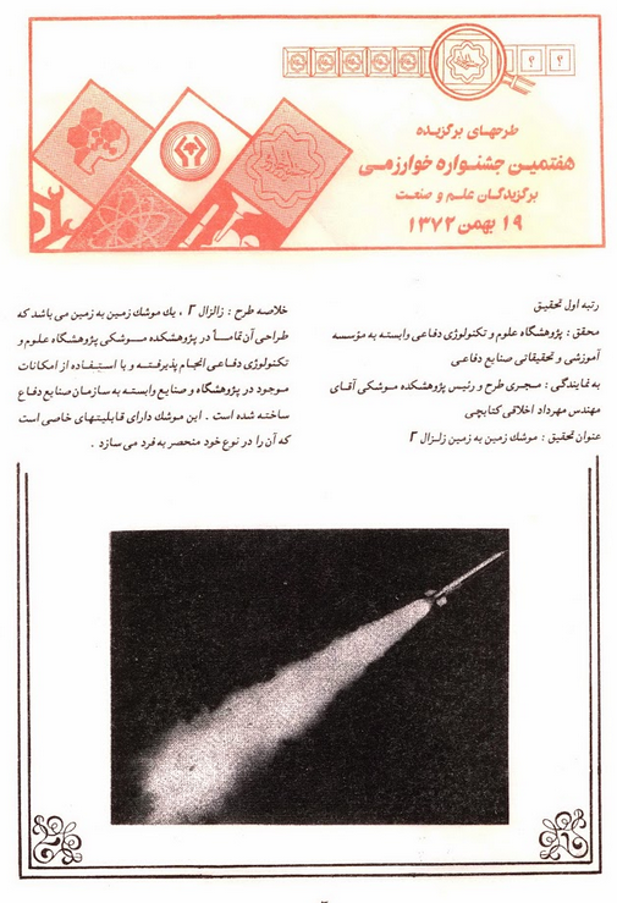
The timing is unclear, but at some point in the late 1980s or early 1990s, Akhlaghi switched from liquid-propellant missiles to solid-propellant rockets. According to Eternal Man and the diaries of former President Akbar Hashemi Rafsanjani, Akhlaghi directed the Zelzal-1 and Zelzal-2 rocket projects as an official of the Defense Industries Research and Development Group (RDG) of the Defense Industries Organization (DIO) and later as director of the Missile Research Center of the Defense Ministry’s Defense Science and Technology Research Center (DSTRC). (In 1989, the RDG became the DSTRC.)
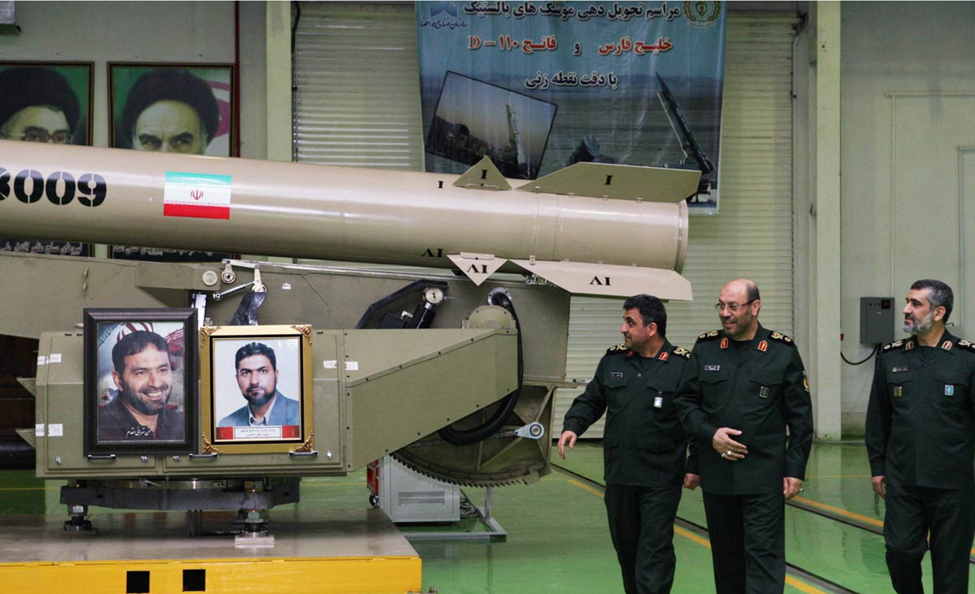
According to Iranian sources, the Zelzal was based on the wartime Sejjil rocket project run by the IRGC and directed by Asghar Eslami who later worked on the Zelzal. (During the Iran-Iraq War, Iran ran several programs to develop long-range rockets—such as the Sejjil, Oghab, Nazeat, and Mojteme—to create a retaliatory capability against Iraq’s air and missile attacks.) Eslami’s photo (see below) was displayed in 2014 alongside that of Tehrani Moghadam, showing his important role in establishing Iran’s solid-propellant missile industry. The Shahid Eslami Research Center—SBIG’s research and development entity—was probably named after Eslami.
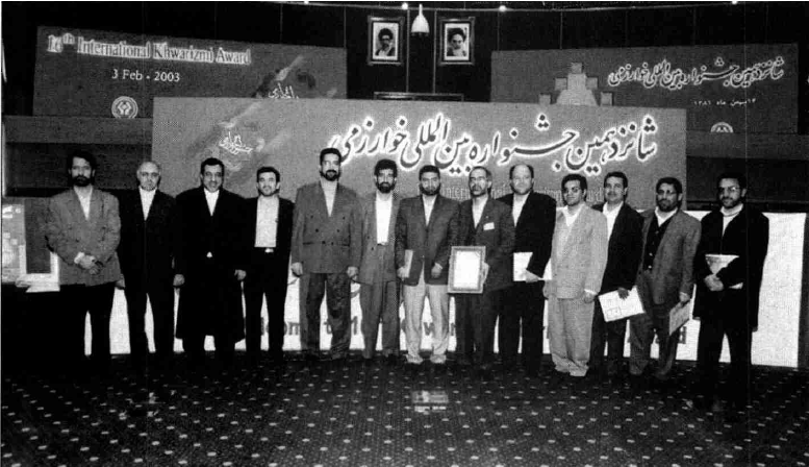
The Defense Ministry merged its two long-range rocket projects (Zelzal and Nazeat) into the Shahid Bakeri Industries Group (SBIG), which oversaw the Defense Ministry’s solid-propellant missile efforts. In 1994, Akhlaghi received a national Iranian scientific award (Kharazmi award) for his leadership of the Zelzal-2 rocket project.
Fateh-110 Missile, Khojir Infrastructure, Sejjil Missile, IRGC SSJO
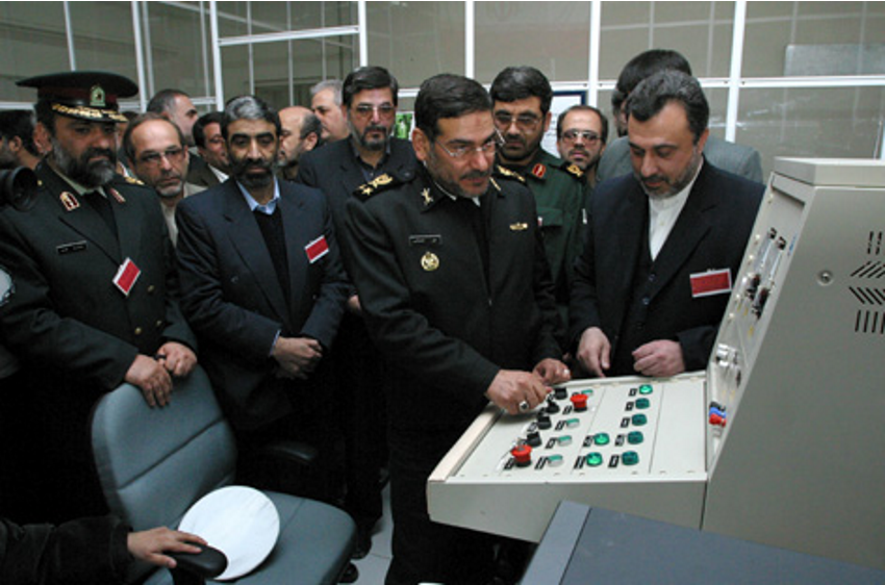
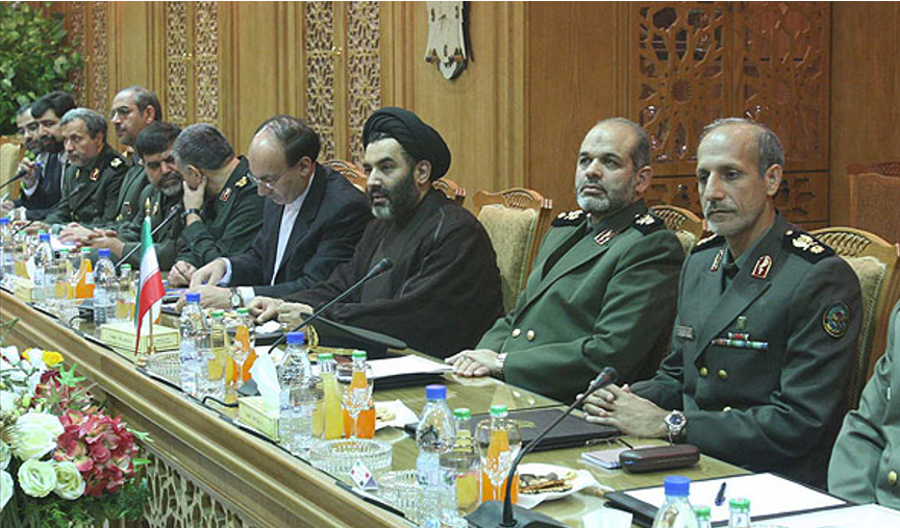
According to Eternal Man, during the 1990s and early 2000s, Akhlaghi moved to SBIG and shifted from unguided rockets to solid-propellant ballistic missiles. In an effort driven by IRGC missile official Hassan Tehrani Moghadam, Akhlaghi became both the project manager and industrial director of the Mersad Project at SBIG. The project’s aim was to develop Iran’s first solid-propellant ballistic missile, the Fateh-110, through the conversion of the unguided Zelzal-2 rocket into a guided missile by replacing its spin stabilization motor with a guidance system. According to Sayyed Majid Musavi—today’s commander of the IRGC Aerospace Force—Akhlaghi and his group conducted the design, research, and production of the Fateh-110 missile “from zero to 100.” As the project’s industrial director, Akhlaghi also oversaw the establishment of SBIG’s initial facilities at Khojir—a large missile R&D and production complex east of Tehran—to produce composite solid-propellant rocket motors and guidance systems, probably based in large part on Chinese assistance. This effort required about a hundred blasting operations to shape the terrain and clear away debris. Akhlaghi can be seen (see photo below) along with other important Iranian defense officials at the 2003 inauguration of SBIG’s facilities in Khojir for the production and testing of solid rocket motors. During this time, Akhlaghi became director of SBIG’s new Shahid Kharrazi Industries, which was created to produce guidance systems for SBIG missiles.
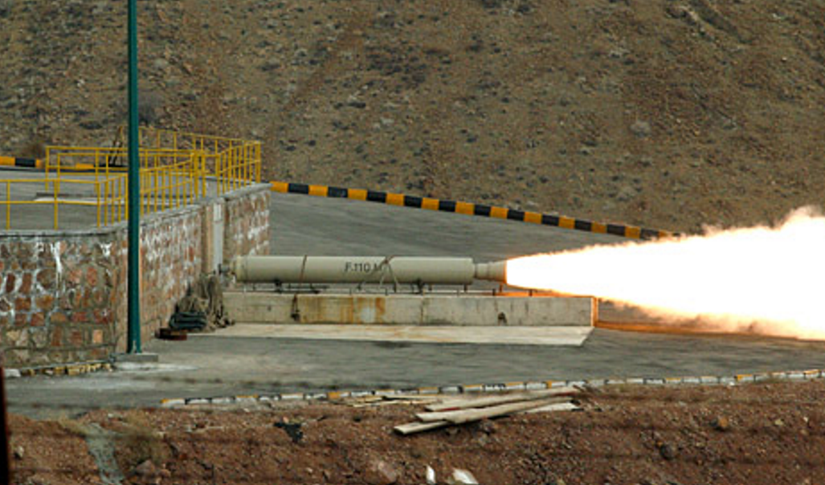
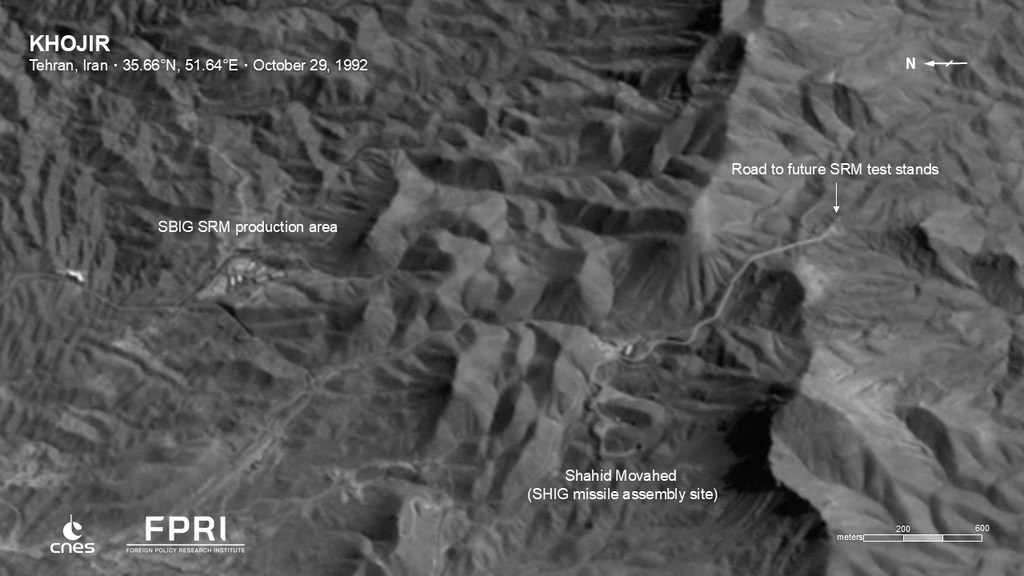
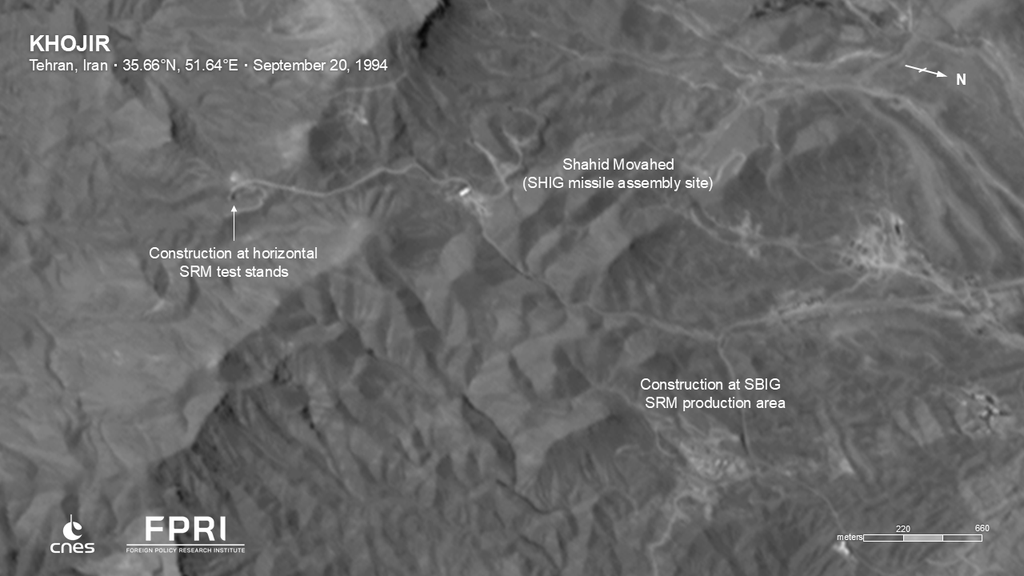
Consistent with Akhlaghi’s tenure noted above, SPOT imagery from the early 1990s to the mid-2000s shows the origins and construction of the SBIG facilities in Khojir for the production and testing of solid rocket motors. It also shows the construction of a missile assembly building and the Shahid Kharrazi Industries site for the production of guidance systems.
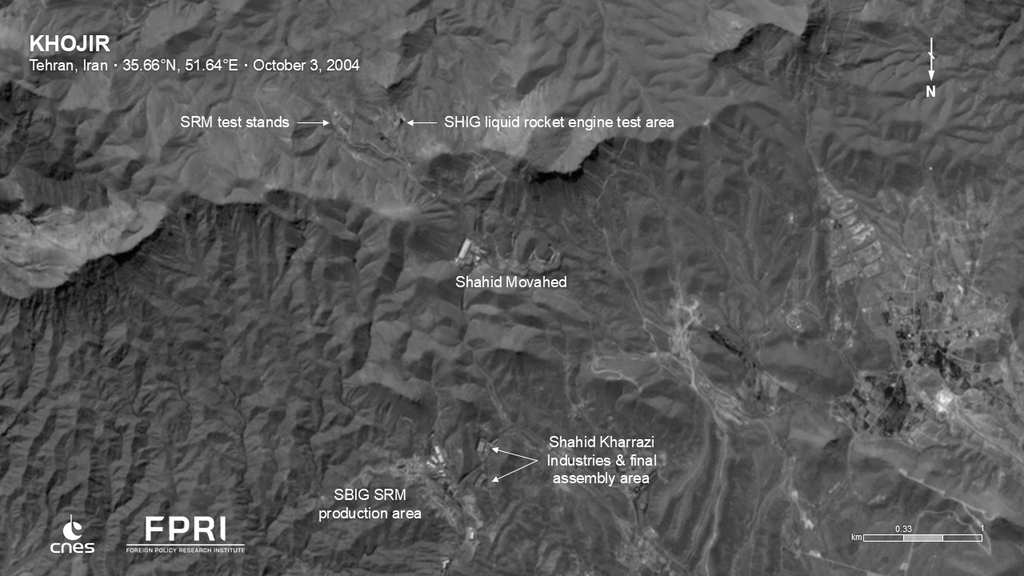
According to Eternal Man, during the mid-2000s, Akhlaghi, who was now the director of SBIG, oversaw the Ashura Project, which resulted in the Sejjil, Iran’s first solid-propellant medium-range ballistic missile (MRBM). SBIG conducted the first successful flight test of the Sejjil in 2008.
Thus, one might view Akhlaghi as the “father” of the Defense Ministry’s solid-propellant SRBM and MRBM programs—through his direct involvement in developing the Zelzal rocket, Fateh-110 SRBM, and Sejjil MRBM, his role in constructing SBIG’s initial development and production infrastructure at Khojir, and his leadership of SBIG and SBIG’s Shahid Kharrazi Industries.
Of note, as SBIG director—and as the previous head of development of the Zelzal rocket and Fateh-110 missile—Akhlaghi probably played a role in Iran’s reported assistance to Syria during the 1990s and 2000s to produce its own versions of the Zelzal and Fateh-110.
According to Eternal Man, sometime in the mid-to-late 2000s, Tehrani Moghadam tapped Akhlaghi to help him establish the IRGC’s parallel solid-propellant missile program under the IRGC Self-Sufficiency Jahad Organization (SSJO) located at the Shahid Modares Base west of Tehran. Akhlaghi supported the SSJO’s work on its Ghaem and Ghadir projects, including his role as a lead designer and his involvement in motor and flight testing. Akhlaghi also constructed a small G&C complex in a building in northern Tehran to support the SSJO’s work. It is unclear if Akhlaghi did this while still working at SBIG, or whether he departed SBIG to work full-time for the IRGC SSJO. In any case, this role highlights the close relationship between Akhlaghi and Tehrani Moghadam, who called him “Dear Mehrdad” (Mehrdad-jun) and referred to him as the best missile designer in the Islamic world.
After the death of Tehrani Moghadam and dozens of other SSJO personnel in 2011 in a massive explosion at the Shahid Modares Base, Akhlaghi was named as the director of the IRGC SSJO, and planned to continue the IRGC’s work on the Ghaem project, according to Eternal Man. (Days after Tehrani Moghadam’s death, then-IRGC commander Mohammad Ali Jafari appointed an unnamed “brother” as the new head of the SSJO—we now know this was Akhlaghi.) It is unclear, however, how long he held that position (possibly until 2014—see below), and it appears that he never returned to the SSJO.
During his time with the IRGC SSJO, Akhlaghi applied his ideas about outsourcing. According to Eternal Man, Akhlaghi briefed Supreme Leader Ali Khamenei about the SSJO’s use of outsourcing and “factoryless production” (tolid bedun-e karkhaneh) in the Ghaem project. Akhlaghi explained how during his 20 years in the Defense Ministry, the traditional approach was to locate all critical activities at a single complex. (It is worth noting that this was the approach by both SHIG and SBIG in their construction of the massive Khojir complex.) According to Akhlaghi, the IRGC SSJO relied on suppliers across the country to support its work, which was less costly and less vulnerable to potential U.S. air attacks. Elsewhere, Akhlaghi noted his support for the related approach of creating “small centers” (hasteh-ha-ye kuchek) and “large networks” (shabakeh-ha-ye bozorg) as a model of weapons programs and defense industries.
Of note, the Defense Ministry since the late 2000s has emphasized the approach—perhaps in part due to Akhlaghi’s influence—of small centers and large networks. (Iranian officials have also referred to this approach as “small knowledgeable centers” and “large capable networks” or simply as “core and network.”). In this model, the “centers”—that is, the core organizations such as the AIO—develop and produce weapon systems and then outsource the supply of key inputs to the “networks” of Iranian industries, research centers, universities, and knowledge-based companies. This outsourcing allows the core organizations to focus on the most critical and sensitive work, expands Iran’s domestic supplier base, and also disperses the industry to prevent its easy destruction from enemy attack. To operationalize this framework, the Defense Ministry established a center called “SAMTA” to oversee what it calls the “network of collaborators” (shabakeh-ye hamkaran), and to identify and license thousands of Iranian companies to supply the required components, materials, and equipment to weapons programs.
AIO Director
In 2014, Akhlaghi was appointed as the director of the Defense Ministry’s Aerospace Industries Organization (AIO), where he now oversaw all AIO ballistic missile programs as well as its cruise missile and other missile and rocket programs. During his tenure as director, the AIO’s SHIG and SBIG significantly expanded their development and production of liquid- and solid-propellant ballistic missiles—both short- and medium-range—including new families of systems derived from the Fateh-110 whose development he led more than a decade earlier. Also, SBIG expanded its facilities at Khojir to develop and produce solid-propellant ballistic missiles.
DIO Director
By 2020, Akhlaghi became director of the Defense Ministry’s Defense Industries Organization (DIO), a sister organization to the AIO and the producer of a range of conventional weapons, munitions, equipment, and technologies. Importantly, the DIO’s Chemical Industries Group supplies important inputs to the AIO’s ballistic missile programs, including solid propellant ingredients used in solid rocket motors and explosives used in warheads. Also, in 2021, the DIO inaugurated a solid rocket motor production facility in its Parchin complex that probably supplies motors to SBIG for its solid-propellant ballistic missile programs. It is possible that Akhlaghi—a longtime proponent of outsourcing—had a major role in establishing that facility as director of the AIO and DIO.
Rough Timeline of Akhlaghi’s Positions
- 1980s: IRGC Ministry: Shahid Hemmat Industries Group
- 1990s: Defense Ministry: Defense Industries Research and Development Group, director of the Missile Research Center of the Defense Science and Technology Research Center
- 1990s-2000s: Defense Ministry: Shahid Kharrazi Industries director, Shahid Bakeri Industries Group director
- 2000s: IRGC: Self-Sufficiency Jahad Organization senior official
- Early 2010s: IRGC: Self-Sufficiency Jahad Organization director
- 2014: Defense Ministry: Aerospace Industries Organization director
- By 2020: Defense Ministry: Defense Industries Organization director
- 2026: Defense Minister
Akhlaghi’s Qualifications and Plans as Defense Minister
Akhlaghi clearly brings a wealth of experience and expertise to the position of defense minister—especially in areas important to rebuilding and improving Iran’s missile programs and industries. Based on his positions and experiences across numerous missile and defense organizations to date, Akhlaghi has clear expertise in areas such as:
- Managing close cooperation with missile end-users—especially commanders of the IRGC Air Force, and later Aerospace Force—to meet their technical and operational requirements for missile systems.
- Working across diverse organizations, including SHIG and SBIG, the Defense Ministry and the IRGC, and the AIO and DIO.
- Directing missile technology research and development. For instance, Akhlaghi has emphasized that he spent a decade focused on research before moving into the production sector, and established many research centers and design bureaus throughout the Defense Ministry.
- Implementing missile system development and production programs, and managing their difficult transition from development to production.
- Planning and supervising the construction of missile development and production facilities.
- Supervising the outsourcing of key activities to Iran’s domestic network of suppliers, and establishing and managing domestic and foreign supply chains.
In his testimony to Iran’s Majles and in other statements in October, Akhlaghi highlighted several elements of his priorities and plans for the Defense Ministry, based on the four-year plan of his predecessor, Aziz Nasirzadeh, and driven by the assessed needs from the 2025 12-day war and the 2026 Ramadan War (40-day war). Notable examples include:
- Create teams to address the enemy threat of “full-scale hybrid war” (jang-e tamam-ayar-e tarkibi) against Iran, including its blend of military attacks, economic sanctions and restrictions, cyber warfare, supply chain disruptions, information warfare, and the restriction of access to technology.
- Revitalize and restructure the Defense Ministry, to better align its structure with its goals, missions, and requirements.
- Rebuild and improve production facilities, with a focus on passive defense—that is, to improve the protection, dispersion, and concealment of facilities against attack. According to Akhlaghi, Iran will not limit itself to the same locations where production sites were previously situated, but will also select new sites for production centers based on criteria such as the existence of mountainous terrain for constructing secure facilities.
- Improve defense production, including by maintaining supply chain stability and increasing the share of production outsourced to companies outside the Defense Ministry to 85 percent by 2028. Reflecting the Defense Ministry’s longtime approach of “core and network” described above, Akhlaghi has noted that highly classified weapons production will remain within the ministry’s secure facilities, and less sensitive items will be outsourced to the country’s broader “production network” (shabakeh-ye tolidi).
- Expand weapons production, including a significant surge in the production and procurement of weapons and equipment tailored to future warfare.
- Ensure the Defense Ministry’s activities align with and meet the requirements of Iran’s armed forces, and increase cooperation with the IRGC and Artesh in the development, production, delivery, and support of weapons and equipment.
- Emphasize the fields of research, innovation, and technology development, including by leveraging the capabilities of universities and knowledge-based companies. According to Akhlaghi, the goal is to shorten the development cycle for new defense technologies to a maximum of six months.
- Upgrade weapons and equipment as well as integrate novel and emerging technologies into weapon systems to achieve “leapfrog innovation” (noavari-e jaheshi).
- Improve ballistic and cruise missiles, including enhancing their accuracy, range, and destructive power to strengthen deterrence. This includes improving these capabilities to such an extent that the enemy is compelled to maintain a greater distance from Iran’s borders. For example, according to Akhlaghi, enemy warships previously operated 300-400 kilometers away from Iranian territory, but now this distance has increased to 700-800 kilometers, and the goal is to force the enemy to remain at a distance of 4,000-5,000 kilometers.
- Continue advancements in the development of various types of drones, including stealth, long-range, suicide, reconnaissance, and air defense drones, as well as counter-drone systems.
- Strengthen Iran’s air defenses and combat aircraft capabilities, and develop and launch military satellites.
- Strengthen defense cooperation with target nations—likely a reference to Iran’s ongoing official defense relationships with countries such as Russia, China, and possibly North Korea.
- Continue sustained and effective support to Iran’s Axis of Resistance partners, and expand defense exports.
Akhlaghi is clearly a strong choice to undertake these efforts to rebuild and improve Iran’s missile and other weapons programs, industries, and supply chains. These highly ambitious plans—combined with the severe damage caused by Israeli and U.S. military attacks—will definitely put his 40-plus years of skills and experiences to the test in the coming months and years. And as Iranian officials have noted, Akhlaghi may be on the assassination lists of Iran’s adversaries, so he will also have to avoid getting killed while pursuing these priorities and plans.
Jim Lamson, based in Maine, is a Senior Research Associate at the Center for Nonproliferation Studies, and is a Visiting Research Fellow (non-resident) with the Department of War Studies at King’s College London.