Transcript
Transcribed automatically: it certainly contains errors. It’s pretty good, just not perfect. We provide it here because, for accessibility, it’s better than nothing.
Ankit Panda
0:02
Right as everybody was starting to worry about the Carl Vinson strike group. You guys remember that? That was fun.
Jeffrey Lewis
0:10
You are listening to the Arms Control Wonk podcast, the leading podcast on arms control, disarmament, and nonproliferation. I'm Jeffrey Lewis, the founding publisher of the Arms Control Wonk blog and a scholar at the Middlebury Institute of International Studies at Monterey.
Scott LaFoy
0:26
And I'm Scott LaFoy, imagery and ballistic missile analyst.
Ankit
0:29
And I'm Ankit Panda, senior editor at The Diplomat magazine and host of The Diplomat's podcast.
Jeffrey
0:34
And this is a special edition of the Arms Control Wonk podcast, which will also be released as a Diplomat podcast. I'm pretty excited about this.
Ankit
0:43
Yeah, it's nice to collaborate with you guys. Long time fan, first time participant, and happy to share the Arms Control Wonk experience with my listeners.
Jeffrey
0:50
Yeah, you're probably going to have to warn them that we're going to get really, really kind of wonky. It's nerdy over here.
Ankit
0:57
Very, very, very so.
Jeffrey
0:59
We have been big fans of yours because you are getting all the good scoops. You've given us all kinds of incredible details about North Korea's missile launches throughout the spring. And so we really thought that rather than just steal all the things you say, we would have you on and then we could talk about them so we could figure out first How the hell are you getting this information?
But second, to get your perspective on things, because, you know, while I think you're very modest about what you do and don't know, I mean, there's nobody else I'm following, you know, other than, you know, my beloved inner circle, you know, people like Schmerler and Scott, who's doing as well.
Ankit
1:42
Yeah, you know, there are things that I can say and things that I can't say, but I'll do my best to lay out some details. And yeah, I think there are a few things that I can share today on the pod that haven't previously been reported on the Hwasong-14 ICBM, which is obviously the topic of the day in July, but also the Hwasong-12, which was first tested in April.
And I guess that was kind of one of my first reports where I confirmed that it wasn't the KN-17 Scud that people were talking about in April that caused some confusion. Yeah, so happy to talk about that range of topics.
Scott
2:19
So yeah, we thought we'd start off with talking about the Hwasong-12, the KN-17, which is not the same thing as the anti-ship, or at least the terminally guided ballistic missile that we've been misidentifying as the KN-17 for a while. You're the one who got us that correction.
Jeffrey
2:37
It's not my fault, but I'm still going to sit here in shame.
Ankit
2:40
Yeah, and you know, guys, to be fair, I did write an article in early April about the KN-17 anti-ship ballistic missile, or what looked like an anti-ship ballistic missile, though I said it probably wasn't. And I guess later on it did turn out that they weren't doing that. When they ultimately tested that Scud, they didn't put it in KPN camo like they showed it to us at the parade.
Or I guess they didn't show it at the parade in KPN camo, but that was one of the things we were anticipating could have been a tell that they had the system. But anyways, the KN-17 is the Hwasong-12, which is the new... Intermediate range ballistic missile that they first successfully test fired on May 14th, just as China was having its big Belt and Road Forum, which was fun.
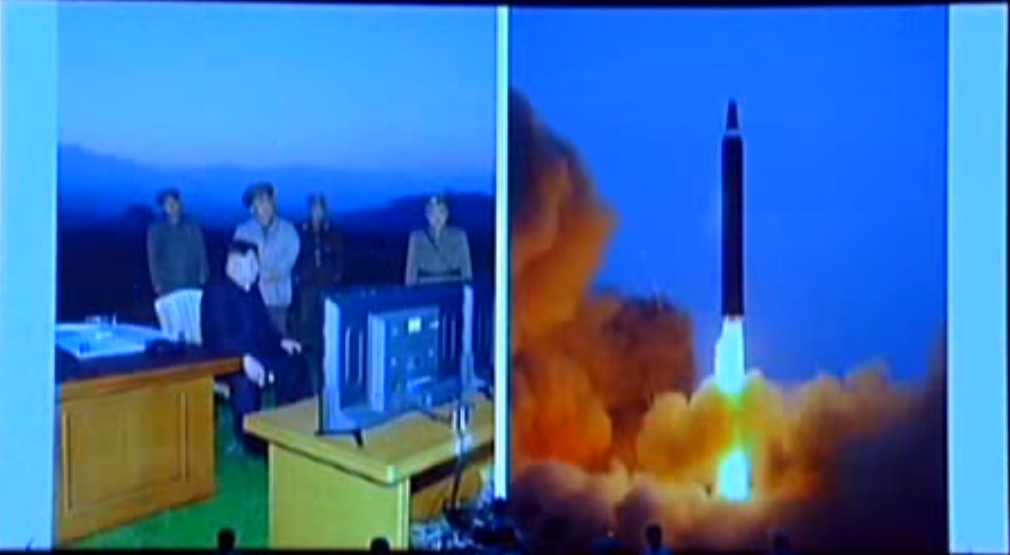
And they actually tested that missile for the first time in April, three times. And I know we'll maybe talk about this later on the pod, but North Korea just dumped a bunch of images from the Hwasong-14 ICBM concert where they showed us some of the failed flight testing footage. From the Hwasong-12 testing in April. I think they released pictures from at least the first test at Shinpo, which I think was April 4th, right as everybody was starting to worry about the Carl Vinson strike group.
You guys remember that? That was fun. And then later in April, when they did a flight test from Pukchang. All three of those tests failed. I guess the first thing I can maybe talk about is just what happened at each of those three tests, which is information that so far hasn't been reported publicly. I haven't put this in any of my articles yet, but it's interesting.
Listening to your most recent episode that you guys did with Aaron talking about the Hwasong-14 ICBM, I think there's some data points here that might inform some of the conversation about Fueling, how they're actually prepping the Hwasong-14's first stage, and just, I guess, where they are with this program more broadly. So that first test that they did out of Shinpo, they exhibited a decent amount of success.
They got it off the ground. They flew it to a range of 60 kilometers with an apogee of 189 kilometers. That information was public. I think Paycom released that in a statement. And we got reports then out of a few other places that the reentry body ended up pinwheeling or cartwheeling. And that's all correct. So all of that happened.
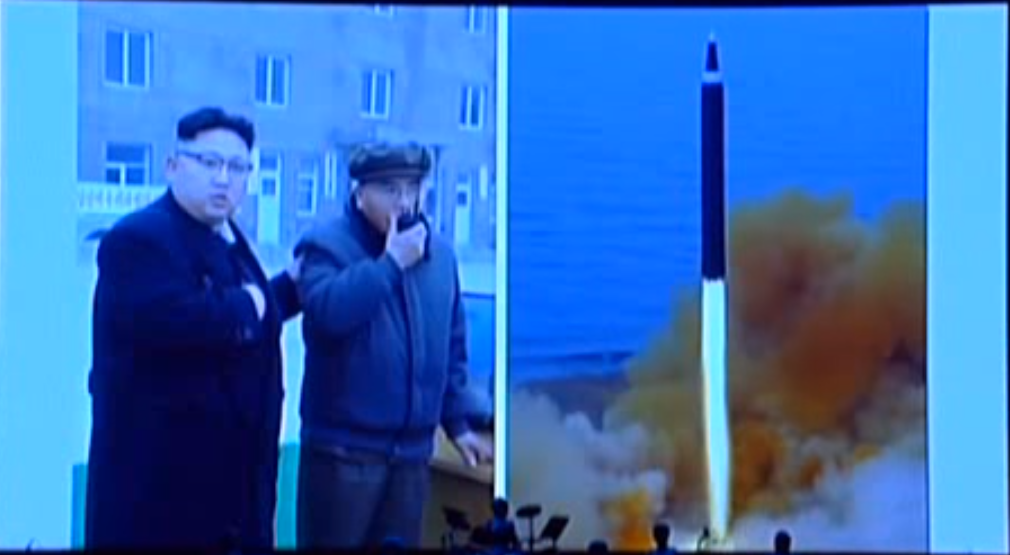
But what we don't know is if the North Koreans cut the engine early for some reason in that test, since that wasn't close to the missile's full performance, obviously, before reentry. Right. So that's one question that's there. So the first test, I think they showed us pictures of that. There are pictures that they recently released from that concert where you see a fully erected Hwasong-12 on a firing table with what looks like sea in the background.
So I'm pretty sure it's a Sinpo test. Yeah, I love that.
Jeffrey
5:18
That was just incredible with the water back there.
Ankit
5:21
Yeah, that was a nice tell.
Scott
5:24
We'll be dropping all of the pictures that we talk about. Schmerler did some nice screen caps of these and put them up on Flickr, so I'm going to try and grab all these and put them in the show notes so people can follow along.
Ankit
5:34
That would be awesome. So, you know, attentive listeners who might remember that two of the Hwasong-12 tests took place out of Shinpo might ask, how do I know the test that we saw pictures of was the first test and not the second test? And I'll tell you why. So the second test is probably my favorite of the Hwasong-12 failed tests, because what happened, or at least what I'm told happened, is that the erected Hwasong-12 missile, once it was ostensibly on the firing table, Over and exploded.
Ankit
6:09
Kablooey. Tipped over and exploded.
Scott
6:11
Like... We've talked about this as a specific issue that they've been running risks at by having all these, like, dudes so close to their tells.
Ankit
6:21
But not the deadbeat dad tell, or deadbeat dad T-E. And, yeah, I mean, you know, I think that's a pretty interesting data point. I mean, you guys were talking about, you know, the Hwasong-14 airframe and whether it could survive, I guess, you know, standing up fully fueled. Yeah. And, you know, I mean, this might be suggestive of like, you know, they've tried to do this and this is what they're working with.
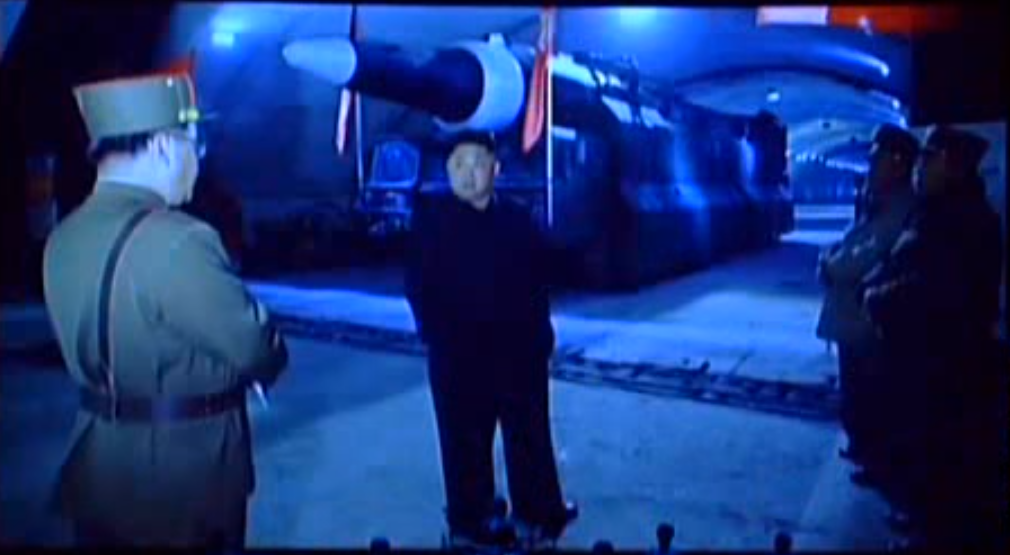
And especially like when you think about the strategy stuff and preemption, the fact that they showed us a picture of a Hwasong-12 in a tunnel yesterday as well. You know, maybe they are seriously thinking of horizontally fueling these guys and rolling them out all heavy and trying to stand them up. And this is one of the risks they run.
And they've kind of seeded up close. Do you want to talk about that?
Jeffrey
7:04
Yeah, well, one of the things that just for listeners to catch them up, you know, in both of these last two tests of the Hwasong-12 and the Hwasong-14, for which we have pictures, the North Koreans went out of their way to show guys in orange bunny suits fueling the missiles in a horizontal position. In the checkout building, and then depicting the test as though it drives out to the site, erects the missile, the transporter leaves, and then it launches.
And so, you know, the big question we've been having is, is that just propaganda? Or is that really something that they would do? And, you know, there are obviously there are advantages to doing that. You know, the Soviets and the Iraqis both pre-fueled their scuds, but those are so much smaller. And so, you know, like we've had this really robust debate about Whether it's physically possible, whether the airframes would hold up.
And if you were the North Koreans, whether you would decide that the risk of the airframes occasionally increasing Breaking it you know that might actually even though that might be very very risky it's kind of also risky to like hang out in the open with all your fuel trucks while the US Air Force is trying to kill you so it was one of these really interesting choices where you know the North Koreans say they're doing this thing we're not sure it's possible but And by possible, what we mean is we're not sure it's a good idea, but as you say, they're in this really hard position of trying to make choices about survivability.
So your data point, I mean, I don't know what you think, but the fact that one toppled does seem to me to be lightly suggestive of the fact that they really fueled it inside.
Ankit
8:43
Yeah, I mean, also suggestive to me of that. We don't know either way. I mean, you know, what you just said, actually, is kind of getting me ahead of myself. But I do want to make sure I get to this on the podcast, which is, again, you guys talked about on the last episode, that 70 minute claim that was reported and a bunch of websites, including InfoWars, ended up running that talking about why we didn't just take a...
God knows what ordinance they were thinking of using. Why don't we just take a shot at Kim Jong-un and kill him? so I just want to clarify, just okay. I was in a meeting where somebody was suggesting Rods from God, so it's, you know, it's not gonna be any worse than that. Yeah, yeah, throwback Thursday. Yeah cool.
Yeah, so that 70-minute claim, really, it comes from a data point that the United States managed to procure at T-minus 70 minutes to launch, right? So they saw a fully erected Hwasong-14, and 70 minutes later, they detected launch. And not only the United States detected launch, right? I mean, everybody in the region. Well, maybe not the Russians, but we can talk about that later.
The South Koreans and the Japanese all detected launch at that time. So that's where that 70-minute figure comes from.
Jeffrey
9:47
Oh, so it was an identification that was 70 minutes before launch. It's now morphed into... You know, there's a magic fairy drone hovering over the thing for 70 minutes, but that's not it.
Ankit
10:01
Exactly, exactly. It's like, nope, there's no RQ-9 just kind of hovering over Kim Jong-un while he smokes a cigarette.
Jeffrey
10:08
By the way, I thought that was, I mean, I'm sure you're proud of your serious work, but nothing you have ever done has made me quite as happy as you identifying Kim Jong-un chain smoking in close proximity to more than 30 tons of highly volatile propellant.
Ankit
10:23
Yeah, that was I had to I had to look at that a few times before I was confident tweeting it. But that's crazy. I mean, especially given what I just told you about, you know, the fact that they're putting these liquid fuel missiles in tunnels where those fumes get to pack together nicely if they're horizontally fuming them.
And they've had issues with missiles toppling over and blowing up. So the fact that they just have them standing there as they're erecting this damn thing and he's smoking. You know, self-inflicted regime change might be a thing soon.
Jeffrey
10:52
Well, you know, one of the things I... I'm glad to hear you say that about the data point because that 70-minute thing, you know, I was listening to CNN and there's this kind of discussion about how, you know, the U.S. is watching them fuel it. And it was just this kind of embellished story. And I kind of didn't want to, like, Totally throw the reporter under the bus, but it sounded like maybe somebody had...
The story got better with each telling.
Ankit
11:26
And look, I think the discussion you guys had in the last pod about the 70 minutes, what it tells us about fueling and stuff, that was all on the point. One of the other factors is if we're thinking about the fact that they want us to know that they're horizontally fueling these guys, standing up a missile 70 minutes before launch and then just revealing that there's no signatures of fuel trucks to be found anywhere, that's also going to be telling.
I don't know either way that there weren't any signatures of fuel trucks, but that is, again, a possibility that if they're Really, if they really want us to know that they can fuel these guys in caves and tunnels and hangars and then roll them out to fire with relatively little warning, probably, probably less than 70 minutes during actual wartime, and probably not on a firing table, you know, the tells would be expendable at that point, probably. But but yeah, that might be, you know, one of the things that they were going for with that move.
Scott
12:13
That's something I'd be really interested if any follow-up data comes on, because I'm still a little more skeptical, I think, than Jeffrey and others are about the horizontal fueling, just because that's not really done for liquid propellant missiles, which isn't to say it can't be done, but that just is such an unusual... I guess it's not unusual.
I guess it would probably be a unique capability. That'd be interesting. It'd be surprising and just so risky.
Ankit
12:42
Do you want me to talk about the third Hwasong-12 failure? Yes.
Scott
12:46
Yeah, what was the date on the second one again?
Ankit
12:48
The second one was the one that tipped over and blew up. That was in Shimpo a few days later. I think that was right as the Carl Vinson strike group arrived. Yeah, you know, we all had that, I guess, weird bout of, at least I had it, the weird bout of confirmation bias that they did test an anti-ship missile because we had this carrier group that was supposedly going up and everybody was like, oh, well, of course, if they're testing something out of Shimpo.
Yeah, they tested something out of Shinpo. There's a U.S. carrier group up there. And we saw something that looked like a maneuverable, you know, scud that could be an anti-ship missile. Well, this is probably what the KN-17 is. So I will fully admit that I fall for that.
Jeffrey
13:20
Well, there was also reporting that the thing tested out of Shinpo was a scud. Yeah. Oh, yeah, that's true. I mean, that's what really— A source did say that. That's what hammered me. Because then we went through and we looked at the flight time. And the claimant had pinwheeled, and that's probably where confirmation bias kicked in, because we could come up with a Scud scenario that matched that, and then we were off to the races to Crazy Town.
Ankit
13:47
Yeah, and I'm sure the North Koreans didn't mind that a bunch of people thought for a couple weeks that they had, I guess, a DF-16 kind of in the works.
Scott
13:54
Well, they certainly weren't correcting us, yeah.
Ankit
13:57
Yeah, and... Yeah, okay, so the third failed Hwasong-12 test. This one's also kind of interesting. So this was the one that took place out of Pukchang, which is where I think that image of the Hwasong-12 tunnel in the tunnel is, but again, very early, don't know for sure. So yeah, this one they launched, it flew for a bit.
I don't have the specific flight time, but then it ended up actually crashing somewhere south of Pukchang on North Korean territory. So that suggests they had some problems with steering and navigation. Hwasong-12 is really kind of their first big missile where they just used a skirt, right? Right. So could be suggestive of problems with that or kind of just broader issues with the design.
And then obviously May 14th day, they ended up getting the successful flight test out. Which comes just a couple months after that big March 18th engine test. And from there on, the next big flight test they do of a system with that kind of range and performance is their ICBM. So that's kind of the trajectory of the Hwasong-12-based ICBM.
Jeffrey
15:03
Yeah, it was really kind of a bummer for us that the ICBM came so quickly because we did this really careful analysis of the Hwasong-12. And, you know, we looked at the March 18th engine. We measured the Hwasong-12, which we estimate to be much bigger than other people are saying. Came up with a mass estimate. You know, did this analysis of its acceleration, which was really tedious.
And, you know, got a nice estimate of the power of the engine and kind of the we knew that the airframe had to be lighter. And so we had this amazing article ready that basically said the Hwasong-12 has demonstrated every technology North Korea needs for an ICBM. And it was sitting in the content management system for approval.
When they launched the ICBM, so. Yeah.
Ankit
15:50
Which I guess we should. They did release, yeah, they did release imagery of what looks like that June 22nd test that we didn't get any imagery of, the liquid fuel second stage. Yes.
Jeffrey
16:00
What do you think that is? We were thinking maybe two Vernier engines.
Ankit
16:04
It looked like it, yeah. You could see two plumes pretty clearly, but the pictures are so grainy that I wouldn't know where to begin. I'm not Schmerler. Yeah.
Scott
16:14
Well, this actually is a good transition to talk about what that article was going to be about, what we've been waiting for for like 2, 3, 4, 15 years now, which is the Hwasong-14.
Jeffrey
16:25
But I have a serious question for you both. When do you think North Korea is going to have a missile that can reach the United States? Sorry.
Ankit
16:39
This isn't what I signed up for with this podcast.
Scott
16:44
I'm just so tired of these articles that are like, no, we, like, I don't like fear-mongering and, like, the emphasis that, like, no, you're being ranged by a missile right now.
Jeffrey
16:54
But, like... You're being ranged by a missile right now.
Scott
16:56
Yeah, like, everyone just cool it and... Everyone who's freaking out lived through the Cold War, probably. They can handle it.
Jeffrey
17:04
So Ankit, why don't you tell us about the Hwasong-14, which ruined...
Ankit
17:20
Reporters, as we tend to do, like to have things easy sometimes. So everybody saw that. It's like, hey, this guy's an accomplished scientist, and his estimate is probably very good and very correct. And it was. He did the right thing. He calculated the minimum energy trajectory from what they demonstrated with that flight test, and he got 6,700.
So then people started talking about this as the Alaska strike system, right? And people were like, well, Hawaii doesn't quite get in that range when you started doing all those Google Earth radius measurements. And you're like, Oh, this just short, you know, stops just short of Hawaii. So they're never going to hit Pacific Command headquarters like the North Koreans would build a missile that would just, you know, stop short of ranging Hawaii.
But then obviously, you know, you guys did a bunch of analysis. And then, again, one of the figures that I managed to get my hands on was that the U.S. currently assesses this as a 7,500 to 9,500 kilometer ICBM, which puts most of the West Coast metros, Seattle, San Francisco, L.A., maybe San Diego. That's one of the targets that they're interested in, obviously, Pacific Fleet.
In range but you know, you can round this up to 10,000, like you said last time on the podcast. And you know, the North Koreans, again, going back to this concert, showed us a video of the Hwasong-12 ICBM just striking smack down the middle of Kansas. this is, you know, they don't see this as an Alaska strike force missile this is, this is intended to strike at counter value targets in the continental United States, in the lower 48th.
Jeffrey
18:41
Yeah, it was really strange for me to watch the reaction to David's initial estimate, because we actually had been working really closely with David on our Hwasong-12 analysis. And when we finished, the first thing we started doing was sticking second stages on the Hwasong-12. And so I knew that David knew, right, that if you put a second stage on the Hwasong-12, and Hwasong-14 is like way better than that, but even if you just did that, you were going to get way more than 7,000 kilometers.
And we had started at that point measuring the Hwasong-14 and it was clearly even bigger than the Hwasong-12. You know, it's not a, it's not that same missiles as a first stage. And so, yeah, it was really weird because we had this kind of computer model that suggested it was so much longer. But I, I mean, I think that the people just really don't want to believe.
And it's, it's really hard to persuade them otherwise. Yeah.
Ankit
19:38
Yeah, it's this weird place where people don't want to believe that North Korean ICBMs are as good as they claim they are, but they want to believe that our missile defense systems are better than most people claim they are. So it's this weird confluence of cognitive dissonance and confirmation bias that just leads to this weird place where we just keep throwing money at missile defense and then just keep on being strategically patient on North Korea.
Yeah. Again, anyways, I'm getting away from missile wonkery into the policy discussion behind all this. But yeah, I mean, they have an ICBM and they want to strike the lower 48 United States with it in wartime.
Jeffrey
20:15
I mean, I think to get The working range from the U.S. intelligence community for that missile so quickly is really incredible, you know, and at least for me, it's really useful because we try to replicate that process on our own. Right. So if when that video hits YouTube, you know, the people, the people in northern Virginia and.
You know Ohio and Alabama are all staring at that video, but we're staring at it too. And it just, for me, it's incredible to, you know, we come up with our number and we're like, yeah, you know, 9,500, maybe round up to 10. And then to get you so like, yeah, 9,500, that's, that's about their number too.
I don't know. I find that just to be a really, it's both kind of a confirmation of how much stuff you can do on the open source side, but just also like a really nice reality check because it's good to have different groups of smart people all looking at the same problem.
Ankit
21:19
Yeah, and at the end of the day, you know, open source and I guess what I'm trying to do is just to, you know, make sure that people have the right idea about this kind of missile. That we don't, you know, that we finally do away with some of that uncalled for optimism about where they are and where they're going with their program.
So definitely it's something that I try to do too.
Jeffrey
21:39
Let's talk about the RV. Well, let's talk about the shroud and what might be underneath that.
Scott
21:43
Yeah, let's talk about the KN-20's shrouds, RV, nose cap. Because there's a lot going on with this that's not... The data on this is very curious from the imagery side and very hard to track.
Scott
21:59
And very weird. Yeah, so what do you think it is? On the telemetry side.
Ankit
22:04
Yeah, just all around weird. And I guess things got a little weirder. We were talking about optimism with the South Korean reports that the RV just wasn't good, that it didn't perform to where an ICBM RV would need to perform.
Jeffrey
22:17
It's amazing how the South Korean intelligence is so good at ferreting out every single detail that just perfectly confirms what they want to be true. Right, right, you know, almost like they're making it up. Yeah, it's like they could be under attack and be like, well, the accuracy of that missile could have been a little better. You know, I got in so much trouble. A reporter asked me, how will we, how will we know when North Korea has a missile that can strike the United States? I was like, there will be a flash of light moment later, the blast wave will hit. Yeah, sorry.
Scott
22:51
Gone with the pun option there. There'll be a flash of realization and then it'll hit you.
Ankit
22:57
Oh, that's good. That is good. You should write headlines, Scott.
Jeffrey
23:01
Sorry. The South Koreans said that the RV didn't work, but you don't think that that's true.
Ankit
23:07
Well, no, I mean, so it's, again, you know, this is very early data. But basically, I think that the South Korean assessment is really rosy based on, I guess, you know, early assessments over here in the United States. The RV probably survived to... A kilometer altitude, at least, in a shape where, you know, the detonation mechanism would still work and they'd be able to deliver an airburst, which I think is probably good enough for the kind of devices that they're working with.
Jeffrey
23:39
Is that right? I would certainly think so. I mean, it's going to be an airburst. You're not going to... I mean, you can't lay down an ICBM warhead, so you've got to pop it in the air and... Oh, you know, I forget what's the... For the 20 kiloton blast, we wanted to do 2,400 feet, I think, for Hiroshima, and that's pretty close to where we need to be.
Ankit
24:07
Yeah, yeah. So that, you know, so that suggests to me that if they're, even if they're not, even if the North Koreans aren't happy with the performance they observed with this test on July 4th, there will be more tests, right? I mean, they are going to, you know, maybe experiment with heavier payloads. That's a question, again, we don't really know what kind of payload they use for this thing.
But also, you know, they have been kind of hinting at this large or heavy nuclear device that they're going to test. And looking at the size of that shroud, we have no idea what the RV shape itself is, except we have seen a lot of North Korean designs on that. But you know, they could, they could end it up, you know, they could do more of these tests in, in the second half of 2017 is what I'm saying.
And, and a lot of them might be focused on the RV. Cause one of the ideas that I had with this Hwasong-12, I mean, apart from being the test bed for the first stage of the Hwasong-14, it would have you know, if you shoot that at a lofted angle, you're going to simulate re-entry speeds and temperatures that might not be quite as long as what an ICBM would experience.
But again, give you some really good data on on what you need to actually move forward with. So, yeah, that's kind of, you know, if I had to preview the second half of the year, that's kind of what I'm expecting. I don't know if you guys agree with that or have any quibbles.
Scott
25:24
No, I think that's about what we're looking for. And I realize we should probably walk it back real quick. We should talk about what a shroud and an RV are. I realize we sort of buried the definitions on that a little bit, just for listeners, because this is like a very specific thing that we haven't really talked about this episode.
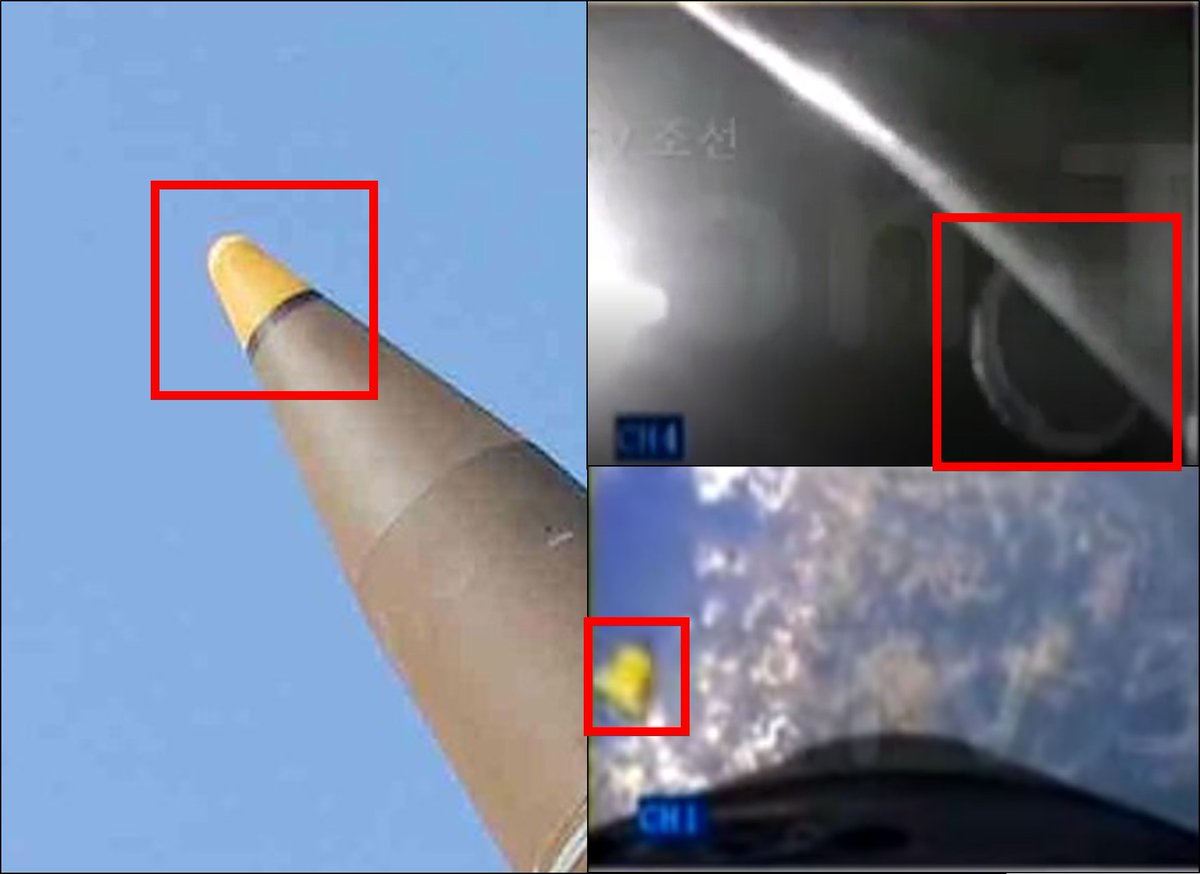
So an RV is a re-entry vehicle. It's just, you know, the part of the... Part of the missile that's actually going to scream through the atmosphere carrying a detonation mechanism. And a shroud refers to the... It's just a covering for a re-entry vehicle or a telemetry package and testing equipment or something else that detaches from the missile after it's outside of the atmosphere usually.
Jets off and just goes out of the way, revealing the payload. It's similar to, if people focus on space launch vehicles, it's similar to a fairing, but for war. It's a war fairing. One of the weird things with this is when we first saw the Hwasong-14's imagery, it looked like kind of an RV to me, but doesn't really have the right I don't know, like, coloration for something that can survive reentry, if that makes sense?
Like, it looks like a shroud.
Jeffrey
26:39
Yeah, it looks like a thin shell of stuff that will be discarded as it's going through space.
Scott
26:45
Exactly. And guess what it is?
Jeffrey
26:46
It's a thin shell of stuff that got discarded in space. You can see it pop off in the video.
Scott
26:51
Yeah, I wanted to talk about that real quick. Probably. Yeah, probably, because Unkit, you put up, I think yours was the tweet where I first saw that from that video, where there is like a split second, maybe like two or three frames from their video, where the North Koreans put this, a series of cameras on the Hwasong-14 for launch, and they got footage of both first stage separation and the ejection of either the shroud or the yellow nose cap.
Ankit
27:25
Yeah, it looked like the nose cap and it looked like they had small cameras in there because you could kind of see the contours of where the nose cap would be. Right. But I don't I don't think I mean, I don't think I detected any actual sign of, you know, the shape of the payload or even a corner of what that might have been.
I don't know if that's visible. I definitely did not either. Yeah. So, I mean, I think they just wanted to show us that they were working with a shroud and that they could, you know, they wanted to show us that the stage is separated successfully because that's obviously an important part of developing an ICBM like this. And, you know, this isn't the first time that they've sent us footage from ExoAtmosphere.
So it seems to be something that they're going to keep on doing.
Scott
28:02
Yeah, they're quite proud of it. I mean, it's sort of the modern thing to do with one space launch vehicles or missiles is put cameras on it and put it on YouTube. Yeah. And GoPro will retweet it.
Jeffrey
28:10
Right. Yeah, well, I mean, like, you can do that now, right? Like, it's not really that fancy. I mean, it's like, I don't know, like, strap a cell phone to it. I mean, I'm being a little bit facetious, but cameras are really, I mean, it's, yeah, you can do it. So, obviously, the implication of a shroud Is that you've got more than just a warhead underneath.
And, you know, I don't, I don't think that the North Koreans have multiple warheads. I'm not, that's not poor Dave. Poor Dave was explaining that that's one thing you could do with a shroud, you know, and it became Schmerler says North Korean Mervs, which was, he was not having a good day after that. But, I mean, they are definitely giving themselves space for things like countermeasures or eventually multiple warheads.
You know, so... I just, I don't know about you guys, I don't know if there's any particular reason this test needed a shroud, but I kind of look at this as a sign of things to come. Although, you know, maybe it had countermeasures.
Scott
29:21
I mean, it could also be testing, since it is the first successful launch of, I think we talked about this a little bit on our ICBM pod, so I don't want to get too into just like what we've already talked about, but we don't know for sure that it would have to necessarily be a An RV test.
Like this is the first launch of that missile. This is isn't this the first launch of a missile that's reached that apogee for the North Koreans? Am I wrong on that?
Jeffrey
29:46
No, I don't have my apogee. No, yeah, no, that's, this is the, they're wafting everything. That's the highest, longest is the highest, or actually it's the other way around. It's highest is the longest.
Scott
29:56
As far as I know, would be new ground for them. And so I'd be curious if instead of having something very operationally practical like a reentry vehicle, there is something more on the technology demonstrator end Or something more towards, like, I don't know, either dummy weights, which I guess could also have pretty important operational considerations, or just some sort of other, like, physics-based interest.
Like, I don't even know what to call it, like a telemetry package instead, basically.
Ankit
30:24
Yeah, and there's, like, you know, there's good, like, strategic and programmatic reasons they'd want to do that, right? Like, I mean, one of the simplest reasons to use a shroud is you just don't want people to see what's inside, and you might not be ready, and if your message after this is you're going to have a big concert and say that you're now deterring Mighty United States. you know, if you're not ready, then using a shroud and releasing a little bit of footage that kind of teases what the payload might be and releasing a statement, but not actually showing off anything that suggests you have an actual, you know, fully performing re-entry body let's you get away with that a bit.
But again, you know, I think we're getting into kind of justifying some of the optimism about the RV's performance. And I think, you know, at least my assessment right now is that the RV is probably, if not perfect, or if not at a place where the North Koreans are happy, it's close to there.
Jeffrey
31:10
The other thing that I wanted to pick up is the comment you made, which the North Koreans have now said for both the Hwasong-12 and the Hwasong-14. Which is that it is designed to carry a large-sized heavy payload. Yeah, they have.
Scott
31:27
That's not what they've been testing.
Jeffrey
31:30
They've been testing compact, lightweight payloads. I don't like this.
Ankit
31:36
Just to clarify, we're all talking about the same thing. What weights are you... What do you mean when you think about a large-size heavy payload in terms of weight and what you think they've been testing?
Jeffrey
31:45
So I think that the first test... Based on a defector account that at the time I thought was crazy but actually seems to have held up pretty well. I think the first test that was sort of disappointing for them was 1,000 kilograms, and then the defector said that future warheads would be closer to 500 kilograms. That's pretty consistent for what a state might do, particularly after five nuclear tests, and that would be Consistent with the disco ball we saw Kim Jong-un pose with.
So, you know, I'm thinking that what they had been working on up until September, through the first five tests, was a compact device, possibly boosted, That was, you know, sort of 60, 70 centimeters in diameter and weighed a few hundred kilograms, maybe up to 500 kilograms. And so when they start talking about large size, heavy payloads, I'm wondering if then that compact device or something like it becomes the primary for what's going to be a thermonuclear weapon.
Ankit
32:57
That, yeah, that I think is the big question is if they go for a fully staged thermonuclear device test sometime soon. And, you know, like you pointed out on the last pod, it hasn't been that long since our last test. And people have been kind of breathlessly staring at Punggiri waiting for that next earthquake. We actually just had a false alarm off the coast this past week that I think freaked a few people out.
But, you know, it was 500 kilometers underground and in the ocean. So definitely no nuclear test. We got back to what we were doing pretty quickly. But I think, you know, there's probably no reason they'd do it. I mean, the other reason is that they're happy with where they are with their packages and they're not testing. And that also kind of, you know, sends a spooky message that, you know, we're happy with our boosted fission devices and we think we can probably get better performance out of them than we've demonstrated in these tests.
And, you know, we're going to start putting them on missiles because they have been deploying You know, like systems like the Pukuk Song 2 have gone into like mass production and they've been releasing kind of messaging that they're deploying these for war and they've been doing salvo tests and things like that that kind of have been signaling that they want the Hwasong strategic forces to be on a war footing as quickly as possible.
But again, that could all be, you know, either a misdirection or just part of their signaling again. They could be on the verge of doing more tests. I think they will.
Jeffrey
34:15
I do too. I mean, when I look at the North Korean program, I have a tendency to analogize to the Chinese program, which is not perfect because there are real and important differences. But I just kind of observe that There are a lot of strands of things they've done that are kind of similar. And the pace of testing, as it has picked up, has kind of approached the Chinese pace, which is usually one every year, sometimes two.
There may be years where it's a couple more than that, but there is a point, I think, at which... This starts to be driven by technology and their own progress. I think we used to think about North Korean nuclear tests like they were demonstrations, not really tests. They had this capability and they chose when to show it off.
And now I think we're actually in an era where they can test more or less as frequently as they want to. And so it's a different set of factors that cause them to want to test. And my kind of favorite example of this with the Chinese is, you know, why did the Chinese test a thermonuclear weapon when they did?
And the answer is because that's how long it took Yu Min to figure it out. Like, they actually have like a story, like he was working really hard and he couldn't figure it out. And then like one day he figured it out. And, you know, so I think that there's probably going to be factors like that that start to drive the program.
Like they know where they want to go, but they have to make certain milestones or solve certain problems. And, you know, sometimes they'll do that fast and sometimes they'll do that slow. And that's going to end up like driving their program. So maybe it's like I think it's a little bit. This is my way of saying I think it's a little bit crazy to look at what is an active nuclear test site, observe that it's active and predict that a test is coming.
It's like it's active and they're always ready to test. And what's going to make them test is not like the vehicles driving around, but like these other things that are harder to see.
Ankit
36:20
Yeah. You know, if one of the teams loses the volleyball game, they get to test, but the other one wins. They don't. No, but I think it's right. I mean, I like thinking about this strategy stuff and what this might be telling us about their signaling mechanism sometimes. But, you know, I mean, there is good evidence that they are a technology-driven program, like so many other early nuclear programs, right?
I mean, especially with these missiles, we've seen, you know, a pretty good pattern of a successful engine test, followed by You know, flight testing just a few weeks later. And this is, you know, I'm thinking about the Hwasong-12-14 path here, where they do a few tests, get a successful test of the Hwasong-12. And then, you know, in June, they do that second stage test, possibly.
And then you see the ICBM. So I mean, they're not really wasting time between Like each of these stages and kind of waiting for the perfect moment to kind of show us a capability. Yes, I mean, the July 4th signaling was fun. But, you know, I think that's a fair point that they are, like so many programs, primarily driven by technology and doing things as they get to them and when they're ready to test and collect their data.
Scott
37:21
I think that's correct. And one thing we talked about off-pod discussing a little bit on-pod is sort of the confusion we're having in data collection for the missile systems themselves on the designation end. How much difficulty we've had not only managing the umpteen thousand different designations each system has, but now we've got sort of changing designations because we've gotten stuff wrong.
Ankit
37:49
Right. Yeah, that's a huge source of frustration for me, I guess, as someone who writes about this stuff, and I guess as you guys who also track this stuff and write about it. Obviously, we talked about one of the examples most recently, which was the CAN-17 What Is It? Drama in April. So that was a great example of the kind of the U.S. government CAN designation system just causing havoc.
And the North Koreans, they don't make it easy sometimes. They don't give all of their missiles names immediately. Like the... The KN-18, which is the maneuverable, the terminal maneuverability SCUD that they tested at the end of May, I believe, you know, they just called it an ultra-precision SCUD. They didn't give it a nice name that we could use as a shorthand to refer to it.
So then, you know, I liked finding out the U.S. government was calling it KN-18 because I think that makes it easier to talk about it, especially on Twitter when you only have 140 characters. I'd rather say KN-18 than ultra-precision SCUD. Yeah. But you know, I mean, on a more serious note if you just kind of look back since February, we've seen kind of KNS 15 through 20 in just a period of like five months, right? Which is pretty scary. And You know, I said this in this article I wrote with Vip and Narang for War on the Rocks, but really even what they've shown us is like this brand new suite of kind of short, medium, intermediate, and intercontinental range missiles, right?
It's like they're just kind of showing us this whole new nuclear force. So I'll just kind of go through the canned numbers just to kind of disambiguate them for listeners because there was some confusion there. So the Canon 15 is the Pukuk Song 2 canistered solid fuel medium range ballistic missile that they first showed us in February and that entered IOC and mass production in May after the second flight test.
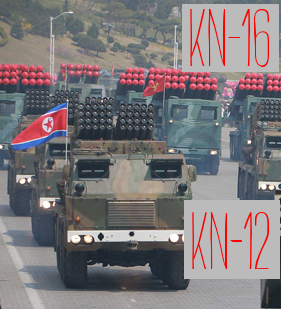
And actually released some cool pictures of the ejection test for that system in that concert footage, which is really neat. We haven't had that. KN-16, this is coming out for the first time on this podcast, at least conclusively. I think some South Korean reports have hinted at it. But the KN-16 was seen at the parade. But since there was so much other stuff that was seen at the parade, I don't think the KN-16 really got much attention.
It was a new multiple rocket launch system, MRL, 240 millimeter guided shells. And I believe the way you tell it apart in the parade footage is that it has closed canisters.
Scott
40:05
We'll put pictures of that up. I do have pictures of that one, just not identified as the KN-16. So I'm going to go update all those files now.
Ankit
40:12
There you go. KN-17 is the Bete Noire of April 2017. It is the Hwasong-12 IRBM, Intermediate Range Ballistic Missile. KN-18 is that new Scud with the control surfaces on the warhead. The KN-19? KN-19 was kind of a disappointment. It was the Kumsong-3 Coastal Defense Cruise Missile, the integrated launcher with the caterpillar treads that they showed off. That's the KN-19.
Yeah, boring. Cruise missiles and rocket artillery. Yeah.
Jeffrey
40:42
I know. Oh, but no, they're not rocket artillery anymore. They're close-range ballistic missiles, Scott. Yes. The MRLS? It almost makes them sexy. It doesn't. No, it's the RPM.
Other voice
40:53
Sorry, go ahead.
Ankit
40:55
Nice new term. And then CAN-20 is the new intercontinental range system. And I guess just for funsies, I can throw out the CAN-12, which I think is also floating around out there but not confirmed. It is, again, another MRL system that uses 122-millimeter guided rounds. Okay. Yeah. I think that fills in a few of the gaps in the KN numbering system.
But, you know, I mean, again, with the Hwasong-14 ICBM test, one of the things that happened right after... So, like, you know, reporters cover stuff that they don't normally cover. So a lot of reporters who don't write about North Korea were assigned a story on North Korea after this ICBM test because it was big news, right? So a lot of them started Googling Hwasong-14.
What is this missile that they tested? And obviously they come across, you know, great articles from Arms Control Wong, everything else on... Talking about Hwasong-14 that we saw a few years ago.
Jeffrey
41:44
It's not my fault. Ermin Zokiri called it. I'm so bitter.
Ankit
41:49
Yeah, no, they called it that. But apparently that report that Ermin Zokiri was talking about was actually talking about how the South Korean media had incorrectly identified it as the Hwasong-14. I believe that's what happened to the Hwasong-14. If you started searching North Korean sources for the terms Hwasong-14 before this ICBM test, you'd find that article that was talking about how the South Koreans had called what was really the Hwasong-13 Mod 2 the Hwasong-14.
And then obviously that kind of ended up on Wikipedia, Global Security, all of those sources where people go to kind of get their missile information on a shoestring. Once upon a time, I used to be good at this. Hmm. But that's the story of the Hwasong-14. So from the North Korean perspective, the Hwasong-14 is new, even though in kind of Western open source stuff, we've been talking about the Hwasong-14 as if it's the KN-14, the KN-08 or Hwasong-13 Mod 2.
So I don't think that actually cleared anything up because I just said a bunch of gibberish. This is now worse. There are people literally leaping from their windows, screaming, Hwasong!
Ankit
42:54
Yeah, end of the day, it's like the stuff just gets confusing. Just call the missiles what you think helps you make the most sense of it. And what helps you talk to other people who are studying these things, right? I mean, I kind of like... KN-20 is actually one of the KN designations I like to use because of the Hwasong-14 confusion.
But, you know, maybe with time, we will get more used to just calling this new ICBM the Hwasong-14 and pretending that the KN-08 Mod 2 just never existed because that seems to be what the North Koreans are doing. Yeah.
Scott
43:20
I'm really impressed at their ability to start replicating the issues we had with SS designations during the Cold War. Like, you know, how occasionally a canister would be swapped or, like, there'd be a very minor change that doesn't actually affect the missile. It would just affect, like, a very minor basing mode thing. And it'd get a whole new SS designation.
And then, like, ten years later, people would be like, well... We screwed that up. That's definitely wrong. And there are, what is it? There are like two SS15s and like three SSN5s. We're sorry. Good luck. So now I feel like we're starting to rapidly approach that in North Korea designations. Because I remember when the most frustrating thing was we didn't know what to call the Musudan because it had too many names, none of which were immediately well-sourced.
And there were only two Hwasongs we cared about, the 5 and the 6.
Jeffrey
44:09
Well, you know, in a strange way, the other thing that the Hwasong-14, a.k.a. KN-20 ICBM test gives us, Is a chance to go revisit that because we got a historical documentary.
Scott
44:23
Well, we got a concert with a slideshow that hopefully precipitates a full documentary at some point.
Ankit
44:31
And that came out less than 24 hours before we're doing this podcast. I think that's worth putting out there with so much data. Just shell-shocked.
Scott
44:38
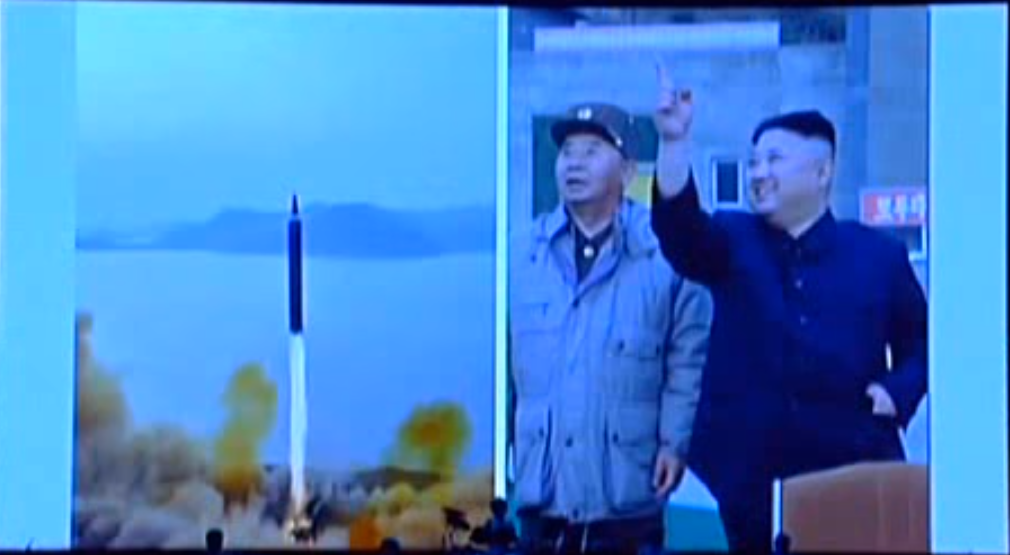
Yeah, Ankit and I were talking before this, like, there was not a lot of sleep. Our friend Xu Tianran over in Beijing started tweeting late last night where he's like, hey, has anyone looked through this concert that got posted today? Because the PowerPoint in the background is a pictorial history of their entire life. Ballistic SAM and rocket artillery program, starting with Kim Il-sung in the Kim Il-sung suit days.
Man, that came out of nowhere. I was up until about 2.30 before I finally called it. There's a lot of stuff here.
Jeffrey
45:20
Yeah, we'll have to do a proper podcast on it, but do each of you have a favorite thing that you've seen in the documentary? I have a clear favorite.
Ankit
45:29
Well, my favorite, because I'm self-absorbed, was the Hwasong-12 test footage, because it's more evidence that I was right in April. You're not half as self-absorbed as I am when you hear mine, but go ahead. Yeah, well, you know, I mean, that was just nice to have. But the Pukuk Song 2 canister, the ejection test stuff was pretty cool to see, too.
And I'm just like, you know, I mean, full disclosure, I'm just less familiar with kind of the early Kim Il-sung era, but I'm sure there's some gems there for you guys that have been, you know, really living and breathing this for much longer than I have.
Scott
46:00
I feel like the Kim Jong-il ones actually have more interesting data because it's Kim Jong-il standing next to things he never... Was really big on showing off compared to Kim Jong-un. Like, there's just a whole bunch of, and again, Shu Chan Ran put these up, a couple of these screenshots up a couple months ago, was like Kim Jong-un standing next to like K and O8 variants with their engines shown years ago that we just didn't catch because it looked like a pipe at the time. so I've really enjoyed seeing like, Kim Jong Il.
Really, it's a good opportunity to revive Kim Jong Il pointing at things. My favorite Tumblr from undergrad. But there's just a lot of good pictures of programmatic steps throughout the years. We have, I think it's an unpainted Musudan with its grid fins covered. We have Like what looks like maybe the Unha, we have unloaded tells with their firing tables.
We just have like a lot of pictures that are Basically cut up pieces of missiles that's really hard to get info on anywhere.
Ankit
47:11
Yeah, I forgot to actually say what my real favorite was, Scott. Ooh, let's hear it. So, at the parade this year, we saw those two canistered beasts, the one, the DF-31E Mel and the Topol-M-looking... Tell by the way, not to interrupt you, but I love how you said DF31E, like DF-31, like, but somebody is actually going to start calling it the DF31E. Oh, yeah, please don't do that. Please don't put that on Wikipedia and then I'll have to start reporting on why that's not right. sorry. Okay, yeah, I should be careful. no, but so what was interesting is that this video that they also, by the way, put in chronological order, which was very thoughtful of them It showed us the it showed us, you know, again, I confirmed this with Scott because I thought I might have been kind of seeing things and that might have been some other canister or possibly a canister test bed for something.
But it was that Mel. It was that Mel that we saw at the parade. They showed that, but there was no evidence that I saw in any of that concert footage of of the kind of the the one shot based topal looking thing that we saw. Which I thought was interesting because I don't know if that suggests that one of those is kind of a real thing that's been underway for a while now and possibly seeing some kind of testing and development and the other one was maybe just a mock-up at the parade.
But, you know, just a data point that I thought was actually really interesting. I don't have a good explanation for why that was the case yet.
Scott
48:35
Yeah, I think that's a good choice for favorite picture, because that is, once again, like, that's the Ghost of Christmas Future. Like, one day we will look back upon this concert and be like, do you remember when they showed us they were working on that mail? Because, yeah, you're right. It's a shop working on a canister.
Ankit
48:52
And that's, we were never going to see that otherwise unless they put that here. Yeah, yeah, okay. And you know, just to put it, yeah, just to put it on the record for, I guess, when the Ghost of Christmas Future makes him or herself known I do, I do think that it's not totally crazy that they'll look to actually cold launch massive liquid missiles in the future, which the Russians do it. Yeah but do they do them from update on them from road mobile systems?
Jeffrey
49:20
I don't know. I have to go back and look. But they definitely do them out of silos, Cold Launch. Yes. Do I get to give my favorite one? Because it's really selfish.
Ankit
49:28
I was going to ask you. Yeah, I want to know what your favorite missile is, Jeffrey.
Jeffrey
49:31
It's so selfish.
Ankit
49:31
Or your favorite picture.
Jeffrey
49:33
We can do both. We did this article, which we internally called Dude, Where's My Tel? Right. Where we had, like, I think a few seconds of Kim Jong-il inside this weird-looking building, looking first at Scud's ontels and then looking at the KNO8 ontels. And we had this idea that the building was so weird that we could model the outside of it because of the unusual window placement.
And then we could find it in a satellite photograph. And this is kind of the first really big integrated piece of work we did with geolocation leading to computer models, leading to some kind of bit of analysis. And we ended up finding the building, which felt like a minor miracle when we did it. But there was one question, which is it had this funny skylight that had been added right after they acquired the Vehicles for the KN-08, and we thought that that's so they could add the erector mechanism, and so we have this computer model of the building and a computer model of the truck and a computer model of the missile, and we show that this funny shaped skylight is so that they can crank this thing up.
And it's got to be like positioned just so in the building and moved around on casters. And it was this like crazy hypothesis we had. And we were like certain we were right. But nonetheless, it was sort of insane. And then they released a picture of the truck in that position with the thing with the missile erected inside the skylight.
When they do stuff like that, you just got to think they're rewarding you. I do kind of think like, I mean, it sounds crazy, but it is such a picture that we desperately wanted to see. You know, it is almost like somebody in the propaganda ministry was like, eh, throw him a bone. Yeah, we ruined his vacation.
Might as well. Can we put something nice for Lewis in there? Yeah, yeah, I got it. He's going to like this one.
Scott
51:34
I do like that original article that y'all were talking about naming Dude Wears My Tail would have been a great name for it. Y'all went with That Ain't My Truck, which sounds like the second-gen knockoff of Dude Wears My Car, which I really like.
Jeffrey
51:49
Stephen Schwartz actually came up with Dude Wears My Tail later. Credit where it's due, and he's funnier than I am, and I'm terrible at titles, but forever it will be Dude Wears My Tail.
Ankit
51:58
I guess another picture that was fun. I mean, I don't want to turn this into a podcast about that, about the picture dump, but the one Chantal and its original paint job.
Jeffrey
52:05
Yeah. Yeah. Cherry red, baby. That's from that same visit because that one was bright red in that short video I was just talking about, but you can barely see it because it's all the way at the end of the hall and the lighting is crap.
Scott
52:18
And so for listeners, what this is, is for anyone who's been following this a long time may remember this. For listeners, check the show notes. Yeah, listeners, check the show notes, the history of this. Just Google forestry truck acquired by North Korea. What's the designation? It's a long Wanchantel name, so I always forget this one.
Scott
52:38
51200, that sounds right. The Wen Shan Special Heavy Vehicles, who provides lovely civilian-use heavy vehicles for apparently forestry, according to the PRC, and Space Launch Vehicle Support, and People's Liberation Armed Forces, Rocket Forces, TEL Support, sold...
Ankit
53:04
I think panel of experts, panel of experts, I think, said six. By the way, there are more than that.
Scott
53:10
Yeah, that's sort of where I was going with it, is we have a number that is the official number, and that may not be the official number. But so when those were originally sold someone started circulating the brochure from the Chinese company that built them. That is this cherry red, bright truck, special heavy chassis built for, you know, unusually heavy industrial applications.
The North Koreans would eventually repaint it and of course modify it to carry a missile. Done in lovely North Korean camouflage, but some of these pictures have it in its original red color, like the color it would have been made and sold in in China.
Ankit
53:55
Oh, and just one other side note that's relevant to this. At the concert, you know, people were focused on the main slideshow screen, but actually on the sides, I think throughout most of it, especially towards the end, they have, again, I couldn't tell if this was maybe a cloned image, but they had four Hwasong 14K and 20s on these tells.
Scott
54:14
I leaned towards that being a cloned image. Yeah, yeah, yeah. But I, once again, man, first impression. I also enjoyed that flanking the video screen were two models of a missile, and the exhaust was illuminated as a light source.
Jeffrey
54:30
That was very charming. Well, it's because the Morin Bong band launches your rocket, Scott.
Ankit
54:34
Guys, I was just going to bring up the fact that we never talked about why the Russians don't think the Hwasong-14 was an ICBM. Oh, well, let's talk about that.
Scott
54:41
Oh, God. Yeah, let's talk about the Russians, because this is a weird data point.
Jeffrey
54:47
We're all going to f***ing die.
Scott
54:48
Cheery. The goal is to end on a happy note. That's why you're going to slice this in earlier, Scott. So, Ankit, you had an excellent article on The Diplomat, the one that revealed the KN-20 designation to all of us, if I remember correctly, that the Russians were basically saying that this was not an ICBM test, and are pretty emphatic about it.
Ankit
55:12
Yeah. So that's what they're saying. So here's the deal, right? North Korea said it launched an ICBM. The United States said it launched an ICBM. South Korea and Japan both said it launched an ICBM. China, as far as I can tell, noted relevant reports that they launched an ICBM, but no one from their government actually said the words intercontinental ballistic missile, as far as I know.
But that might have changed in the past couple of days. So don't quote me on that. But the Russians just flat out denied that this wasn't an ICBM. And they actually said it was an intermediate range ballistic missile. But the Russians are using kind of the INF definition of that, anything between 500 kilometers to 5,500 kilometer range.
So that is very strange because, you know, the Russians kind of have this history that I think actually Joshua Pollack had a great article on Arms Control Wonk where he kind of went through a bunch of statements that they've made like this in the past. I think one of the UNHAT-2 launches they said, you know, successfully delivered its payload into orbit when everybody else pretty much said it splashed down.
There's a few other things they've done like this. But the big question that I kind of got at in the article that I wrote was, you know, what is going on? And, you know, I mean, like full credit to you guys, I think the discussion that really informed that analysis was kind of first on Twitter where people were talking about, well, is their early warning system just crap and they just don't have the ISR to really gather any real data about these missiles?
Did they miss the second stage of the Hwasong-14? And on the second stage point, there is an interesting data point that I got my hands on, which was that the... What the Russians said was the apogee of this supposed IRBM that they launched on July 4th was 535 kilometers. And what the United States measured as the actual apogee of the Hwasong-14's first stage was 585 kilometers.
There's a 50 kilometer gap there, which I don't think is just a rounding error. Just suggests to me that the Russians are either working with Equipment that just isn't, isn't a par, or they're doing something more nefarious here, possibly misdirecting, possibly stalling at the United Nations on Pyongyang's behalf, but we have no evidence either way to really decide which of those hypotheses is is correct. But Scott, I understand you've been doing some look you've been looking at their their radars here, right?
Scott
57:23
Yeah, I was talking to Pavel Podvig on this because he is my go-to for trusted Russian strategic forces stuff. On the capabilities of the radar, and I'm not going to pretend that I can speak Russian, Voronezh, their early warning system that's located in Irkutsk, Out there, and I've been putting it into SDK to just sort of get a very rough draft model of what it looks like it should be able to see, because I think the Russian Ministry of Defense released, you know, This graphic that shows how great the coverage of the range fan is and that it covers, you know, everything and sees everything.
But radars work in volume. They don't work in area. It's not a two, the world is not flat. There's a huge shadow produced by mountains and more importantly, just the curvature of the earth. And as far as I could tell, their early warning radar should have picked up. I mean, it should have picked up everything. So obviously there's already a weird, Aberration in the data there, but if they were looking at the first stage with a 535 kilometer apogee, they should have been able to see that first stage for a pretty short amount of time, maybe like two minutes, three minutes. I don't have an exact number because I'm not confident enough in the projection But that's it.
They only would have seen it near its apogee. They wouldn't have seen it in boost. They wouldn't have seen it in terminal. They just would have seen like apogee slightly before apogee and slightly after. So we're looking at a pretty narrow frame in which they could actually see it. Whereas the Japanese with the AN-TPI-2 in Shariki, South Korea, presumably on the AN-TPI-2 running out of, man, I can never remember the name of the new fad site.
Plus any AN spies hanging around on Aegis ships. And then, of course, we have early warning because we've got the Sibbers and the DSP Constellation basically looking for this sort of thing at boost phase. I'm actually not familiar with Russian early warning IR satellites because there may not Be any left. I do not recall that offhand. I have that written down somewhere, but basically the Russian ISR network, super not robust, should have still been able to see the full ICBM, like the second stage and the separation. So I don't know why they didn't. Yeah, it's not a small object that second stage. It's not like, yeah, exactly. So you know, they missed the launch, the space launch in 2009.
Yeah, which is a lot bigger.
Jeffrey
1:00:02
And, you know, like at the time it was like, well, the radar that would have seen it wasn't there. And so there was kind of a lot of, I would call it excuse making, you know, and then they kind of ended with, but, you know, there's now a new radar. So everything is probably fine now. But like, I don't know, like everything is not fine.
And I know that there are some people who don't. There are some people who feel like this is just the Russians pretending they can't see things to scare us, but I actually think they can't see things.
Scott
1:00:34
Well, this plays into my confirmation bias really badly. I'm not a Russia analyst, but this strikes me as the most stereotypical problem with Russian strategic forces. I can't tell the difference between something not working and something being obscured.
Jeffrey
1:00:48
Well, so, you know, we have this Track 2 meeting. It's actually a track one and a half, given the participants, where we brought a bunch of Russians in to talk about their estimates of North Korea's nuclear program and missile program. And we gave an open source presentation. And just to perfectly capture it, there was one Russian who insisted on taking a picture of every single slide.
And we kept saying to him, no, no, no, this is all open source. We'll send you the presentation later. And he would say, thank you, and then would continue taking pictures of each slide. But the Russians straight up said, this is an unclassified briefing of a classified report. So they didn't even like, which is why they presumed that we were doing the same thing.
That's what they were doing. And their analysis sucked. It was just terrible. They don't believe that the North Koreans have nuclear weapons.
Ankit
1:01:49
And part of that has to do with some unsavory assumptions about North Koreans.
Jeffrey
1:01:54
Yeah, there's a lot of racism. There was a lot of racism in that room. I mean, we really were like, I mean, maybe we're annoying because we're nice liberals, but, like, yeah, there's a lot of racism. There was that one point where somebody was like, well, they can't, you know, they can't make good bicycles. Yeah. You know, it's like...
Scott
1:02:16
Wasn't that Fareed Zakaria's opinion on Saudi Arabia? It was cars. They don't have a car industry.
Jeffrey
1:02:21
They don't have a car industry.
Jeffrey
1:02:24
Yeah. That's what he said. So, I don't know. You know, there is a famous, now I'm belaboring this, but there is a famous memoir by a Russian who was a member of the delegation sent to China in the early 1960s. And he recounts what it's like to be a scientist in communist China. And, you know, like, spoiler alert, he didn't think that the Chinese would ever be able to build nuclear weapons, which didn't age very well.
So racism, it makes you stupid. Good, good data point to end on.
Scott
1:02:59
That's a positive note. Don't be racist.
Jeffrey
1:03:02
Don't be racist. Don't be racist.
Ankit
1:03:03
It makes you an idiot. This is like an after-school special Arms Control Wonk episode. There you go.
Jeffrey
1:03:09
Hey, Honkit, it was incredible to sit down and be able to do this with you.
Ankit
1:03:15
Yeah, real fun, Jeffrey, and I'll bug you on Twitter.
Jeffrey
1:03:18
Please do. Scott. Yeah. Yeah, hire things over on the Slack page.
Scott
1:03:23
Slack is awesome. I may have incidentally DOS'd our DPRK missile channel because I dumped all 180 pictures from that concert into the missile channel and then left. So I'm really sorry about that, guys. But it's good because everyone got those pictures. It's going real well. We're doing a bunch of imagery analytics. And now, like we talked about on and off pod, we have a...
Video game Steam group going, and we occasionally play games together, so in addition to a regular wonkery, we got a nerdery thing going on too. It's great. I have a lot of fun there. For a mere three dollars a month, you can be part of our awesome wonky community. It's a lot of fun. Thanks, Scott. Honk it. Thanks for joining us. Absolute pleasure, Jeffrey. Scott, thanks for being with me. Always happy. And thank you for listening.