Transcript
Transcribed automatically: it certainly contains errors. It’s pretty good, just not perfect. We provide it here because, for accessibility, it’s better than nothing.
Jeffrey Lewis
0:02
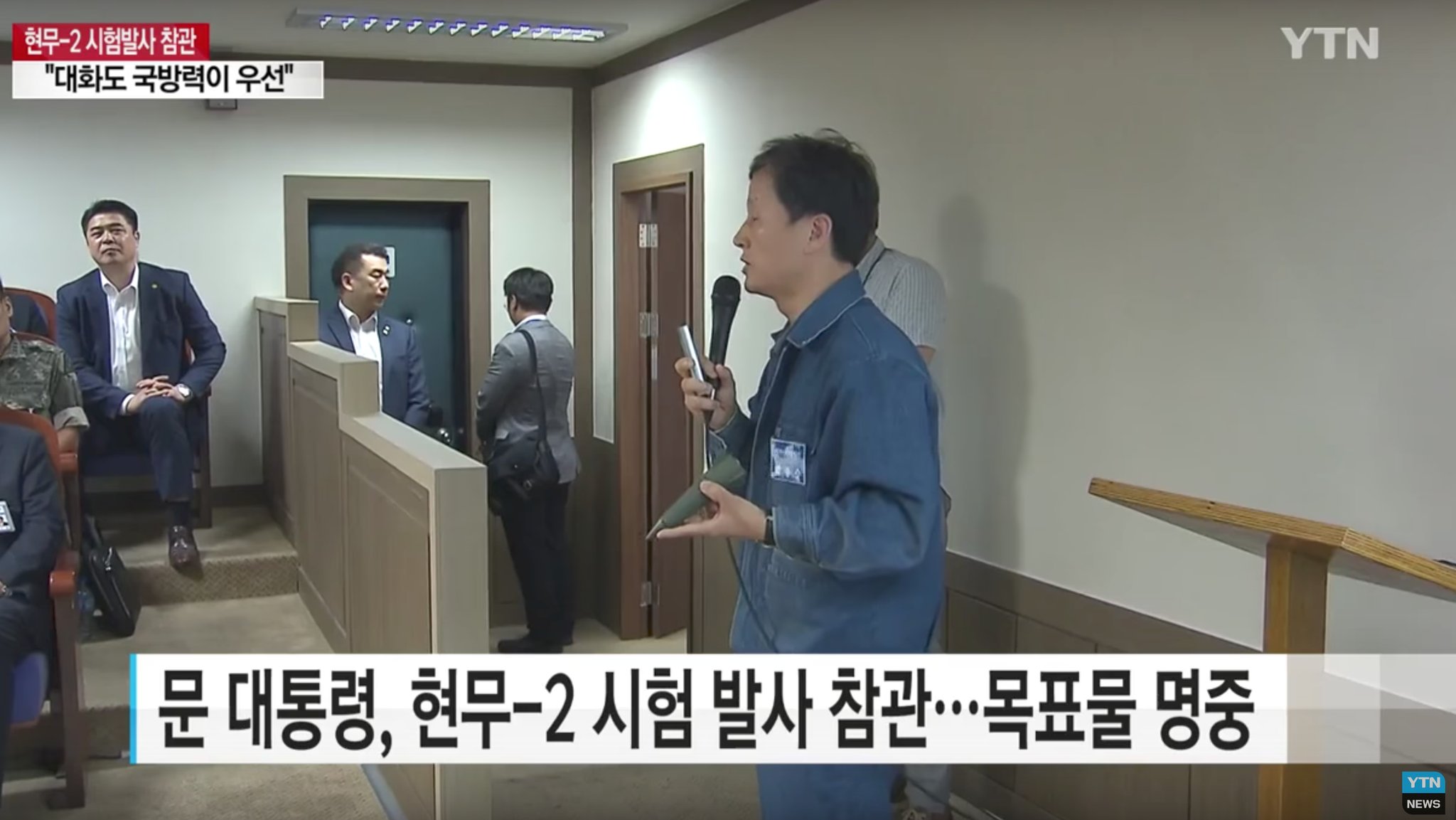
I mean, they were so proud of it. They had a tech guy brief the president wearing a Canadian tuxedo. You are listening to the Arms Control Wonk podcast, the leading podcast on arms control disarmament and nonproliferation. I'm Jeffrey Lewis, the founding publisher of the Arms Control Wonk blog and a scholar at the Middlebury Institute of International Studies at Monterey.
Aaron Stein
0:28
And I'm Aaron Stein, a senior fellow at the Atlantic Council's Rafiq Hariri Center for the Middle East. Korea. But it's the different Korea.
Jeffrey
0:41
It's the other Korea. The other Korea. Launch a missile, get a podcast.
Aaron
0:48
That's right. It's a particularly active month for missile launches.
Jeffrey
0:52
Yeah. Yeah. So this was a fun one. The South Koreans launched a Hyunmoo-2C short-range ballistic missile, and it probably wouldn't have been all that big of a deal. They've done four tests of this missile, and they have two more planned before deploying it sometime this year. But President Moon Maybe feeling a little beaten up by the North Koreans, decided that he would drop by and watch the test.
And in doing so, created a minor media sensation, which led to Schmerler and I geolocating some stuff and me doing a little tweet storm on the underappreciated South Korean missile program.
Aaron
1:40
That's right. I mean, as soon as I saw images of a Korean leader sitting somewhere, With reference or geolocatable things behind his head, I knew you and Schmerler would be on the case.
Jeffrey
1:58
So I guess the first thing to say is the launch happened from a place called the Anheung Proving Ground. We had previously geolocated it because impeached President Park Geun-hye went there to watch a launch. So we kind of knew where it was. Also, missile ranges have keep-out zones. And so we knew where the keep-out zone was, which isn't, I should say, it's not the keep-out zone they used for this test.
It's just that we knew it was surrounded by keep-out zones. And we had previously identified the launch site, which happened at an island that was visible from this main facility, which is run by the Agency for Defense Development, which is the agency that builds Korea's missiles. But man yeah normally they're really careful about that site it's like all blocked out by trees in Naver and they normally don't do external shots but there were some beautiful shots of President Moon shaking hands and posing for pictures outside the building and anytime you do that Schmerler is going to do stuff like notice that they're standing on a road and behind them in the trees is a basketball court
Aaron
3:18
So, in your tweetstorm, number 21 of your tweetstorm, you take a small screenshot of the basketball hoop. Yep. Before we get deeper into this, can I just put it on the table? If you are a nation state trying to scrub this data, just hire like us so we don't make a podcast about this and put it on the internet.
Jeffrey
3:48
So we don't make a podcast about which opsec you have. Yeah. I know. Well, the South Korean OPSEC is especially bad, and we'll talk about that later. But, you know, this is just the test range. They have a whole bunch of super secret missile bases that we're sitting on.
Aaron
4:03
How could you do this to us on the show and the listeners? So that's teasing for another episode when we're ready to go public like the UAE one?
Jeffrey
4:10
Yeah, well, I want to make sure I find them all because they've built them all to the same, at least so far, we think they've built them all to the same pattern. I just repeat the damn pattern over and over again.
Aaron
4:23
Did they launch this one off a ship or off a barge? Yeah, so that's the other crazy thing that happens.
Jeffrey
4:30
So, yeah, not only do we then geolocate where he watches it from, which is a known location, but they launch it off a... It's called a jack-up barge. And it's actually a South Korean-built barge that was used commercially for other purposes that they seem to have bought a couple years ago. And so just like with the Israelis in their recent launch where they put a truck with a canister on a ship, the South Koreans put a truck with a canister on the barge and took the barge out into the ocean and then conducted the launch off of the jack-up barge.
Aaron
5:12
Why did they do that? I mean, why do they put it on the barge rather than just in that wooded area or at least quasi-wooded area just off the Teff side?
Jeffrey
5:22
I'll be honest. I am not completely sure. I mean, there is an island with test infrastructure and launch pads where all of the previous launches that we have images for were conducted. I don't mean that. I want to be clear. I don't think all of the previous tests were from the island, but at least all of the ones we have pictures were from.
All of the ones for which we had pictures were from that island. So I don't really know. I think it might have to do with launch angles. This was a much longer range missile, and they didn't fire it to the full range, but they fired it to a pretty healthy portion of the range based on the NOTAM that Jonathan McDowell found.
And I suspect that it's just a matter of making sure that it's fired sort of out to sea on an angle where they can sort of see everything and they don't fly over anything they don't want to fly over. I mean, I don't know. It seems honestly like I'm coming up with an explanation for them, but it seems rather Baroque to me.
Aaron
6:27
The range, I think, is sort of the story, right? Yeah. The range limits, and then that points to the rather complicated relationship with the United States, missile proliferation, and the history of this program.
Jeffrey
6:41
Yeah, I got a kind of weird reaction from Jonathan because I started talking about the Hunmu-1. This is the Hyunmoo-2. And Hunmu-1 is like a really different looking missile. And the reason I talked about this really different looking missile is because it establishes kind of this unusual situation where in the 1970s, the South Koreans wanted to develop Missile programs, and the United States was not crazy about that, but a deal was worked out in which the South Koreans agreed to a series of missile guidelines that required them to report information to the United States and then limited the range of the missiles they could develop.
In exchange for U.S. assistance. And the South Koreans have been pretty good about violating that on a fairly regular basis.
Aaron
7:32
Yeah, they push the envelope. They like to let everybody know who's boss.
Jeffrey
7:36
Yeah, so what has happened a couple of times is they agreed to, I think it was 180 kilometers, and then they developed the Hunmu-1. And then they started working on the Hyunmoo-2, the first variant of which had a 300-kilometer range. And so they convinced the Clinton administration to increase the range permitted up to the MTCR limit of 300 kilometers, lest we have to find them in violation of the missile guidelines, which we didn't want to do.
And then they were so appreciative of that step that they immediately began working on the Block 2 or the Block, the Hunmu 2 Block B, which had a 500 kilometer range. Because why not, right? Right. And then they managed to get the Obama administration to agree to this new range limit of 800 kilometers so that the 500 kilometer missile was not a violation.
And then as soon as the 800 kilometers was arranged, you know, within, I guess what it is now, it's something like 300. Three and a half years, an 800 kilometer range missile has appeared. And of course, I don't believe for a second that that is either A, the max range of this system, or B, the last missile that the South Koreans will develop.
We're going to have to come back and let them have a, you know, a Tokyo buster here pretty soon.
Aaron
9:07
Yeah, and I think you pointed this out on your tweet storm, and let's flesh it out here on the pod. The design starts to change as you go through these different... The first, the 300, then the 500, then now this 800, in quotes.
Jeffrey
9:22
Yeah, I mean, the Hunmu-1, which was the 180-kilometer range missile, that was... That was a Nike Hercules. In fact, they call it the NHK. Well, all of these missiles have this other name, the NHK, and NHK is Nike Hercules Korea. I'm actually not sure how fully Nike Hercules they are. They did get a solid propellant plant. It was actually a...
I think it was Lockheed closed down a solid propellant production plant in California, and the Koreans bought it. But they also had acquired a similar capability from France. And so I'm not entirely convinced that these things are just fancier Nike Hercules, whatever the name says. But yeah, starting with the Hunmo II, which looks a lot like a TACOMS or Israel's Laura or the Russian Iskander, and basically looks like any really capable short-range ballistic missile.
Aaron
10:33
Which means it's short, squat, and has a wide diameter. Yep. I think we had a good name for this last episode.
Aaron
10:43
Now I forgot what the hell I was saying. Sorry. You've got me. Short, squat, large diameter, good short-range ballistic missile solid fuel. It looks like everything.
Jeffrey
10:55
Yes. So the point is, the Hunmoo 2... Has looked pretty consistent in terms of its booster, but we've now seen three variants of its reentry vehicle. I mean, clearly the booster is getting better because it's going to greater and greater ranges, but we aren't really able to look under the hood and see what exactly is happening there.
The fins also are changing. Well, that's what I was going to say, is this latest one is cool because it's got these little control fins on the reentry vehicle.
Aaron
11:28
Oh, you're talking about the first stage ones. Yeah, I think the booster fins are also changing shape just for minor visual changes. For listeners who aren't as well-versed in missiles, what do the fins... Tell why that matters. Well, the other term for those is control surfaces.
Jeffrey
11:47
Right. So the control surfaces... Are a pretty easy thing to alter as the aerodynamics of the missile change. So I was less interested in the fins on the base of the missile than I was the fins on the reentry vehicle. Oh, for sure. Which the South Koreans are very proud of. And not only, I mean, they were so proud of it that they had a tech guy brief the president wearing a Canadian tuxedo holding... Oh, no, wait, now, wait.
Jeffrey
12:22
Denim on denim.
Aaron
12:23
Oh, no, I know what it means.
Jeffrey
12:26
I just have not seen this picture. Oh, it's in my tweetstorm. Schmerler noticed it. Schmerler was like, hey, look at the guy in the Canadian tuxedo. He's got a little model of the re-entry vehicle.
Aaron
12:40
Oh, that guy!
Jeffrey
12:40
Yeah. That certainly looks like denim. It looked like denim to me. I clearly... Clearly we know where he got his engineering degree. That's hilarious.
Aaron
12:59
He's holding it. It's in his left hand and the microphone's in his right. It looks like he has a PowerPoint thing in his right hand to move forward. I'll embed this screenshot in the show notes so that people can see it. Keep going, sorry.
Jeffrey
13:15
Right, well, so we've gotten distracted. But the point is that this missile, the Hyunmoo-2, has gone from 300 to 500 to 800 kilometers. And I think it's sign of a pretty capable missile program that the South Koreans have that I think most Americans don't think about very much. And, you know, as Scott knows, Scott and I have been having fun geolocating...
All of the South Korean production facilities. So Hanwha is the company that actually makes the missile, and they make it at a site in Daejeon, actually near the ADD headquarters. That's where they assemble the missiles. Doosan Heavy Industries makes the truck. And Scott, you and I are still looking for that solid propellant factory. Is that right?
Aaron
14:04
Yes, that's correct.
Jeffrey
14:06
I mean, you haven't, in the time we have, since we last spoken, you haven't found one you really like, right?
Aaron
14:11
We've got some candidate sites, but it's not a sure thing yet.
Jeffrey
14:16
And I think the complicated thing here is that, as I say, the South Koreans imported that facility from France and then another facility from the United States. My understanding is they put those at the ADD, Agency for Defense Development, main site in Daejeon. And so for the Hunmu-1, I think the propellants were made in-house. I presume that they're not still doing that.
I mean, South Korea has a ton of heavy industry now, and so I'm guessing that somewhere else there is a propellant plant. I just haven't been able to figure out where it is. Does that seem right to you, Scott? Yep. It's fine to say no.
Aaron
14:56
No, I mean, that's about where I am as well. I've been tracking both Hanwha facilities and then, what is it, Limnext One, which does a lot of MRLS and smaller, I think, double-base solid propellant industrial applications because I want to make sure I get the false positives and the ones not associated with this. And so far, there's not anything that's as clear as the Mitsubishi Heavy Industries one in Japan or the North Korean sites.
Jeffrey
15:26
And it's a whole other podcast, but I showed Scott where the LIG Next One Gumi 2 plant that makes the cruise missiles is located.
Jeffrey
15:34
That was good. That was a good find. So, yeah, we actually have a pretty decent make on all of the South Korean facilities, which they think are all secret. We know where the proving ground is. We know where the missiles are assembled. We know the manufacturer of the truck. I guess I could find the truck plant, but I don't really care.
And we know where the big ADD site is. All of which. We know where they shoot hoops. And we know where they shoot hoops. It's actually just a stanchion that we think is sitting on a, on a tennis court. It's a weird arrangement, but they have like a little recreation area at the, at the foot of this of this hill.
Yeah. The barge is also kind of cool. It reminds me of a mosque with minarets. Yeah, well, they left the International Maritime Organization number on it.
Aaron
16:21
Yeah, I saw that.
Jeffrey
16:21
So Schmerler was actually, I mean, when I said it was, you know, built in South Korea and that they bought it, I mean, Schmerler was able to identify the exact vessel.
Aaron
16:32
You know, it's a really interesting... It's called Sirius. It's like my satellite radio. That's right. Okay.
Jeffrey
16:42
Well, I mean, I think the thing that at least emerges for me is how extensive the South Korean missile program is. We almost never see it. The National Air and Space Intelligence Center just released this new report on the ballistic and cruise missile threat that makes no mention of South Korea's missiles. So it's this... Really sophisticated and advanced missile capability that is deployed.
You know, it's not like something they're making. It's something that has been made and is getting bigger and better. And like almost no one ever talks about it, which I think is really interesting.
Aaron
17:22
Well, they're able to use, look, I think they're able to use, obviously, the North Korean problem and their own alliance with the United States to their advantage where they can keep pushing the ball forward. No one's really willing to call them on it. And so they're able to fly under the radar.
Jeffrey
17:42
Yeah, I mean, the reason I think it's really interesting is because I suspect that the reason that they're investing in these capabilities is because when they talk about the kill chain, I don't think they have any hope of trying to go out and hunt North Korean road mobile ballistic missiles. I think they're planning on trying to kill Kim Jong-un at the outset of a conflict.
And cruise missiles and ballistic missiles that are really precise are their way of doing it. You know, there was this leak that they had this... Massive punishment and retaliation plan in which they were going to level sectors of Pyongyang. Like, I think that's about decapitation, right? It's about trying to kill Kim before he gives the order, which strikes me as, like, a really terrible idea.
Yeah, but what other options do they have? They're thinking this through if we get to that point. Well, so that's what I think is so interesting about this problem is it's a little bit like a friend of mine who's a doctor. He has another friend who's a lawyer. And they were having this conversation where people have these problems in their lives.
And sometimes people decide that their problems are medical problems. And so they go see a doctor. Right. But sometimes they decide that these problems are legal problems and they go see a lawyer. But actually, you know, the underlying problems are something different. Right. Like like they're stressed out because of their job, you know. So but they've decided it's a medical problem.
They have a headache or they've decided it's a legal problem. They need to get a divorce or or whatever. I think the same thing happens here where. You've got this nuclear problem, and if you decide it is a military problem and you turn to your military and you say, right, so what's our plan? The military is not going to look at you and say, well, all your plans or options basically suck, so there is no plan.
Like, there's no good plan. They're going to look and they're going to come up with the best of all the bad plans. And I think decapitation is the best of a series of really terrible ideas. But it's still a terrible idea. And so you need people with different responsibilities to weigh in and say, this isn't really a military problem, or it's not a problem that has a military solution.
So stop. Don't do this decapitation fantasy. Because we fall for it every time. That's how we started off. The 2003 Operation Iraqi Freedom, right, with the decapitation strike on Dora Farm, and it was a fiasco.
Aaron
20:22
Right. No, that's exactly right.
Jeffrey
20:24
Thus setting the tone for the remainder of the liberation and reconstruction of Iraq, which remained a fiasco.
Aaron
20:30
And then returned. We're still there. Don't forget.
Jeffrey
20:34
It continues to be a fiasco. Yeah, right. At the time, Dora Farm seemed like a fiasco, and now we realize that was the high point.
Aaron
20:43
It was all downhill from there. But I think that's right. I mean, when you place... When you ask for the military for military options, they will give you military options. Which is their job. Which is their job. And then on top of that, you have... The nonproliferation norms, and so you have to go conventional. And then as guidance improves and you are able to put missiles through windows, your window to try and take out, particularly in a highly authoritarian centralized state, it becomes, you know, you can see the genesis of policy option.
That's right.
Jeffrey
21:25
And so, you know, I think that that helps account for the enormous investment that the South Koreans are making. It's a really interesting thing, though, because I think it is probably the most interesting dynamic right now for the security of the Korean Peninsula. This idea that the South Koreans have this independent option to go ahead and escalate a conflict.
Because that's their best chance of getting out of this thing scot-free, or at least so they think. But I don't ever hear U.S. commentators discussing this possibility. And in fact, I've had some conversations with people where I treated the South Koreans as kind of an independent center of decision in a crisis. And I mean, I was pretty directly told that I was wrong, right?
And that I couldn't do that. And that that wasn't an accurate portrayal of the situation. And that the South Koreans would basically just sit there politely and wait for the U.S. to tell them what to do. And it's like, oh, that's interesting. That doesn't really resemble the South Koreans I know, you know? And I mean, maybe that's different...
I mean, almost certainly it's different under a President Moon who's not likely to be nearly as hawkish as his predecessors. But at the same time, you know, those incentives are pretty similar.
Aaron
22:40
So... I mean, yeah. And then as you say, you know, this is... Would you say this was the third test? Fourth. Or they have three left before they're ready to deploy this?
Jeffrey
22:52
Fourth of sixth. Fourth of six. Fourth of six. And they said that they'll probably deploy later in the year. So, you know, it... You know, one thing is when the South Koreans convinced the Obama administration to increase the range limit from 300 to 800, they were ready with that 500-kilometer range missile, like, really quickly. You know, so quickly that it was really clear that they was already...
Ready to go, and they just, they needed the political blessing. And so now they've done the 800-kilometer range one. I, you know, I think that the test cycle is I think the design cycles are pretty far ahead of the test cycles. Well, history tells us that, so we shouldn't be surprised that when they want to push the envelope again, that they'll have a system ready to go.
Jeffrey
23:47
And it'd be really interesting to see how this plays out. I mean, I don't think Moon will push for this. That would seem sort of out of character for him. At the same time, you know, he did make the political decision to go watch this test. So he clearly...
Aaron
23:59
I was about to say, he decided to go down there and stand next to a basketball hoop. Right. Or something that looks like a basketball hoop.
Jeffrey
24:06
I mean, I can't read his mind or predict the future. But I can certainly imagine a scenario in which he has a fight with the Trump administration over THAAD and a way to position himself in the kind of happy center of South Korea's anti-American sentiment is to tell the progressives, yeah, I told the Americans to go buzz off about THAAD and then, you know, to look at people on the right who may have supported him and say, oh, and by the way, you know, like...
I'm also prepared to tell the Americans to go buzz off about their 800-kilometer range limit. Right? So, you know, you can imagine a situation where by trying to shake the South Koreans down for more money or make them do things they don't want to do, that Moon kind of has this sweet spot of saying, forget THAAD. Like, we're just going to spend more money on our own missiles and our own missile defenses, and we don't, like, need your stuff.
Right? Because I actually don't think the South Korean left is against missile defenses. I think the South Korean left is deeply worried about the United States. And so if those are Korean missile defenses and not American missile defenses, I think the political calculus is pretty different.
Aaron
25:22
Well, I think to prove that, you'd need a comprehensive and mass deployment of some sort of indigenous interceptor system, Jeffrey. And we're at least 20 minutes away from that.
Jeffrey
25:34
Yeah, I mean, the South Koreans are really investing pretty heavily in their own indigenous missile defense systems, and those generate almost no political controversy, as far as I can tell.
Aaron
25:43
Yeah, they just announced the mass production of KSAM, so...
Jeffrey
25:48
Yeah. And so, you know, I just, in general, I find the South Korean industrial base is really advanced, and it's producing a lot of really interesting and capable weapon systems. And it gets, in its sort of, you know, the systems aren't as long range as the North Korean systems, but they're way better. And, you know, the cruise missile, which is another podcast, but the cruise missile is really quite capable too, and they get no attention.
I thought maybe we'd have this conversation to try to fix that a little bit.
Aaron
26:24
Well, I think it's the first of three. I think the next one we'll do is on the cruise missile, and after that we'll do KSAM. Why not? Sounds like fun. We'll just have to wait for them to test each, because, you know, we have standards. We have standards.
Jeffrey
26:35
Unless somebody wants to pay us. Or if, you know, the South Koreans want to pay us not to have that podcast where we list the location of all their secret missile bases. I'd be open to a negotiation. Why not?
Aaron
26:50
Once again, armscontrolwalkpodcast at gmail.com.
Jeffrey
26:58
We'll give you the special Lockheed price of $3 million a month. That's right. That's right. Well, it's been fun talking about one of my favorite underappreciated topics, the South Korean Missile Program. Hey, Aaron, thanks for joining me. My pleasure. And thank you for listening.