
As regular readers know, there’s something of a dispute in the wonk world over the nature and origins of the North Korean missile program. Basically, it comes down to two issues:
First, did a team of Russian scientists and engineers from the Makeyev design bureau in Miass help the North Koreans duplicate the SS-N-6 SLBM, repurposed as a road-mobile IRBM?
The answer to this question is pretty clearly “yes.” A bunch of Makeyev technical specialists were caught at the airport in 1992, and there have been too many sightings of the missile leaked to the press over the years to be ignored. We’re still waiting to see the deployed missile (i.e., with our own, open-source eyes), but it seems like just a matter of time.
Second, are North Korea’s Scud and Nodong production lines nothing but Russian equipment making missiles of Russian origin, operated or overseen by Russian personnel?
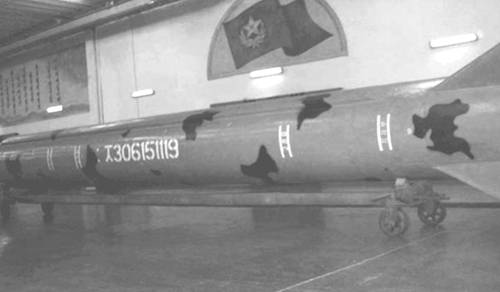
This is more contentious. The idea originates with one Robert Schmucker, a German consultant who started advancing the idea in the late 1990s. The thinking goes like this: North Korea started selling Scuds in the 1980s and Nodongs in the early 1990s, but didn’t conduct nearly enough tests to explain their reliability. Therefore, these missiles must have come from a mercenary Russian outfit operating in North Korea. Or possibly they are based on Russian rocket engines or engine components sold to North Korea, not designed or made there.
Because the Schmucker Thesis raises more questions than it answers, it’s surprising to see it win acceptance lately from some serious American experts on North Korea and missile technology. It’s with a little added hesitancy, then, that we should continue to reject it.
Reasons for Skepticism
The first problem is that the Nodong never existed in Russia—or rather, there is no convincing evidence for it. The Scud family of missiles is of Soviet origin, but the Nodong first appeared in North Korea. Schmucker rather implausibly assumes that it must have existed in Russia going back to the 1950s, only the rest of the world never knew about it until he inferred it.
The second problem is in the timeline. North Korea started developing the Nodong in the late 1980s, before the collapse of the Soviet Union and the end of regular state support for the missile enterprises motivated scientists and engineers to seek new work wherever they could.
Valentin Tikhonov’s invaluable survey of the nuclear and missile cities illustrates the point. Facing straitened economic circumstances, large numbers of technical specialists at Miass started moonlighting for the first time in 1990. This is in line with what’s known about the SS-N-6 transfer. But by this time, a Nodong prototype had already been sighted in North Korea.
Of course, we shouldn’t rule out the participation of one or even a few enterprising Russians in the development effort. That’s much easier to swallow than the idea of a wholesale transfer of an existing but hitherto unknown production line, or the transfer of rocket engines or components from an existing but hitherto unknown stockpile in Russia.
Tomorrow: Different reasons why there was so little early testing.

It’s 100% conclusive that as of this writing the DPRK nor the IRI are able to manufacture a closed cycle high pressure engine such as Isayev (Not Makeyev) OKB 4D10. As to the BM-25 fiasco, that is clearly a case bad journalism coupled with a good propaganda campaign intent on scaring E.U. member states into fearing an Iranian ICBM and thus support tougher sanctions. It has been recycled as of late to jostle congress into supporting the defective BMD— initiative. I believe the Unha-2 shot speaks volumes about the state of the DPRK’s state of the art when it comes to engine technology i.e. open cycle NoDong x 4.
“Schmucker rather implausibly assumes that it must have existed in Russia going back to the 1950s, only the rest of the world never knew about it until he inferred it.”
But the rest of the world knew about it! It simply didn’t know how that missile (the R-15) looked like in detail (not helped by some artist’s impressions depicting that missile type as an oversized Polaris A3 – something completely implausible, considering the soviet SLBM-technology of that time-frame)! Looking at the soviet technology (IRFNA/Kerosene, open-cycle engine made of corrugated steel with film-cooling by fuel-rich injection at the rim of the injector head, the general shape of the thrust chamber, the general proportions of the missile body made of steel, the conical type of reentry vehicle, jet vanes etc.) of the time (1955-1958), i still can’t understand how somebody can not see the possible connection between the R-15-program and the Nodong-A.
Looking more closely at the Nodong-A (not to be mistaken for some iranian-modified experimental models with inverted tanks and lightened warhead – the Iranians apparently weren’t content with a missile with too little range for threatening Israel…), we see a missile with the general layout and proportions of the R-17/SS-1c/Scud-B and a diameter in the range of other soviet missiles of the time-frame, but less compact or exhausted components (like the more bulky guidance compartment or the, based on the lower expansion-ratio, estimated chamber pressure of only 55bar opposed to 69bar on the Scud). So the idea suggests itself that this is rather a predecessor, not a successor of the R-17/SS-1c/Scud-B – again pointing in the direction of the R-15.
Do we know for sure that the R-15 was never produced (i’m thinking of prototypes) in the 50ies? Or that it was not flight-tested back then (possibly the flight-tests, provided they were detected at all by western intelligence, were misinterpreted as belonging to the R-13/SS-N-4/Sark or R-21/SS-N-5-programs – mark that both programs are not exactly well-understood in the west, either)? The answer to both questions has to be a clear no!
Besides, if there is no linkage, why can then drawings of a thrust-chamber very closely resembling that of the Nodong been found in ~50 year old soviet books about rocket engine production (“production technology of liquid rocket engines” by Vorobey and Loginov)?
From an engineer’s point of view (and anybody asserting differently outs himself as not having had that type of education…or any first-hand experience in industrial maufacturing…), the irrational notion that the North Koreans first “reverse-engineered” the Scud-B to perfection (producing indistinguishable 100%-clones that are exported immidiately, even without any type of flight-testing), then, without further knowledge of that program, independently re-designed the soviet Scud-C and eventually “designed” a missile with all technical aspects of a predecessor of the Scud-B (and all this without any previous expertise or credible flight-testing activity!) is the real implausible part!
The logical fallacy this time Jochen, is a straw man argument. First you ask us to accept that the NoDong-A is the R-15 as a given and then you berate us for not accepting the logic built upon that premise. We accept the logic, we just don’t accept the premise. The R-15 was never flight tested, it was never assembled; it was a paper exercise. It was deemed to have to few benefits to pursue. So why would the DPRK bring to fruition an old soviet project with no working prototypes?
Reverse engineering the Scud and then incrementally improving the design until they were ready to scale it up as the NoDong seems far more plausible than the alternatives. And to speak to the similarity of the NoDong’s thrust chambers to those depicted in Russian textbooks; wouldn’t that be expected without having to resort to the Deus ex machina device of the R-15 as NoDong-A?
Azr@el:
Just as “never” is a very long time, 100% conclusive is very conclusive.
I think I understand where you are coming from. It is only reasonable to harbor doubts about NK’s independent ability to manufacture SS-N-6’s in their totality. After all, the second stage of the Unha-2 appears to involve only the vernier engines, and as I believe you pointed out earlier, having mastery of this sort of technology would seem to obviate the need for the Unha-2 first stage, as evaluated by Postol et al. There’s a great deal we still don’t know about this.
On the other hand, it appears only too easy to underestimate the North Koreans, and the presence of road-mobile IRBMs based on the SS-N-6 is too widely attested by reputable sources to be dismissed. I just don’t think the IC people are making this up, or are that badly in error.
(Whether the missile exists in Iran is less clear.)
I used to take the opposite view about the Musudan, but also maintain that it’s salutary to change one’s mind from time to time. Which brings us to
Jochen:
If the Nodong has the same characteristics as Soviet missiles of the 1950s, perhaps that’s because the Soviet missiles of the 1950s were also the North Korean missiles of the 1980s. And if it’s not quite as well-fashioned as the Scud-B, perhaps that’s because it’s a North Korean product. Without being at all dismissive of its technical achievements, let’s recognize that North Korea’s missile complex is not the equal of its Soviet predecessor.
I hope you take my point. Either explanation offers a coherent interpretation of the facts, but one is a lot simpler. If there are anomalies in the North Korea theory — the limited testing record — there are more anomalies, and bigger ones, in the Soviet theory.
My next post addresses the question of limited testing.
There has been more detail of the D-3 system/R-15 missile program published in recent years, such as Pavel Kachur’s series on Soviet SLBMs in Tekhnika i Vooruzhenie magazine. Part 7 was devoted to the D-3 in the January 2006 issue “Kompleks D-3: “Perekhodniy vozrast” which includes several drawings of the R-15 including a simple cut-away of the propulsion system which was a five-chamber design by D. D. Sevruk at OKB-3 of NII-88. So not a plausible candidate for the single-chamber No-Dong.
My own hunch is that an unknown Chinese ballistic missile is the origin of the No Dong, not a Soviet type, as the early Chinese history is a lot more sketchy than early Soviet programs.
Steve, thank you, you’ve done me a minor service and Jochen a major one by illuminating details of the R-15.
As to the PRC’s involvement in the NoDong-A, I believe the likely candidate is the DF-61. This was a joint PRC-DPRK storable ballistic missile of 600-1000km range. It was rumoured to incorporate a PRC designed inertial strap-down system, high pressure turbopump, a diameter larger than the scud and a separating warhead. Work on this project coupled with reverse engineering of the scud most likely accounts for the paternity of the NoDong-A. The NoDong in this light can be viewed as a stretched DF-61 with a 150% scale Isayev OKB S-2.713 inspired engine, since the DF-61 engine was never completed. Possibly some Rocket Ronin from Russia helped with some of the integration to flesh out the overall picture.
Steve Zaloga:
First of all, i’d be very interested in that source (since the data on the D-3 missile complex is indeed somewhat scarce). Can you please post some pictures (or, if available, a link), since i don’t have access to that particular copy of that magazine?
Secondly, are you 100% positively sure (or can you exclude that possibility with absolute certainty) that that five-chamber engine does not depict the main-chamber plus four-chamber-vernier engine of the R-13/SS-N-4/Sark, the Isayev S2.713 (if that 5-chamber-engine uses IRFNA/Tonka, i’d say chances are good that that is the case)?
And last: Why would the Chinese have chosen a propellant-combination (IRFNA/Kerosene) they have no documented experience with? (BTW, i personally don’t consider the chinese missile program as anyhow more shady than the early soviet one…both are not at all well-understood in the west!)
Even a main-chamber plus four vernier thruster style S2.713 would rule it out as a production line plug and play for the single chamber NoDong-A. Again the easiest route seems to have been a 150% version of S2.253 inspired by S2.713 turbomachinary. I’m fairly sure that at the time of the NoDong-A, neither the Iranians nor the North Koreans had the expertise to conduct the flow analysis if they wished a 150% scale S2.253. Thus they must have closely modeled the turbomachinary upon something with the same working fuel/ox combo with roughly the same ISP and thrust. S2.713 was apparently Nitric Acid and amine, but surely it’s so old that calculating it’s replumbing for a variety of fuel/ox combos must not only be in half a dozen Russian textbooks but the worked out answer is probably also in the solution guide.
I don’t know how to post images here, but I’d be happy to pass on scans of the images to interested parties.
I am not claiming any inside knowledge of Chinese programs, but I do not find the purported Soviet No Dong ancestor mentioned here (R-15) to be at all plausible given more recent and more detailed Russian accounts of the program.
As a post-script to my last message, I forgot to mention that the drawing in the TiV article does not show all five chambers since it’s a side profile corss-section (so it shows three) by the text describes the original configuration as a five-chamber rocket engine (“pyatikamerniy ZhRD). I just did a quick Google search of Russian sites and the forum on the Novosti Kosmonavtika site had a discussion in honor of Sevruk’s birthday and identified the engine designation as S3.41. (See: http://www.novosti-kosmonavtiki.ru/phpBB2/viewtopic.php?p=447175&sid=0c5506caa9eeccfbb8737b463ad14dc3)
Here’s the drawings. (If I understand the upload process!)
Steve, I’m in your debt. I hope you truly appreciate the issue you’re putting to rest with this information.
Jochen, I believe your battleship is taking on water. It has been been a long hard slog, eh, but I hope there have been no hard feelings. I truly admire your diligence, well reasoned arguments and persistence, yes the persistence. I think we have both learned something or many somethings…I’ve learned I’m petty and you’ve learned that the NoDong-A is not the R-15 nor it’s direct offspring.
Steve Zaloga:
First of all, thank you for posting these pictures and that link!
Unfortunately, the drawing of that engine is only a rather crude freehand sketch; Thus it doesn’t allow a more thorough analysis of it’s exact design. How many chambers does this have actually? The only thing we can say with some certainty is that it’s a multi-chamber-design with a common turbopump. But what type of propellants did it use (my guess would be, judging from the general tank-volume-ratio of the supposedly belonging missile that it’s either IRFNA/Kerosene or IRFNA/Tonka – but unfortunately, that picture doesn’t tell us exactly where the lower tank ends, so i dare not say which of both combinations this is – anything mentioned in the text on this issue?)? Or what thrust-level(s)?
An interesting detail in that engine sketch might be the toroidal tank around the fuel lines: this strongly reminds me of the RD-214 of the R-12/SS-4/Sandal, where the turbopump was propelled by catalytically decomposed hydrogen peroxide, which was stored at approximately that position in exactly such a type of toroidal tank. Can we exclude the possibility that this sketch is perhaps related to the RD-214 instead of that Sevruk S3.41?
On the other hand, the whole missile concept is reminiscent of a miniaturized R-12/SS-4/Sandal – and i must say that such an approach would make sense for a Yangel/OKB-586-design.
Generally, i see some inconsistencies in the overall data presented together with these pictures: the maximum airspeed should be at least double that “5000km/h”-figure (unless they’re referring to above-ground-speed: 12 minutes flight time would be roughly consistent with ~1000km range), and i have difficulties to find any type of thrust-vectoring system in those pictures. Were there (non-illustrated) jet-vanes? Or was it intended to gimbal the outer chambers (if this is in fact a five-chamber-design)? Also the launch weight of only 18.5t would be rather low for a missile with these dimensions, and what about the 21.5-22t “launch weight with gas generator” (is there any better description of this? Does this perhaps refer to a seperate turbopump-propellant, aka hydrogen-peroxide? Nonetheless, 3 to 3.5t would be a rather big amount allocated to that purpose…)? Also, how should the missile have been stabilized against swell (a Horizont/Vertikant gyrostabilized system doesn’t tolerate movement during run up – that’s why missiles like R-11FM or R-13 used a decoupled, gimbaled launching stool)? Well, at least that would offer explanations why the project was cancelled.
Another question would be: is this the final version of the R-15-project? What happened with the design after Sevruk (if i got that right, Isayev stepped into the breach…) got dismissed and the transfer from OKB-586 (Yangel) to SKB-385 (Makeyev)? Is the design we see in those pictures really the final version, or only some early studies?
Let me expand on why i see a possible interconnection between the R-15-project and the Nodong-A:
Nodong-A (reconstructed data):
– length of ~15.6m;
– finspan of ~2.55m;
– range (theoretical) of ~1000km;
– engine of Isayev (not Sevruk!) heritage, but clearly no simple upscale of the Scud-engine 9D21 (different scaling factor than the rest of the missile! Also: different proportions); Instead, with a chamber pressure of only 55-56bar and an expansion ratio of ~9.3, this looks like it’s less evolved than, aka a predecessor of the 9D21 (let’s not forget that Isayev designed over 120 types of rocket engines – but only ~40 of them were ever actually used);
– general layout similar to Makeyev R-17/SS-1c/Scud-B with identical l/d (aka aerodynamics), but clearly no simple upscale of that missile (e.g. different tank-lengths, proportionally thinner wall-material, proportionally much smaller, separable warhead etc.);
– guidance compartment with the proportions of the Scud-B, but hatches not larger than on Scud-B (indicating similar-sized internal components in a less dense array);
This lets me come to the conclusion that the Nodong-A has several characteristics of a Scud-B-predecessor (designed from the start for longer ranges), and i’d sort something like that somewhere in between the R-11/SS-1b/Scud-A and the R-17/SS-1c/Scud-B; Since R-12, R-13, R-14 and R-16 are well-known, i would say that the R-15, which would also share the same general specifications (has to fit into a tube 3m x 17m, 1000km range) would have been my hottest candidate. If not the Yangel-R-15 with a Sevruk-engine – maybe a parallel Makeyev-project with an Isayev-engine?
(BTW, the similarity in thrust level of about 27-28t in the IRFNA/kerosene Nodong-engine and the LOX/alcohol R-1/SS-1a/Scunner-engine perhaps offers another possible explanation: an even earlier effort to supplant the Scunner’s cryogenic propellants with storable ones, not unlike the german Aggregat-8-project; Do we have any data on or against something like this? What were the R-4 or the R-6, provided those designators were not never used?)
The “launch weight with gas generator” refers to a cold launch system to propel the rocket clear of the submarine before main engine ignition. Observe the cap at the bottom of the R-15 and the sleeve around the rocket with the apparent riding fin midbody, a powder contained in a unit at the bottom of the launch cell, most likely coal, would ignite forming a high pressure gas that would propel the cap, sleeve and rocket out of the tube for an out of tube main ignition. Tricky and dangerous, no doubt one of many reasons the R-15 died on the draft board.
With respect to Sevruk, you have your timeline confused, OKB-3 was dissolved in Dec of 58, the R-15 was cancelled in Dec of 57. Isayev didn’t work on the R-15, Yangel was prime and OKB-3, Sevruk, handled the engine, i.e. S3.41. Had Isayev any part in the engine design he would have insisted on a designation S2.# or S5.#. For instance, in 1957, during project 217 to improve the supersonic performance of the SA-25 Berkut, Sevruk’s exploding engine, the two chamber variable thrust S3.42A was handed over by Sevruk to Isayev, where Leontiev finished it as the S5.1A.
As to the final form of the R-15, there was none, it was cancelled before it got off the board, a year after the design bureau that handled it’s engine was dissolved and it’s members merged with a successful design bureau.
As far as the lower engine pressure of the NoDong opposed to the S2.253, consider it an artifact of a first try at designing by the DPRK, the IRI seems to have recovered this slack in their Safir engines.
The aerodynamics of the NoDong seem to be informed by the DF-61 design work and as such would not be a simple scaling of the scud.
With respect to the rest it seems a desperate clutching for straws. Honestly, I feel it’s time you internalize the fact that the DPRK engineers are proficient at their craft and have been able to design the NoDong-A without a secret ported production line of some pre-historic soviet program.
I’d guess that such a SPGG ejection system would be a lot bigger! (BTW, coal???)
Even if only half that 3-3.5t were committed to that little stub, this would result in something about as dense as solid concrete.
Instead, the general layout of that tube looks to me more like intended for a classical hot-launch (and that would additionally be a typical solution for soviet silo-launched missiles of that timeframe; Cold-launching, on the other hand, was AFAIK a completely foreign concept to the Soviets back then).
It would be highly interesting if that magazine-article delivers a better description of that “gas generator” (and if this is possibly connected to a seperate turbopump-propellant – What is this toroidal tank in that engine-sketch for???). Especially the particular wording in the original language would be interesting, since there is so much potential for loss/misinterpretation in translations.
“OKB-3 was dissolved in Dec of 58, the R-15 was cancelled in Dec of 57”
Where do you get that “cancelled in Dec of 57”-figure from?
Look e.g. here:
http://209.85.129.132/search?q=cache:lA59SZ6mhdoJ:www.darkgrot.ru/pathologies/igrushki/raketnoe-oruzhie/article/2040/+%D0%A0-15+%D0%94-3&cd=2&hl=de&ct=clnk&gl=de
or here:
http://submarine.id.ru/sub.php?639
or here:
http://209.85.129.132/search?q=cache:RkM0VzrRHnsJ:www.yuzhnoye.com/%3Fid%3D14%26path%3Dabout_company/history/missiles/missiles+%D0%A0-15+%D0%94-3+639&cd=15&hl=de&ct=clnk&gl=de
The first link explicitly mentions early conceptual works by OKB-1 (Korolev), which had previously designed the R-11/SS-1b/Scud-A (BTW, initially in 1956, the R-15 was obviously designed in parallel to the R-13/SS-N-4/Sark), while the last link mentions a “transfer of documentation” to SKB-385 (Makeyev), who later on designed the R-17/SS-1c/Scud-B.
“As far as the lower engine pressure of the NoDong opposed to the S2.253”
I guess you meant the pump-fed S5.2 (aka 9D21), not the pressure-fed S2.253 (aka 8D511)?
“the IRI seems to have recovered this slack in their Safir engines”
You may be surprised that i’m thinking somewhat along the same lines (it’s theoretically possible, sufficient reserves in the original design provided, to ratchet the p-c up with a given expansion ratio, although that will result in overall loss of potential efficiency – the opposite direction is impossible in case of a sea-level-start!), but the low expansion ratio tells me that that thrust chamber was designed from the start for that lower pressure – and that would speak against a simple blow-up of the S5.2/9D21! If the NKs really are so much better than those ape-like american or european (or iraqi or indian) engineers who fail where those techno-wizards effortlessly succeed, and are in fact capable of (re-)designing/manufacturing perfectly working engines for their Scuds with 69bar p-c without any previous experience (or outside help) on that sector, then why this step backwards?
“The aerodynamics of the NoDong seem to be informed by the DF-61 design work and as such would not be a simple scaling of the scud.”
1.) The chinese have/had no missiles with aerodynamics (or general layout or propellants) comparable to the Nodong-A (If you can traceably cite a chinese example, you are welcome to do so – i can’t find a single one!).
2.) The Russians have! Compare a Scud-B (or a Scud-C, which has identical aerodynamic shape) with a Nodong-A: both have indisputably very similar aerodynamics (l/d, body shape, proportions/layout of the fins)!
To clarify, I said the NoDong-A seems to have been informed by the DF-61, meaning that the DPRK has some aerodynamic design capability and thus the NoDong should not be expected to be a linear scaling of the scud.
And yes the S5.2 of the scud-b not the S2.253 of the scud-a.
As far as the R-15, the proposal was finished Dec of 57, it wasn’t given a green light so for all intent and purposes it died in Dec of 57 not in Dec of 58 when OkB-3 was absorbed.
Cold-launching is actually a Soviet concept, in fact the first cold launched SLBM R-21 was a Soviet design as was the first silo and land mobile cold launched ICBMs. And yes coal-gas ignition system driving a piston is a common vertical launch technique in Soviet, Russian and PLA Navies.
With respect to the NoDong engine, I assume the DPRK drove it far below it’s design potential as a safety precaution. Imagine you just scaled up a Scud-b main engine chamber and nozzle, mated it with a new turbopump and new plumbing and were unsure about your quality control, would you rev it up to the edge? I assume the IRI has more confidence in their quality control and were able to tweak their NoDongs in their Safir design to run hotter…and or select a more energetic fuel/ox combo.
Dear Azr@el,
First of all, the R-21/SS-N-5 was hot-launched from a flooded tube, not cold-launched (just like the R-27/SS-N-6/Serb, R-29/SS-N-8/Sawfly, R-29R/SS-N-18/Stingray or R-29RM/SS-N-23/Skiff – one of the reasons why i personally consider the Golf-II, Hotel-II, Yankee-I, and all Delta-classes of submarines to be death-traps); The silo-launched land-based missile types R-12U/SS-4/Sandal, R-14U/SS-5/Skean, R-16U/SS-7/Saddler, R-36/SS-9/Scarp, UR-100/SS-11/Sego, MR-UR-100/SS-17/Spanker, UR-100N/SS-19/Stiletto, RT-20P/SS-X-15/Scrooge, RT-15/SS-X-14/Scamp-Scapegoat and RT-2P/SS-13/Savage also were hot-launched.
The first soviet/russian try at cold-launching (first applied in the west in 1960 in connection with the UGM-27A Polaris A-1) was the Temp-2S/SS-X-16/Sinner, which was followed by the RT-21M/SS-20/Saber, R-36M/SS-18/Satan, R-31/SS-N-17/Snipe, RT-2PM/Topol/SS-25/Sickle-A, RT-23/Molodets/SS-24/Scalpel, R-39/SS-N-20/Sturgeon, RT-2PM2/Topol-M/SS-27/Sickle-B and finally the R-30/Bulava/SS-NX-30.
Generally, cold-launching-SPGGs (for Solid Propellant Gas Generator) characteristically employ a cartridge-packed charge not unlike in composition to solid rocket propellants for generating large amounts of relatively cool gas in rather short time (the whole process is reminiscent of the mode of operation of a mortar); I doubt that coal-gas-generation (which needs an additional influx of an oxidiser – carbon won’t burn otherwise) would offer anywhere near sufficient performance for the involved masses.
The only cold-launching-system apparently using such a type of gas-generator seems to be S-300F/SA-N-6/Grumble (and i’m asking myself why they didn’t adopt the standard S-300P SPGG-cartridges for that system) – and we’re talking about missile-masses of only 1/10 or less than all the other mentioned missile types.
“…and thus the NoDong should not be expected to be a linear scaling of the scud.”
Exactly! But, considering the aerodynamic shape, that is precisely the case (compare photos of both missile types!) – thus i’d expect a soviet/russian heritage, not a chinese one!
“I assume the DPRK drove it far below it’s design potential as a safety precaution. Imagine you just scaled up a Scud-b main engine chamber and nozzle, mated it with a new turbopump and new plumbing and were unsure about your quality control, would you rev it up to the edge?”
Wrong assumption! As i mentioned before, it is physically impossible to stay noteworthy below 69bar p-c in a Scud-engine! At the expansion ratio of ~10.4, the rocket flame (and thus the thrust) will collapse due to the ambient pressure! And the Nodong-engine doesn’t at all look like a Scud-engine with sawed-off nozzle (compare the position of the fuel-inlet manifold)!
Besides, how do you explain the scaling factor of ~1.6, which is different from the rest of the missile of ~1.4? And the resulting lift-off acceleration of ~1.8g, which by coincidence exactly matches that of the R-14/SS-5/Skean, R-16/SS-7/Saddler, R-27/SS-N-6/Serb or R-29/SS-N-8/Sawfly etc. (the only exception seems to be Scud-B or -C with a rather high lift-off acceleration of ~2.1-2.2g; Again, i interpret this as those missile types being more evolved than the other ones)?