

In two recent posts—Iran’s ‘Big Gains’ at Natanz and More on Iran’s ‘Big [Hairy] Gains’ At Natanz—I have taken issue with a story by David Sanger in the New York Times that “all the centrifuges [at Natanz] appeared to be enriching uranium and running smoothly…”
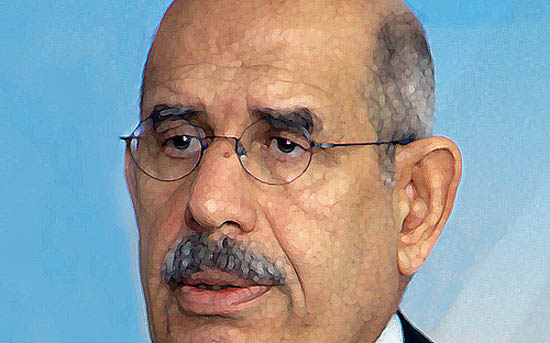
One aspect of my objection was the Sanger took a quote by IAEA DG ElBaradei out of context in order to give the (false) impression that the IAEA Director-General was confirming the details of the short-notice inspection.
I now have the full text of the two confirmed quotes by ElBaradei:
We believe they pretty much have the knowledge about how to enrich. From now on, it is simply a question of perfecting that knowledge. People will not like to hear it, but that’s a fact.
Quite clearly suspension is a requirement by the Security Council, and I would hope the Iranians would listen to the world community. But from a proliferation perspective, the fact of the matter is that one of the purposes of suspension— keeping them from getting the knowledge—has been overtaken by events. Until all outstanding verification issues are clarified, and the Agency is able to verify the peaceful nature of Iran’s nuclear program, the focus should be to stop them from going to industrial scale production, to allow us to do a full-court-press inspection and to be sure they remain inside the treaty.
It is my understanding that Sanger did get the quotes (Heinrich at Reuters had described them as “released”), but that they were general in nature and not related to the content of the short-notice inspection.
Sanger did, in my opinion, take the ElBaradei quote out of context.
What Was ElBaradei Trying To Say?
Lost in the hullabaloo is why ElBaradei is making a distinction between “the knowledge about how to enrich” and “perfecting that knowledge.”
This is a political distinction that creates room for compromise, such as on whether the West should offer Iran a multinational consortium to enrich uranium on Iranian soil as Geoff Forden and John Thomson propose.
I blogged in October about my hypothesis that compromise on Iran comes down to a judgment about how much Iran can learn on its own:
Ultimately, these kind of deals come down to a sort of theoretical trade-off. There are two ways to make it “hard” for Iran to build a bomb: One way is to restrict Iran’s access to information and technology; the other is to propose monitoring and verification efforts to make any decision to move toward a bomb a very public decision.
Neither offers a guarantee—the 2002 revelation of Iran’s clandestine centrifuge program demonstrates both that controlling technology is difficult and that, even with lots of warning, we might not be able to stop a country like Iran. As we try to decide how much enrichment work we can accept in Iran and under what safeguards (or monitoring, really), we can imagine a hypothetical policymaker with an indifference curve that defines the rate at which she is willing to allow Iran access to enrichment technology in exchange for better capabilities to monitor Iran’s activities.
As Iran’s scientists learn more about centrifuges, we need to learn more about Iran’s scientists.
The Forden and Thomson proposal reflects a judgement that Iran is going to learn lots about centrifuges—and they’ve got 164 reasons to think so. Gaining as much access as possible, therefore, is worth—to Forden and Thomson—letting Iran have really awesome (although black boxed) centrifuges just kind of hanging around (under reasonable safeguards). For others, no amount of monitoring will make it okay for Iran to have a centrifuge plant on its soil.
You can see, I think, a different willingness to trade in Matthew Bunn’s proposal to allow Iran to conduct certain activities under a suspension and the response by David Albright and Jackie Shire, driven by different assessments of how much Iran is likely to learn anyway.
Anyway, at that time Iran had a couple hundred centrifuges, not in excess of a thousand. Not surprisingly, as Iran has built more centrifuges, the “zero enrichment” crowd has dwindled.
Even Western diplomats are beginning to think about arrangements that would accept enrichment in Iran, as Daniel Dombey and Roula Khalaf reported
in The Financial Times:
“We can be imaginative and flexible in terms of exploring where negotiations might go,” a senior British official said. He argued that an offer the world’s big powers made to Iran last year was only the starting point for discussion and could be repackaged.
Last year’s offer, made by the permanent five members of the United Nations Security Council and Germany, proposed that an international consortium based in Russia enrich all the uranium for Iran’s nuclear programme. Tehran has rejected this, although it says it would be willing for an international consortium to enrich uranium within Iran itself.
The official said such a suggestion could be discussed within the negotiations. “No doubt they would put the idea of a consortium inside Iran on the table,” he said.
Anyway, in my opinion, ElBaradei is drawing a line between knowing how to enrich and perfecting that knowledge to create space for a compromise that allows Iran, the United States and Europe a face-saving way to stop short of 54,000 centrifuges spinning at Natanz without going to war.