
The New York Times has a second story by Christiaan Triebert, John Ismay, Alexander Cardia, Leanne Abraham and Azmat Khanout that concludes … well, the title says it all: “New Evidence Further Implicates U.S. Missiles in Strikes That Killed 21 Civilians in Iran.”
I am quoted estimating the length of the object as about fifteen feet, plus or minus two feet. As best I can tell, the missile is far more likely to be PrSM as the New York Times and BBC reported earlier than it is an Iranian cruise missile like the Hoveyzeh as CENTCOM has claimed. This is a brief description of how I made that estimate.
Apparent Length of the Munition That Struck Lamerd, Iran
Jeffrey Lewis
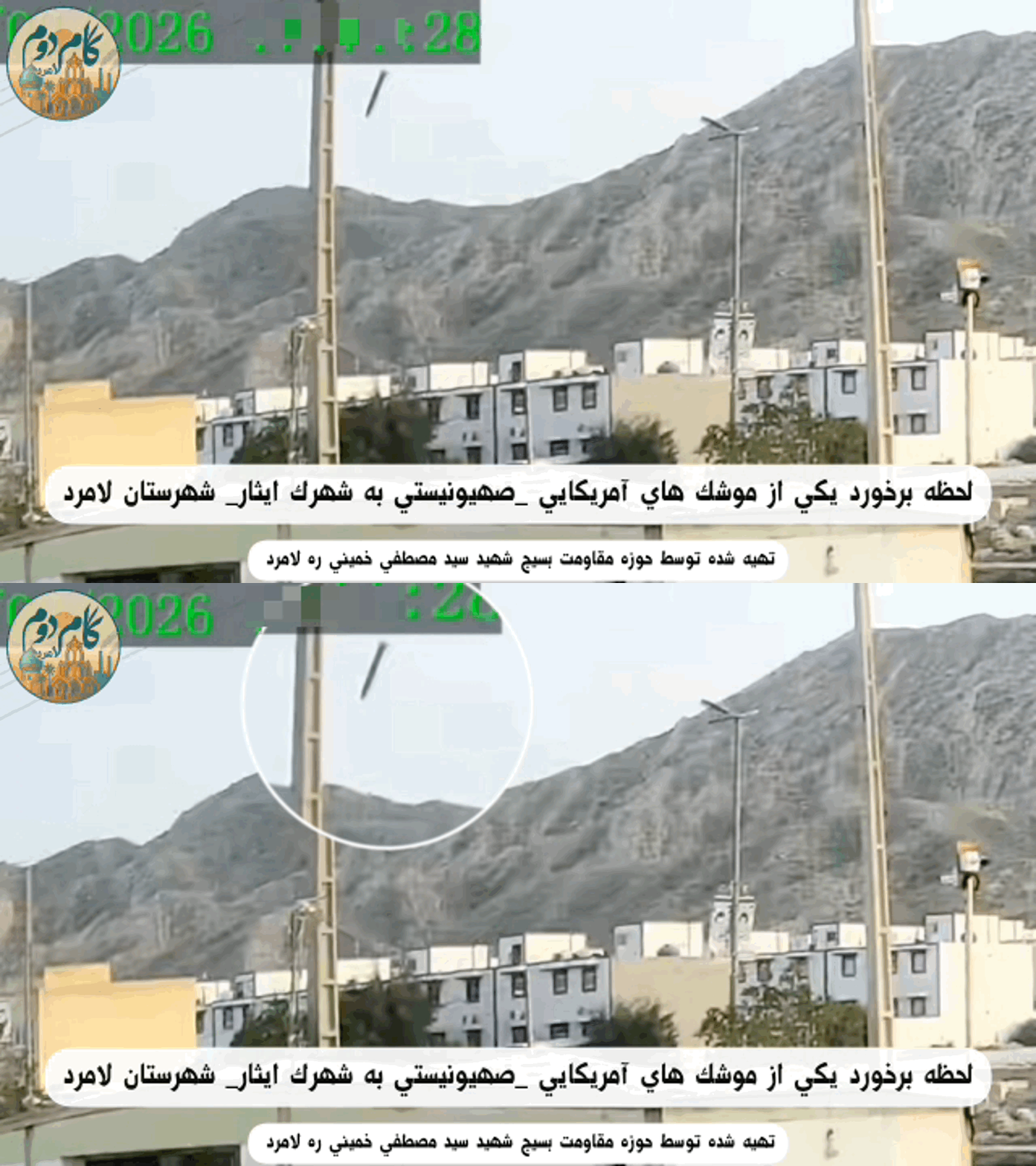
Iran released two videos taken by security cameras showing what appears to be one of three missiles that exploded in Lamerd, Iran. The apparent length of the missile is 4.6 m (+/- 0.7 m). The apparent length is more consistent with the 4.0 m-long U.S. Precision Strike Missile (PrSM) than with known Iranian land-attack cruise missiles, which are approximately ~6 m long or more.1 The apparent difference in length between PrSM and the missile in the image could easily be explained by motion blur from a fast moving (>100 m/s) object. Sources of uncertainty include the distance to the explosion distance, lens effects, stretching or skewing as the videos were compiled into the file placed online, and measurement error.
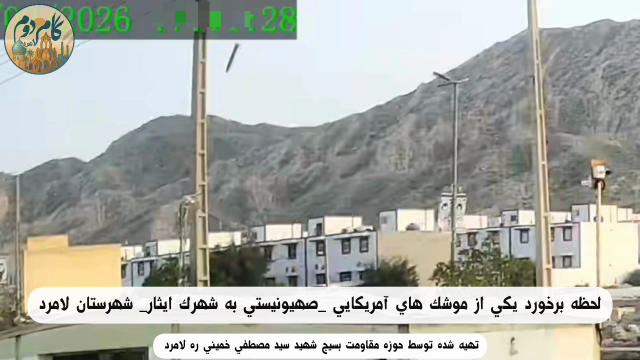
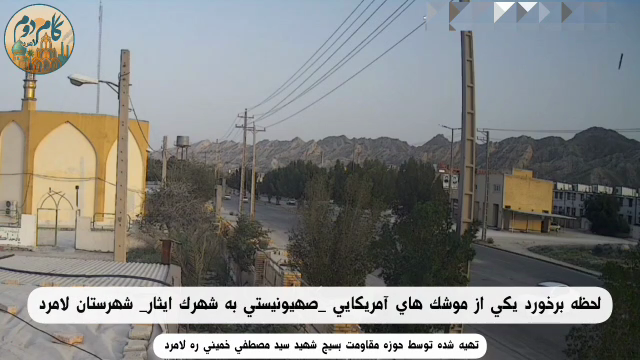
In extracting the still images, it is important to extract frames in which the missile has not been magnified for viewing.2 In the two videos, most frames show the missile magnified 20 and 40 percent, respectively. I made a gif showing the effect of the enlargement.
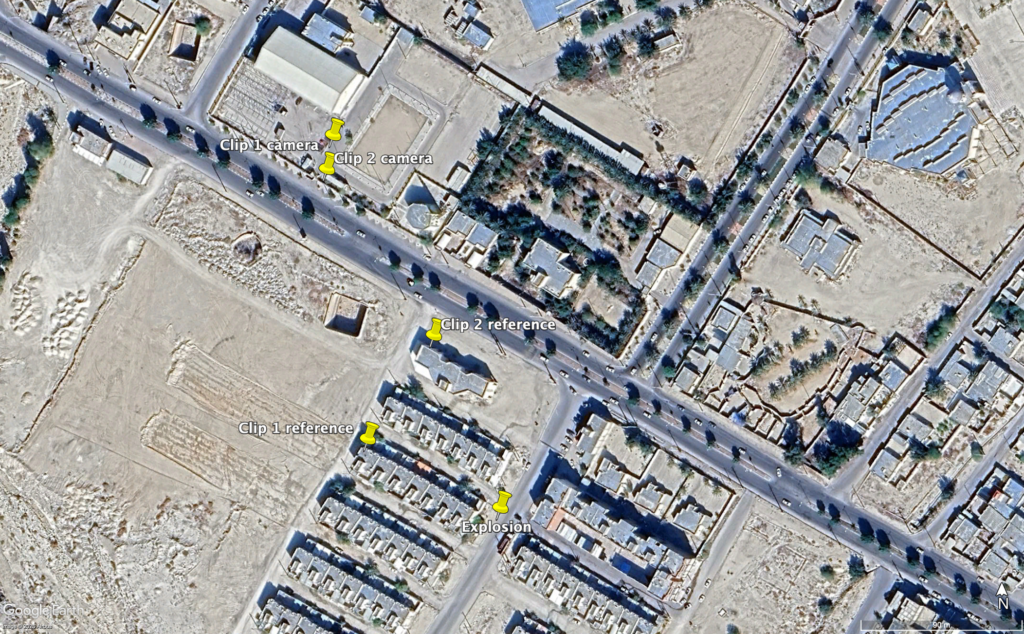
The location of the cameras and the explosion were provided by Christian Triebert at the New York Times. I generally confirmed the locations, as did Joyce Lee at the Washington Post.
To estimate the length, I derived an effective focal length (ƒ) in pixels for each camera, using a nearby building as a reference.
Effective ƒ = (heightpx × distancem) / heightm
I estimated the height of a reference building using shadows in satellite images. These estimates are an additional potential source of uncertainty. This allows one to estimate the size of the missile in the absence of the original image or precise details about the camera.
| Reference Objects | |||
| height (m) | distance (m) | pixels | effective ƒ |
| 7.15 | 166 | 70 | 1621 |
| 8.65 | 101 | 57 | 664 |
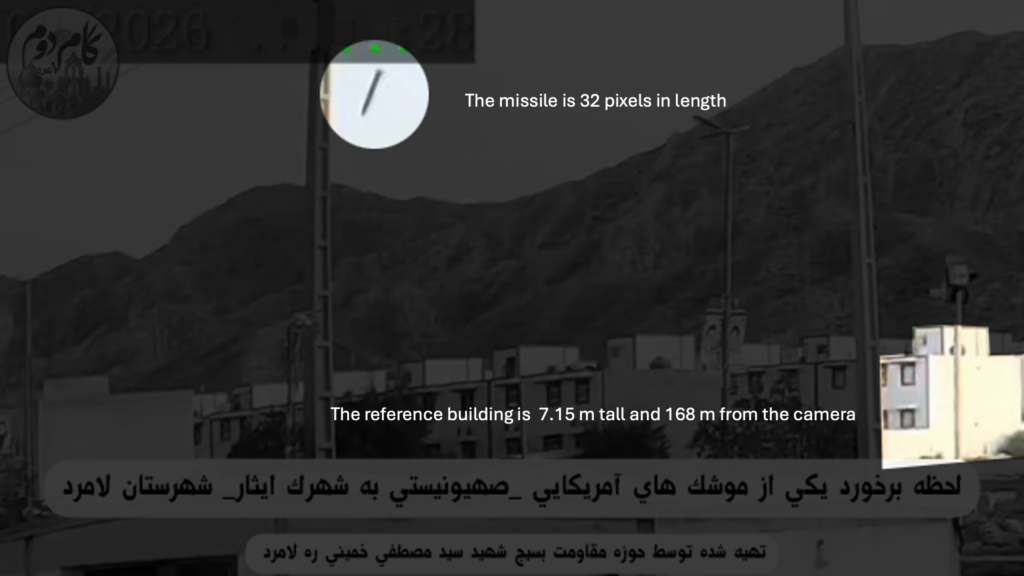
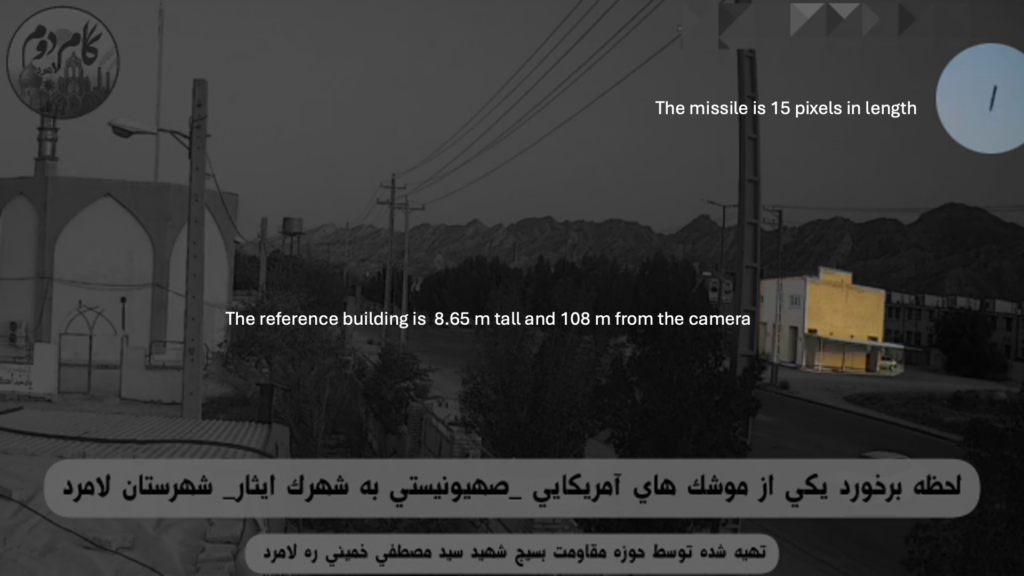
I then measured the pixel length of the missile in each of the images, as well as the distance from the camera to the approximate point of the explosion. Using the effective focal length derived from the reference buildings, we can estimate the size of the missile with the formula:
Lengthm = (lengthpx × distancem) / effective ƒ
Based on this method, the missile appears to be about 4.6 m long. Sources of uncertainty are about 0.7 m. (For uncertainty, I estimate 30 cm in building height, 2 m in distance to reference building, 1 pixel measurement error all for effective focal length and 20 meters distance to missile prior to explosion and 1 pixel measurement error for the final calculation.) Motion blur can only reduce the length of the missile, but without knowing the shutter speed of the cameras, it is not possible to estimate. There are also lens effects which could stretch or skew the object.3
| Apparent Length of the Missile | |||||
| effective ƒ | Distance | Missile (m) | Uncertainty (m) | Magnified (m) | |
| Clip 1 | 1621 | 226 | 4.45 | +/- 0.65 | 5.43 |
| Clip 2 | 664 | 207 | 4.68 | +/- 0.78 | 6.55 |
By far the largest contribution to uncertainty is the location of the explosion. A change in distance of 1 m corresponds to about 2 cm in length. A ten meter difference in distance – roughly equivalent to the question of which side of the street the explosion occurred – would result in a change of 20 cm. (The missile is approximately 20 m above the ground, which results in a negligible change to distance.)
Overall, the estimate of 4.6 m (+/- 0.7) agrees well with the stated 4.0 m length of the PrSM. The total difference between the apparent length of the missile and the stated PrSM length corresponds to less than 3 pixels. This difference could easily be explained primarily by motion blur given the likely velocity of the missile (>100 m/s).
Notes
1. U.S. Central Command claimed that “A PrSM is 13 feet in length. The munition depicted in the video appears to be twice as long, consistent with the dimensions and silhouette of an Iranian Hoveyzeh cruise missile.” The Hoveyzeh is slightly longer than 6 meters, or twenty feet, in length, not twice as long. The munition in the video does not exhibit wings or an external turbojet engine, both of which are features of the Hoveyzeh and other similar Iranian land-attack cruise missiles.
2. Using a still with the magnification would bring the estimate closer to twenty feet in length, which could account for CENTCOM’s claim that the munition is similar in length to Iranian cruise missiles.
3. Lens effects are also an issue but attempting to correct them without details regarding the cameras introduces more uncertainty as well as the possibility of bias. I chose to create an effective focal length because I was not confident about the camera details and, for the same reason, did not attempt to correct for lens effects.

Leave a Reply