
This guest post is by Dr. James M. Acton
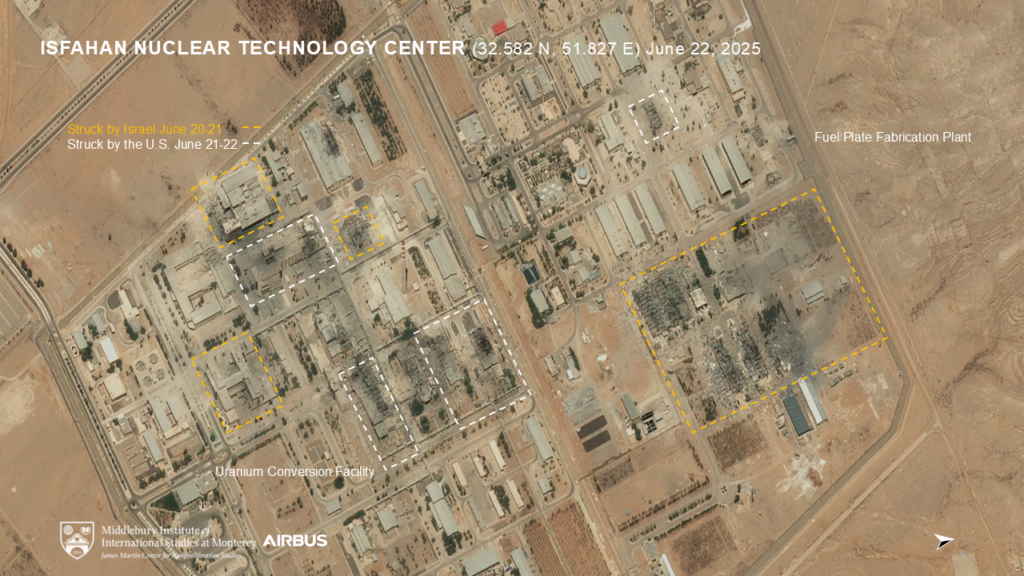
Central to the Trump administration’s case for the effectiveness of its air strikes on Iran is the destruction of a “conversion” facility at Isfahan with equipment for producing uranium metal. Secretary of State Marco Rubio has claimed that U.S. strikes set Iran back by “years,” largely because of the difficulty that, in his telling, Iran would now face in producing the metallic cores of nuclear weapons.
Tellingly, however, the purported value of attacking Iran’s uranium metal production lines has become an argument for military action only in the aftermath of strikes. It was never part of the United States’ original causus belli, which (to the extent it was ever clearly laid out) focused on Iran’s refusal to give up enrichment.
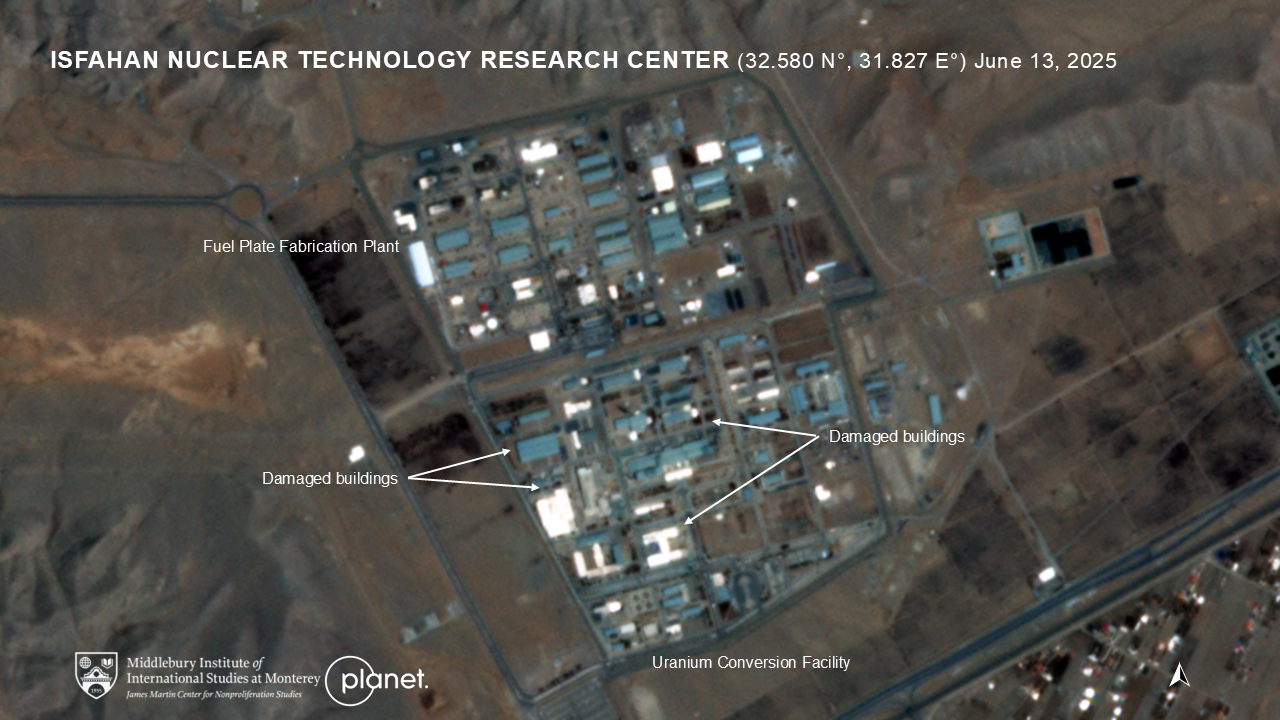
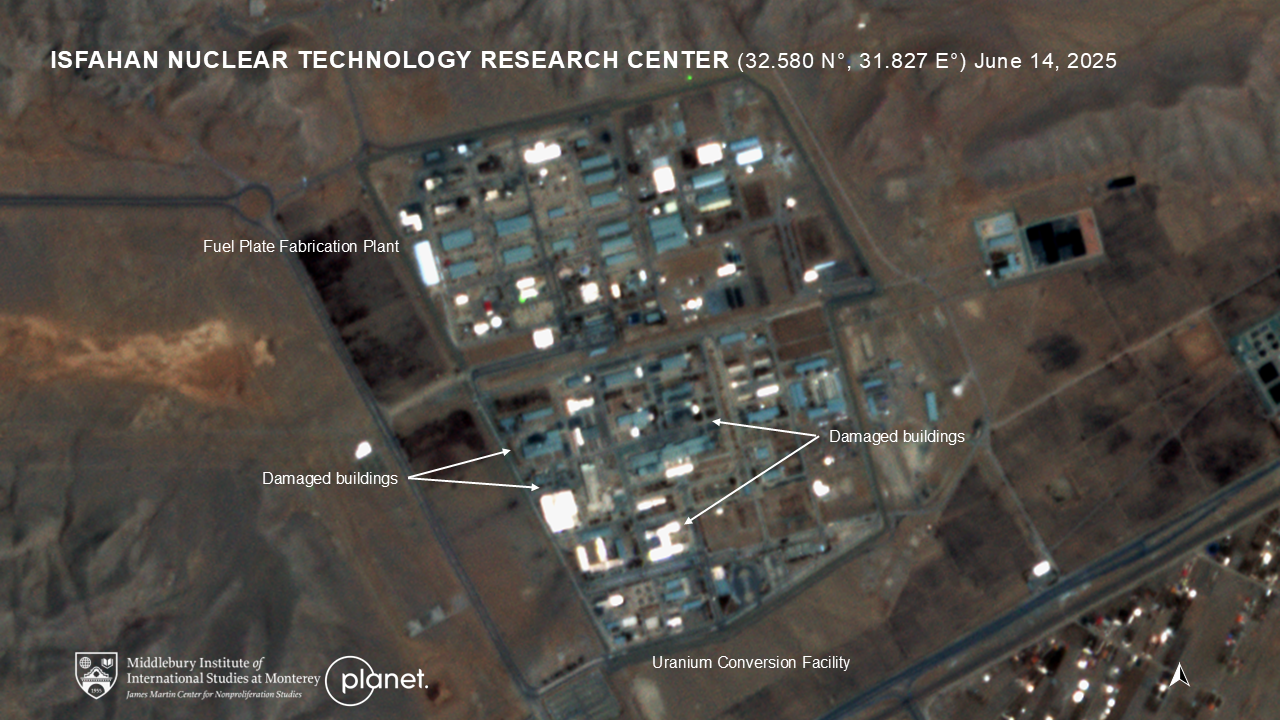
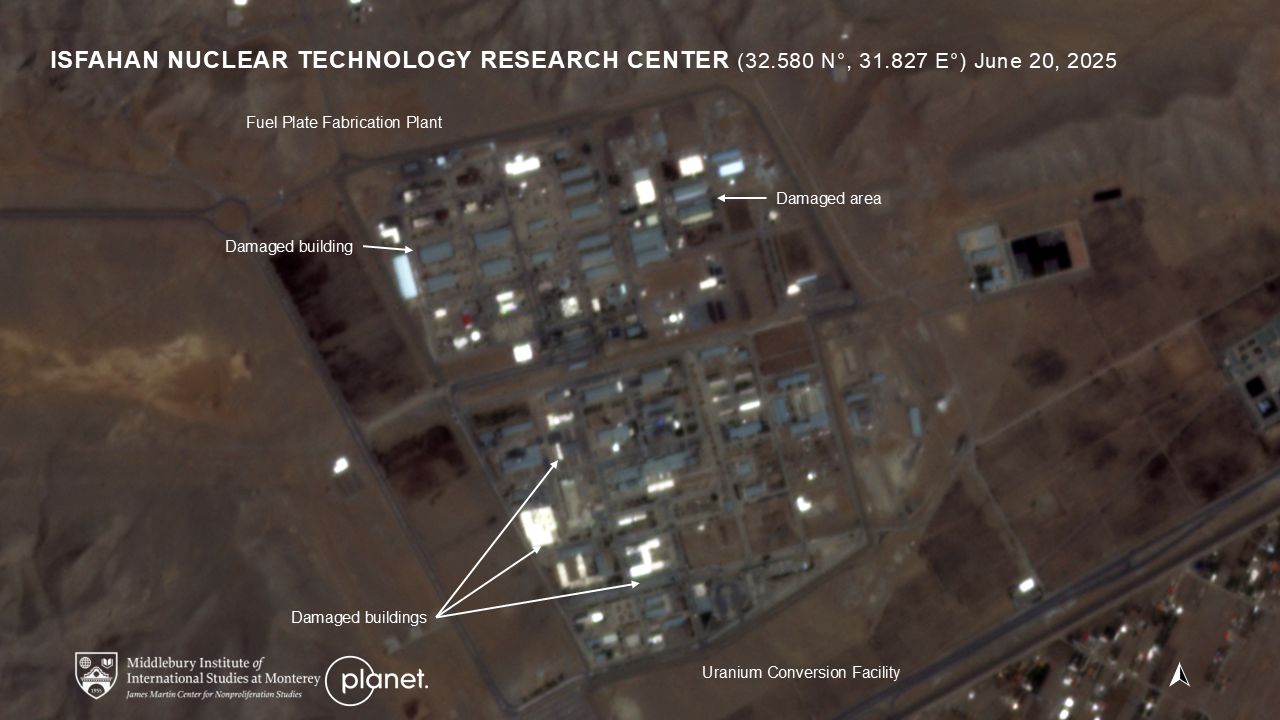
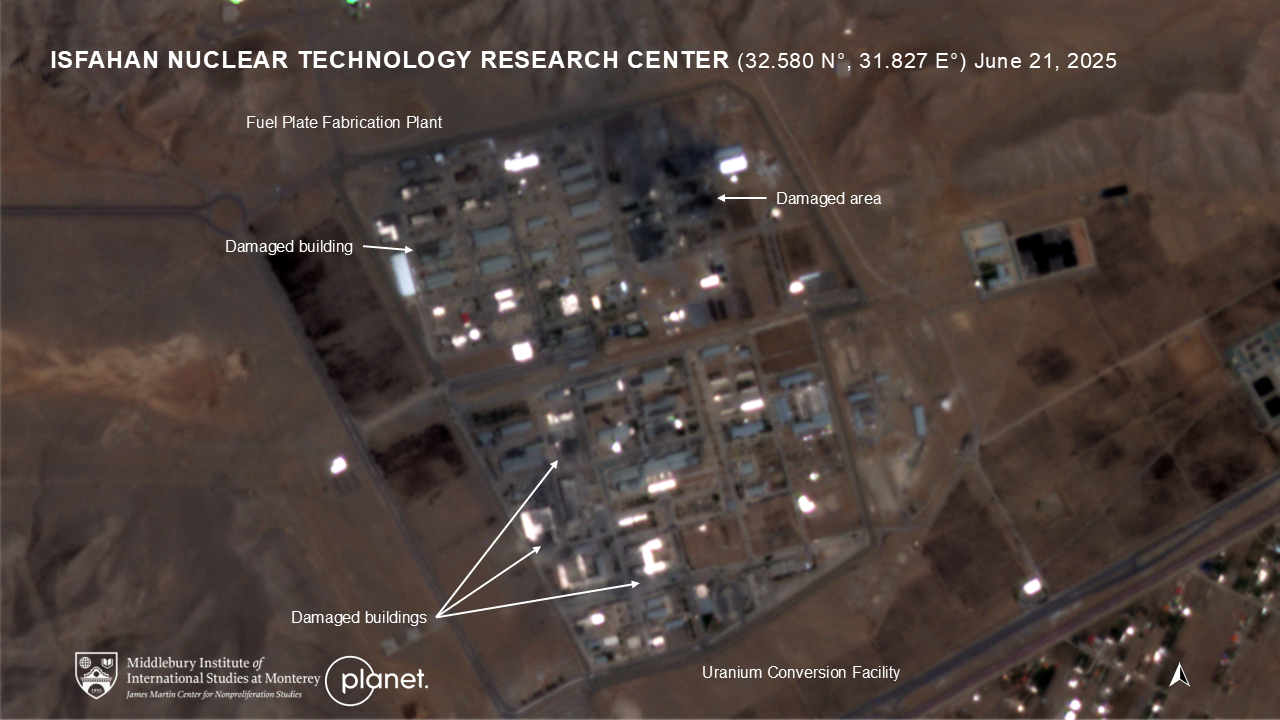
Indeed, the destruction of the Isfahan metal production facilities (there were, in fact, two of them) was not a major blow.[1] Their loss did not set Iran’s nuclear-weapon program back by “years;” in fact, it may not even have set Tehran back by months.
Iran does not need the Isfahan facilities to rapidly produce highly enriched uranium metal in the quantity required for nuclear weapons—roughly 25 kg per warhead. Even if Iran does not have a clandestine production line, it could produce that amount of material in weeks, perhaps even days, in a laboratory with the appropriate equipment, which Iran certainly possesses.
Iran has adopted a standard two-step process for converting uranium hexafluoride (UF6, the material used in enrichment) into uranium metal (the material used in nuclear weapons and certain types of reactor fuel).
Step one involves mixing uranium hexafluoride with hydrogen gas to produce uranium tetrafluoride (UF4), a solid sometimes known as green salt. This process involves straightforward chemistry, even if the byproduct, hydrogen fluoride, is rather nasty. The now-closed Feed Materials Production Center in Ohio could process 16,000 kg of uranium per day in this way. Producing enough green salt to yield 25 kg of uranium metal is laboratory-scale science.
Step two involves mixing green salt with high purity calcium or magnesium and heating it (if you have dim memories of performing the thermite reaction in high-school chemistry, it’s that kind of thing). These materials, as well as the relevant equipment, such as furnaces, are widely used and easy to acquire—so much so that the U.S. Department of Defense (quite sensibly) did not even bother listing the process of producing uranium metal on its Militarily Critical Technologies List (whereas it did list plutonium metal production).
A state that wants to produce metallic uranium needs to sweat some details: the right temperature, the right material to contain the reaction, and so on. But once it has developed a protocol, it can execute it and produce enough uranium metal for a nuclear weapon in weeks or days. The International Atomic Energy Agency estimates that, starting with uranium hexafluoride, a state could produce a finished metallic core for a nuclear weapon in as little as one to three weeks. In practice, it took China only slightly longer: “one to two weeks” to produce the uranium metal (and then another few weeks to purify and shape it).
Converting uranium hexafluoride into uranium metal in weeks or days requires having a suitably equipped laboratory at the ready. If Iran does not have such a facility available—an assumption I would certainly not make—it could set one up in months, as U.S. experience from the Manhattan project demonstrates.
The process for producing uranium metal from green salt was developed in the Chemistry Building at Iowa State College at Ames (now Iowa State University). As its name suggests, the Chemistry Building was not a specially designed facility for producing uranium metal; it was the university chemistry department, and it happened to contain metallurgical research facilities from the 1920s. Work on uranium metal production at Ames started in February 1942. By October of the same year, scientists there had not only developed the process but had ramped production up to 50 kg of metallic uranium per week.[2]
This uranium was not enriched; it was used as fuel for the first nuclear reactors. Producing HEU metal for nuclear weapons was somewhat more complicated. There was the risk of a criticality accident (HEU can spontaneously explode if too much is present in any one place). Moreover, the material produced using the original Ames process was insufficiently pure for weapons. Even so, these challenges were not difficult to overcome. Scientists at Los Alamos quickly gained the relevant experience and made relatively minor changes to the Ames process.
This history strongly suggests that, if Iran wants to produce uranium metal, the destruction of the Isfahan facilities will not create a significant hurdle. Indeed, Iran has already succeeded in producing metallic uranium elsewhere. According to the IAEA, from 1995 to 2002, it produced over 100 kg of uranium metal from green salt at a laboratory in Tehran. These experiments underscore that Iran has likely already developed a protocol for producing high-purity uranium metal. They also show that Iran has long possessed the equipment to do so.
I suppose one possible conclusion is that the United States and Israel should restart air strikes and try to destroy every lab in Iran that could produce uranium metal. There is little reason to suppose such strikes would be effective, however—not least because of the existence of underground facilities beyond the reach of even the United States’ bunker-busting Massive Ordnance Penetrator. Ultimately, the only form of military action that could permanently prevent Iran from acquiring nuclear weapons is invading and occupying the country. Yet, thankfully, not even the most fervent proponents of military action are calling for that.
Instead, the best way forward is diplomacy. Whether or not the administration publicly acknowledges the limited effects of its air strikes, it should privately recognize them and attempt to resurrect verifiable limits on Iran’s nuclear activities. Such a process will be exceptionally difficult and success is far from guaranteed. However, diplomacy is more likely to succeed than wishing away Iranian capabilities and know-how.
James M. Acton holds the Jessica T. Mathews chair and is co-director of the Nuclear Policy Program at the Carnegie Endowment for International Peace. He holds a Ph.D. in theoretical physics from the University of Cambridge. As a kid, he loved the thermite reaction.
[1] Iran has produced enriched uranium metal at the Fuel Plate Fabrication Plant. Israel destroyed this facility, which could likely have been used to make HEU metal, early in the war. The United States destroyed a second facility at Isfahan, the Uranium Conversion Facility, which was also equipped to produce uranium metal but had not yet done so. However, the IAEA reports that this second facility was for depleted or natural uranium (as opposed to HEU), presumably on the basis of a criticality assessment. Israel could easily have destroyed this above-ground facility but did not, suggesting it agreed with the IAEA that this plant was not suited to handle HEU.
[2] A dedicated facility was subsequently established. It was a “somewhat dilapidated, one story wooden building on the campus.” Its previous uses had included a “gymnasium for women” and a “combination garage and pop-corn laboratory.”

Thank you! I’ve been telling my friend this ever since the bogus “set back” claim was made. (And my Phd is in mere political science).
James-the US is in a much stronger position to negotiate with Iran post these strikes and with Israel controlling the skies over Iran. It seems there will be negotiations next week. Before military action was taken, Israel believed Iran was days away from obtaining a nuclear weapon. We don’t know how close they are now and we should seek a diplomatic solution or threaten Iran with further military action if they will not commit to a verifiable and peaceful nuclear program. This is the only way we can prevent a fully nuclear Middle East which would be a disaster.