

Twenty four years ago today, Israel attacked Iraq’s Tammuz-1 (Osirak) nuclear reactor.
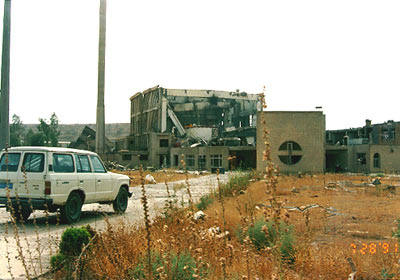
Although popular myth holds the raid a success, the Duelfer Report hints at a more complicated reality:
The Israeli destruction of the Tammuz 1 (Osirak) research reactor on 7 June 1981 and Iraq’s subsequent failure to replace or rebuild it compelled the Iraqis to pursue a more clandestine uranium enrichment program for a nuclear weapon by the mid-1980s.
I’ve written about this before, but couldn’t let the anniversary pass without comment. Dan Reiter, a professor at Emory University, has written The Osiraq Myth and the Track Record of Preventive Military Attacks arguing that “closer examination of the Osiraq attack reveals that it did not susbantially delay the Iraqi nuclear [weapons] program and may have even hastened it.” [Emphasis, mine.]
I tracked down Reiter’s footnotes—just for fun—and think he is correct.
- In memoirs and interviews, largely published after Operation Iraqi Freedom, Iraqi nuclear scientists have been unanimous in stating that Osirak was not part of a clandestine nuclear weapons program. The reason is simple: the two strategies for using the reactor in this manner—diverting HEU or secretly producing Pu—would have been detectable by IAEA inspectors and produced relatively small amounts of fissile material. A technical analysis by the IAEA in 1981 supports these accounts.
- The scientists were also unanimous in dating Saddam’s pre-Gulf War effort to acquire a nuclear weapon through a clandestine uranium enrichment program to the days immediately following the Israeli attack. The effect of the attack was probably to transform a “virtual” bomb program into a very real one that may or may not have succeeded without the intervention of the Operation Desert Storm.
Military action did not stop Saddam’s progress toward a bomb. To argue that progress was slowed, one has to make a technical judgement about the relative risk frorm a plutonium reactor under safeguards viz a clandestine uranium enrichment program.
I’d rather have the former.